
Virtual Legal Assistant – Streamlining Legal Operations

Practical guidance for building efficient, accountable legal support operations.
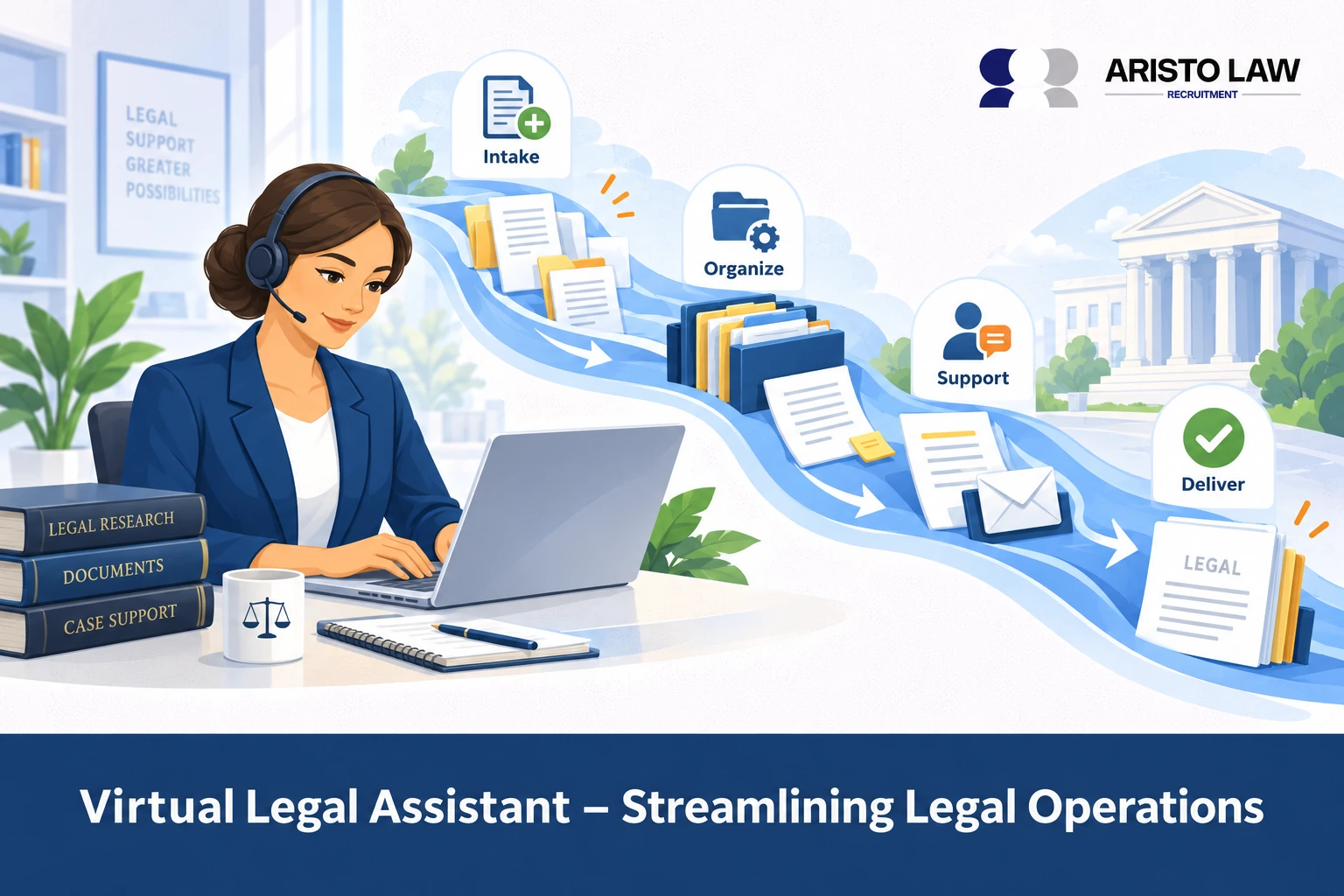
A virtual legal assistant provides remote administrative and
legal support services to law firms, attorneys, and legal departments
through digital communication systems, cloud-based workflows, and case
management platforms. Virtual legal assistants help manage
document handling, client communication, scheduling, intake
coordination, calendar management, billing support, email management,
legal correspondence, records organization, and operational workflows
that keep legal practices functioning efficiently.
American Bar Association publications and legal industry
reports indicate that technology-assisted workflows and outsourced legal
support can improve operational efficiency, reduce administrative
burden, and help smaller law firms manage staffing costs while improving
responsiveness to clients.
Virtual legal assistants streamline legal operations by reducing
administrative burden, improving response times, supporting workflow
organization, and allowing attorneys to focus more heavily on billable
legal work and case strategy. Common tools used include legal case
management systems, cloud-based document management platforms,
scheduling software, client relationship management tools, e-signature
systems, billing platforms, and communication applications such as
Microsoft Teams, Slack, Zoom, and Clio.
Virtual legal assistants differ from virtual paralegals because their
work typically centers on administrative coordination and operational
support rather than substantive legal analysis, legal drafting,
discovery management, or advanced litigation support. Virtual paralegals
usually perform more legally intensive tasks under attorney supervision,
whereas virtual legal assistants focus on workflow management,
organization, communication, and administrative execution.
Law firms hire virtual legal assistants because they provide cost
efficiency, operational scalability, staffing flexibility, reduced
office overhead, and support for growing caseloads without requiring
full-time in-office employment. Solo attorneys and small firms
frequently use virtual assistants to manage intake, scheduling, file
organization, follow-ups, invoicing, and client communication while
maintaining lean operational structures.
Role boundaries remain important because virtual legal assistants
cannot independently provide legal advice, represent clients, establish
attorney-client relationships, or perform unauthorized legal practice
activities. Related support roles include virtual legal secretaries, law
firm virtual assistants, intake coordinators, litigation support
assistants, and remote administrative specialists.
Hiring pathways commonly include legal staffing agencies, outsourcing
companies, freelance platforms, and independent contract professionals.
Desired qualifications often include legal-administration experience,
familiarity with legal terminology, organizational skills,
confidentiality management, communication ability, case management
software proficiency, and understanding of legal workflow systems.
The future outlook for virtual legal assistants continues expanding
as law firms adopt hybrid operations, cloud-based case management,
AI-assisted workflows, remote staffing models, and outsourced legal
support structures designed to improve productivity, operational
efficiency, and scalable legal service delivery.
Aristo Law helps law firms improve virtual legal assistant
support and legal operations by providing outsourced support for
administrative workflows, calendar management, client communication,
document coordination, intake assistance, and back-office legal tasks.
Hire a
Virtual Legal Assistant with Aristo Law today. Aristo Law connects
law firms with outsourcing solutions that match trained virtual legal
assistant staff to each operational workflow, administrative duty,
remote support need, client-facing task, and law firm operations
responsibility.
What is a virtual legal
assistant?
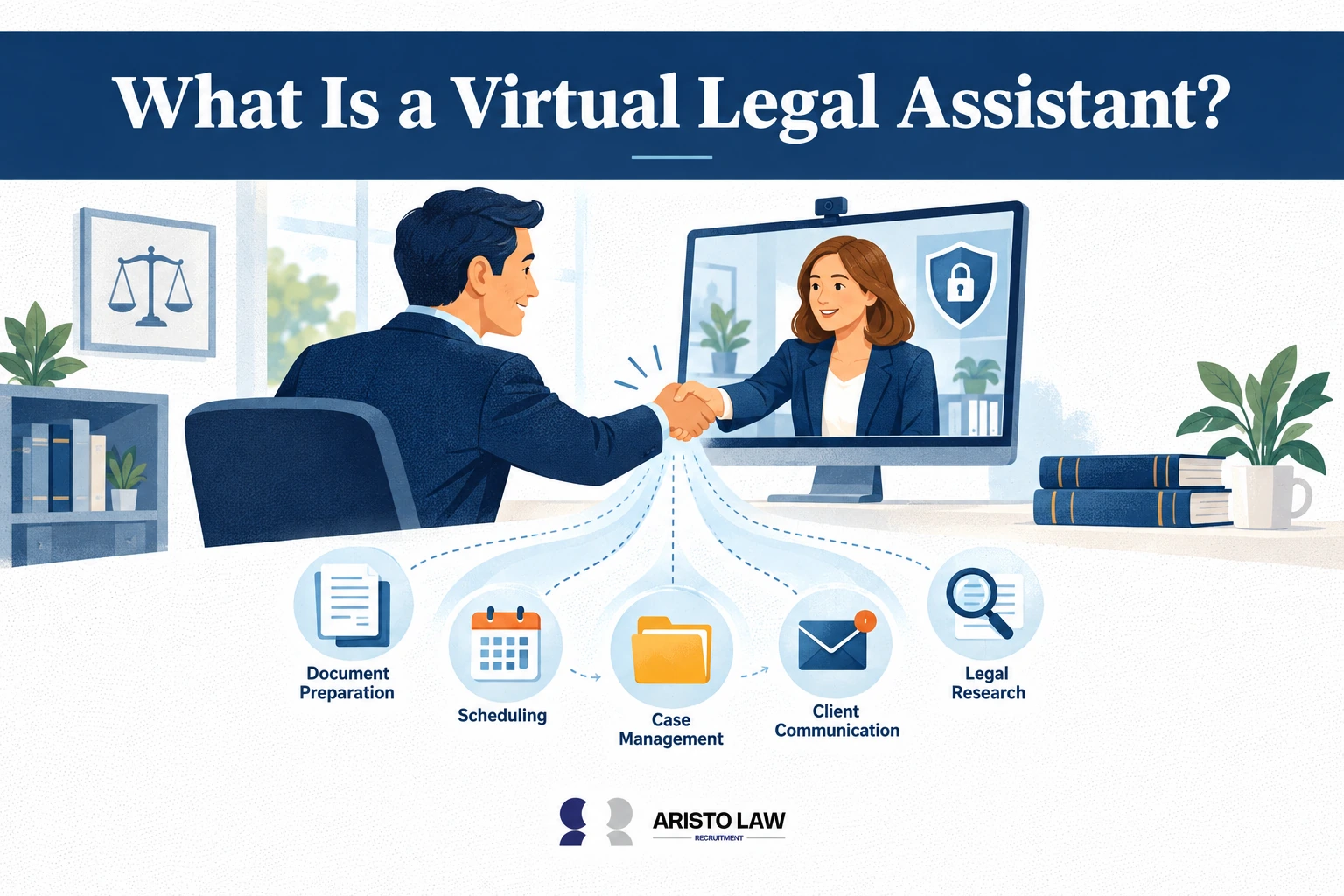
A virtual legal assistant is a remote professional who
provides administrative, operational, and legal support services to law
firms and attorneys using digital tools.
ABA publications and legal industry reports have shown that
remote legal support systems and outsourced administrative workflows
help reduce non-billable administrative tasks, improve operational
efficiency, and support scalable law firm management.
Virtual legal assistants work remotely while supporting daily legal
workflows such as client communication, appointment scheduling, document
management, email coordination, intake processing, billing support,
calendar organization, records management, and legal administrative
tasks. These professionals integrate directly into law firm operations
through cloud-based systems, legal case management platforms,
communication software, and secure document-sharing tools.
Virtual legal assistants help attorneys maintain organized workflows,
improve response times, manage routine operational responsibilities, and
reduce non-billable administrative burden. Law firms commonly use
virtual legal assistants in solo practices, small firms, litigation
support environments, and growing legal operations requiring flexible
staffing without maintaining full in-office administrative teams.
Remote execution typically involves platforms such as Clio, MyCase,
PracticePanther, Microsoft Teams, Slack, Zoom, Google Workspace, and
secure legal-document management systems. Virtual legal assistants
support operational continuity while allowing attorneys to focus more
heavily on client representation, legal analysis, and case strategy.
What services
do virtual legal assistants provide?
Virtual legal assistants provide administrative, client
communication, scheduling, document management, and legal support
services for law firm operations; listed below are the core functions
they perform.
Law firms use remote legal support to improve workflow continuity
across intake, scheduling, document preparation, client communication,
billing coordination, and case management without expanding in-house
administrative overhead.
Structured delegation of recurring operational tasks allows attorneys
to spend more time on legal strategy and client representation, which
explains the growing demand for virtual
legal assistant services for law firms across
high-volume practice areas.
Listed below are the 15 core services virtual legal assistants
provide.
-
Document drafting and formatting for contracts, correspondence,
intake forms, pleadings, and legal templates. -
Legal research support for statutes, regulations, case law, and
background case information. -
Scheduling and calendar management for attorney meetings, hearings,
consultations, and deadlines. -
Email management including client follow-ups, inbox organization, and
communication coordination. -
Client communication support through intake handling, appointment
coordination, and status updates. -
Case management support including file organization, deadline
tracking, and workflow monitoring. -
Document management and digital filing using legal case management
and cloud-storage systems. -
Billing and invoicing assistance including time-entry tracking and
payment follow-up coordination. -
Medical records and evidence organization for litigation and personal
injury matters. -
Court filing preparation and administrative litigation support under
attorney supervision. -
CRM and intake system management for lead tracking and client
onboarding workflows. -
Transcription, data entry, and administrative reporting for
operational efficiency. -
Coordination with courts, medical providers, experts, vendors, and
third-party service providers. -
Legal correspondence preparation including engagement letters,
notices, and scheduling confirmations. -
Workflow automation support using legal software, task-management
systems, and communication platforms.
How
do virtual legal assistants streamline legal operations?
Virtual legal assistants streamline legal operations by
handling repetitive tasks, organizing workflows, and ensuring timely
completion of administrative and legal processes.
A 2025 American Bar Association publication titled “How
Lawyers Can Work Faster Without Sacrificing Accuracy” reported that
technology-assisted legal support systems, including AI-powered workflow
and administrative tools, improved operational efficiency, reduced
attorney administrative workload, and increased productivity in modern
law firms.
Virtual legal assistants improve workflow management by coordinating
calendars, organizing legal files, maintaining client communication,
managing intake systems, tracking deadlines, and supporting document
workflows through cloud-based legal platforms. These responsibilities
reduce operational bottlenecks and allow attorneys to dedicate more time
to billable legal work, litigation strategy, negotiations, and client
representation.
Remote legal support also improves efficiency through faster document
retrieval, centralized communication systems, automated scheduling,
digital case tracking, and structured task management. Virtual legal
assistants commonly integrate with legal case management software, CRM
systems, document management platforms, billing systems, and
collaboration tools to maintain organized daily operations across
multiple matters simultaneously.
Law firms benefit from reduced administrative delays, improved
response times, scalable staffing flexibility, lower overhead costs, and
stronger operational continuity without requiring additional in-office
personnel.
What
is the difference between a virtual legal assistant and a virtual
paralegal?
A virtual legal assistant primarily handles administrative
and operational support tasks, while a virtual paralegal performs
substantive legal work under attorney supervision.
Although both roles support legal operations remotely, the
distinction lies in the depth of legal work performed, workflow
responsibility, and case-related involvement, making the difference
between virtual legal assistant and virtual paralegal
support especially relevant for law firms deciding how
to structure administrative versus substantive legal tasks.
The table below shows the difference between a virtual legal
assistant and a virtual paralegal.
| Category | Virtual Legal Assistant | Virtual Paralegal |
|---|---|---|
| Role | Remote administrative and operational support professional for law firms |
Remote legal support professional assisting with substantive legal tasks under attorney supervision |
| Main responsibilities | Scheduling, email management, client communication, document organization, intake coordination, billing support |
Legal research, drafting legal documents, discovery support, case analysis, litigation preparation |
| Level of legal work | Primarily administrative and workflow-focused | More legally intensive and case-focused |
| Legal involvement | Limited involvement in substantive legal analysis | Direct involvement in legal support and procedural case work |
| Client interaction | Handles intake, updates, scheduling, and administrative communication |
Assists with case-related communication and legal information gathering |
| Document work | Formats, organizes, uploads, and manages legal documents | Drafts pleadings, motions, discovery documents, and legal summaries |
| Research responsibilities | Minimal or administrative research support | Conducts legal research using statutes, regulations, and case law |
| Court-related support | Administrative filing coordination and calendar tracking | Litigation support, discovery review, deposition preparation, and procedural assistance |
| Training background | Administrative support training, legal office experience, workflow management skills |
Formal paralegal education, legal studies training, or litigation-support experience |
| Regulatory limitation | Cannot provide legal advice or substantive legal representation | Cannot independently practice law but may perform substantive legal work under attorney supervision |
| Common software tools | Scheduling systems, CRM platforms, document management software | Legal research databases, litigation-support tools, case management platforms |
| Primary operational focus | Workflow efficiency and operational organization | Legal case support and substantive legal assistance |
Can a virtual
assistant provide legal services?
No, a virtual assistant cannot provide formal legal services
or legal advice, but a virtual assistant can support legal operations
through administrative and workflow-related tasks.
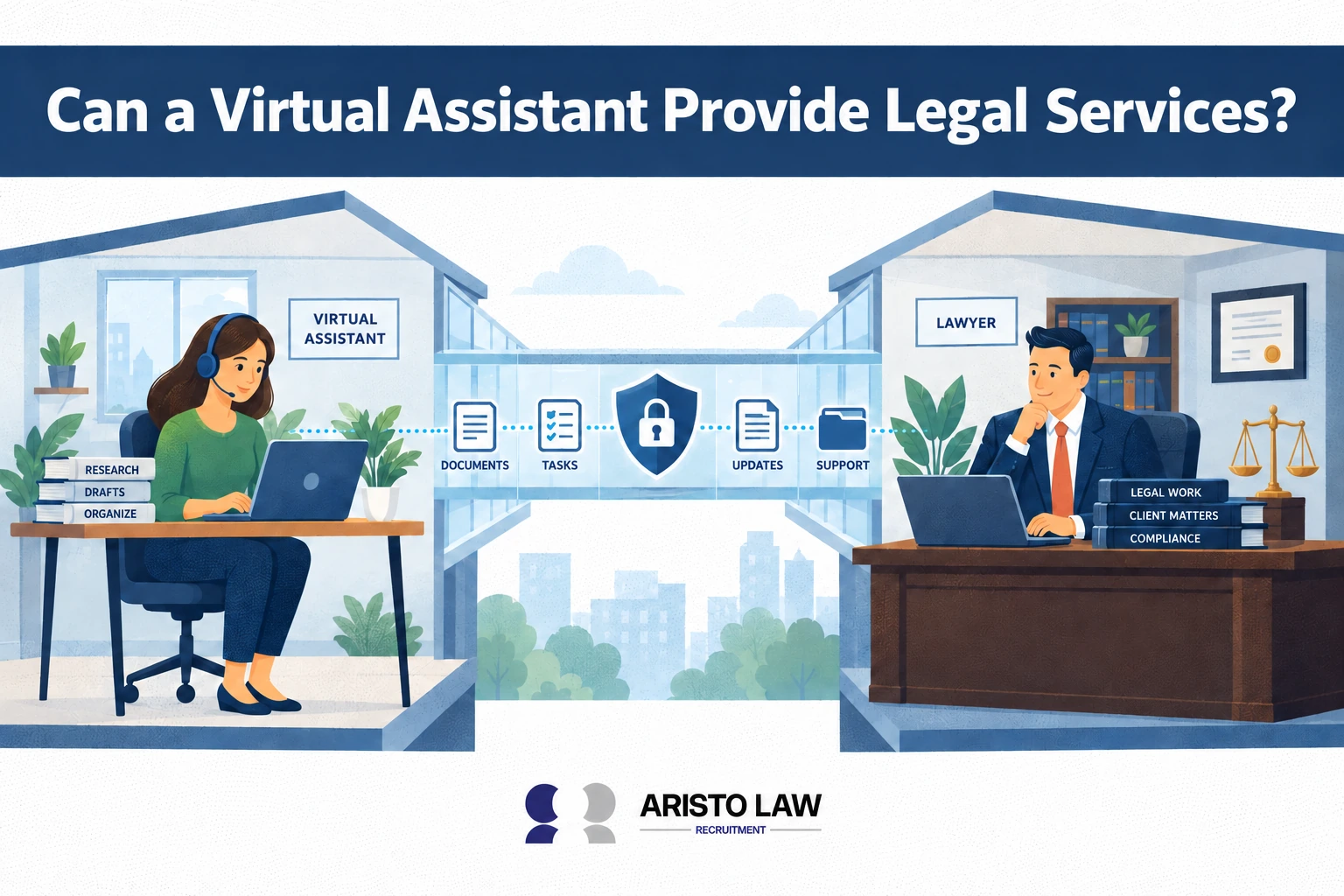
According to the American Bar Association (ABA) in Formal
Opinion 506 released on June 7, 2023, nonlawyer assistants, including
virtual legal assistants, may support lawyers with administrative
functions such as client intake and workflow coordination, but attorneys
must supervise them to ensure they do not provide legal advice or
perform unauthorized legal services.
Virtual legal assistants commonly support law firms through
scheduling, client communication, intake coordination, document
organization, billing assistance, email management, calendar tracking,
records handling, and case management support. These tasks improve
workflow efficiency and reduce administrative workload without involving
unauthorized legal practice.
Virtual assistants cannot independently provide legal advice,
interpret laws for clients, represent individuals in court, establish
attorney-client relationships, draft legal strategy independently, or
make legal decisions on behalf of attorneys. Substantive legal work
requiring legal judgment must remain under attorney supervision and
within applicable professional regulations.
Law firms therefore use virtual legal assistants as operational
support professionals integrated into administrative and legal workflows
while licensed attorneys remain responsible for legal analysis,
representation, and client advisement.
What is a virtual legal
secretary?
A virtual legal secretary is a remote professional who
handles clerical and administrative duties such as scheduling,
correspondence, and document formatting for legal teams.
According to the Association of Legal Administrators (ALA),
legal administrators primarily handle firm-wide operations such as
finance, human resources, and operational management, while legal
secretaries focus mainly on clerical and administrative support tasks
including scheduling, document preparation, filing, and
correspondence.
Virtual legal secretaries primarily focus on administrative execution
rather than broader operational management or substantive legal support.
Common responsibilities include managing attorney calendars, preparing
correspondence, formatting legal documents, handling phone and email
communication, coordinating appointments, organizing files, maintaining
client records, and supporting daily office workflows through remote
systems.
Unlike broader virtual legal assistant roles, which may include
intake coordination, workflow support, CRM management, and operational
task integration, virtual legal secretaries concentrate more heavily on
traditional clerical and secretarial functions tied to legal-office
administration. Their work supports attorneys, paralegals, and legal
staff by maintaining organized communication and ensuring administrative
processes remain efficient and timely.
Virtual legal secretaries commonly use scheduling platforms, legal
document systems, communication software, and cloud-based office tools
to support remote legal operations without requiring in-office
staffing.
How do virtual
assistants support solo lawyers?
Virtual assistants support solo lawyers by managing
administrative workloads, organizing case materials, and enabling focus
on billable legal work.
According to Clio’s Legal Trends data cited in legal industry
reports, legal professionals spend nearly 48% of their work hours on
non-billable administrative tasks such as scheduling, document
management, invoicing, and client communication rather than actual legal
practice. This supports the growing use of virtual assistants to handle
administrative workloads so lawyers can focus more on billable legal
work.
Solo attorneys frequently handle legal strategy, client
communication, intake, scheduling, billing, document management, and
operational responsibilities simultaneously, creating significant
administrative pressure. Virtual assistants reduce this burden by
coordinating calendars, organizing files, managing emails, tracking
deadlines, processing intake forms, handling follow-ups, and maintaining
structured legal workflows through remote systems.
Virtual assistants also support case organization by maintaining
digital records, updating case management platforms, preparing documents
for attorney review, coordinating appointments, and ensuring legal
materials remain accessible and properly indexed. These workflow
improvements help solo lawyers reduce administrative interruptions,
improve response times, and maintain better operational consistency
across multiple active matters.
Remote support provides solo practices with staffing flexibility and
lower overhead costs compared with maintaining full-time in-office
administrative personnel. This structure allows solo attorneys to
dedicate more time to litigation, negotiations, legal research, court
preparation, and client representation while maintaining organized daily
operations.
What
are the benefits of outsourcing legal assistant services?
Outsourcing legal assistant services provides operational and
financial advantages such as reduced overhead costs, increased
efficiency, scalable support, and improved workflow
management.
Listed below are the 13 benefits of outsourcing legal assistant
services.
-
Reduced staffing costs through lower overhead expenses related to
office space, equipment, benefits, and full-time employment
obligations. -
Increased operational flexibility by allowing firms to scale support
services based on workload, litigation volume, or seasonal demand. -
Access to global talent with specialized legal-administration
experience, software proficiency, and workflow-management skills. -
Improved productivity through delegation of administrative and
repetitive tasks that reduce attorney workload. -
Greater scalability for growing law firms without requiring immediate
in-house hiring expansion. -
Faster turnaround times for scheduling, intake management, document
organization, and client communication tasks. -
Better workflow organization through remote support integrated with
legal case management systems and cloud-based platforms. -
Reduced non-billable attorney hours by shifting operational
responsibilities to support professionals. -
Extended business coverage through assistants working across
different time zones and flexible schedules. -
Easier adaptation to remote and hybrid law firm operations using
digital collaboration systems. -
Access to specialized support services such as medical records
management, legal intake coordination, billing assistance, and CRM
management. -
Lower recruitment and training burden compared with maintaining
permanent in-office staffing structures. -
Improved operational continuity during high caseload periods, staff
absences, or rapid firm expansion. -
Enhanced cost control by using contract-based or project-based
staffing models instead of fixed payroll structures.
How
do law firms use virtual assistants for legal support tasks?
Law firms use virtual assistants for legal support tasks such
as client intake, document management, scheduling, billing, and
administrative workflow coordination.
Listed below are 10 ways law firms use virtual assistants for legal
support tasks.
-
Identify repetitive administrative and legal support tasks suitable
for remote delegation. -
Assign responsibilities such as scheduling, intake coordination,
document management, billing support, and client communication. -
Integrate virtual assistants into legal workflows using case
management and document management platforms. -
Establish secure communication systems through email, messaging
platforms, video meetings, and shared workspaces. -
Provide workflow instructions, standard operating procedures, and
confidentiality guidelines for consistent task execution. -
Grant controlled access to legal files, calendars, CRM systems, and
cloud-based legal software. -
Use task-management tools to organize assignments, deadlines, and
workflow priorities. -
Implement performance tracking through productivity metrics,
turnaround times, and task-completion monitoring. -
Maintain regular attorney-assistant communication to review workload,
updates, and operational issues. -
Scale virtual support functions based on litigation volume, client
demand, or operational growth requirements.
What tools do
virtual legal assistants use?
Virtual legal assistants use case management software,
document automation platforms, communication tools, and billing systems
to support legal workflows and remote collaboration.
Modern virtual legal assistants rely on integrated digital
environments that combine communication platforms, document automation,
calendaring, billing coordination, and workflow tracking to support
daily legal operations efficiently.
Familiarity with cloud-based collaboration software and secure
client-management infrastructure also improves responsiveness, deadline
management, and case organization across remote teams, especially when
working with legal
tools and case management systems used by virtual
assistants in high-volume legal workflows.
Listed below are 14 most common tools used by virtual legal
assistants
-
Legal case management software for tracking matters, deadlines,
tasks, and case workflows. -
Document management systems for storing, organizing, indexing, and
retrieving legal files securely. -
CRM platforms for managing client intake, lead tracking, follow-ups,
and communication workflows. -
Communication platforms such as Microsoft Teams, Slack, Zoom, and
Google Meet for remote collaboration. -
Cloud-based storage systems for secure file sharing and remote
document access. -
Scheduling and calendar-management tools for coordinating hearings,
consultations, meetings, and deadlines. -
Billing and invoicing software for time tracking, payment processing,
and financial management. -
E-signature platforms for secure digital document signing and
approval workflows. -
OCR and PDF tools for scanning, converting, editing, and searching
legal documents. -
Task-management and workflow systems for assignment tracking and
productivity organization. -
Legal intake software for onboarding new clients and collecting case
information efficiently. -
Email-management platforms for communication organization,
automation, and follow-up tracking. -
Spreadsheet and reporting tools for case tracking, budgeting, medical
records indexing, and operational analysis. -
Cybersecurity and encrypted file-transfer tools for protecting
confidential client and legal information.
Why should
attorneys hire a virtual legal assistant?
Attorneys should hire a virtual legal assistant to reduce
operational costs, increase productivity, and maintain consistent legal
support without expanding in-house staff.
According to the 2025 Clio Legal Trends Report cited by legal
staffing researchers, lawyers spend only about 3 hours of an 8-hour
workday on billable legal work, while the remaining time is consumed by
administrative and operational tasks. Legal analysts noted that virtual
legal assistants help recover this lost time by handling scheduling,
intake, document management, billing, and client communication, allowing
attorneys to focus on revenue-generating legal work.
Virtual legal assistants help attorneys manage administrative
responsibilities such as scheduling, intake coordination, document
organization, email management, billing support, calendar tracking, and
client communication through remote systems integrated into daily legal
workflows. Delegating these operational tasks allows attorneys to
dedicate more time to litigation strategy, legal analysis, negotiations,
hearings, and revenue-generating legal work.
Hiring remote legal support also provides staffing flexibility
because firms can scale assistance based on caseload volume, seasonal
demand, litigation intensity, or firm growth without committing to
additional office infrastructure or permanent in-house administrative
expansion. Virtual staffing models reduce expenses associated with
office space, equipment, employee benefits, and long-term payroll
obligations while maintaining workflow continuity and operational
responsiveness.
Law firms additionally benefit from faster task execution, improved
workflow organization, broader scheduling coverage, and access to
specialized support professionals experienced in legal software, case
management systems, and law firm operational processes.
How can law
firms hire a virtual legal assistant?
Law firms can hire a virtual legal assistant by identifying
support needs, evaluating qualified candidates, verifying legal workflow
experience, and implementing a structured onboarding
process.
Law firms that build structured remote support systems often improve
intake coordination, document handling, scheduling efficiency, and
administrative workflow consistency, making how
to hire a virtual legal assistant for your law firm an
operational decision tied directly to scalability, delegation strategy,
and long-term practice management.
Listed below are 12 steps in hiring a virtual legal assistant.
-
Define operational needs, workload gaps, and the specific legal
support tasks requiring delegation. -
Determine whether the role requires administrative support, intake
coordination, billing assistance, document management, or broader
workflow support. -
Establish required qualifications, software proficiency,
communication expectations, and confidentiality standards. -
Source candidates through legal staffing agencies, outsourcing
companies, freelance platforms, referrals, or independent
contractors. -
Review resumes, legal-support experience, technical skills, and
familiarity with legal case management systems. -
Conduct interviews to evaluate communication ability, organization
skills, workflow understanding, and remote work reliability. -
Assess proficiency with legal software, CRM systems, document
management tools, scheduling platforms, and communication
applications. -
Verify confidentiality awareness and understanding of legal workflow
boundaries and data-security requirements. -
Create onboarding procedures including workflow documentation,
standard operating procedures, task instructions, and communication
protocols. -
Provide secure access to legal systems, calendars, document
platforms, and collaboration tools with controlled permission
settings. -
Assign trial tasks or probationary projects to evaluate accuracy,
responsiveness, and workflow integration. -
Monitor performance through productivity tracking, deadline
management, communication consistency, and operational efficiency
reviews.
What
qualifications should a virtual legal assistant have?
A virtual legal assistant should have knowledge of legal
procedures, strong organizational skills, and experience with legal
software and documentation.
A 2024 industry report by BigHand based on responses from 835
senior legal professionals across the United States and United Kingdom
found that 64% of law firms reported measurable efficiency gains after
implementing legal technology systems and workflow management tools,
supporting the view that legal-technology proficiency and organized
operational structures improve law firm performance.
Virtual legal assistants should understand legal-office workflows,
client-intake procedures, document management practices, scheduling
systems, confidentiality requirements, and communication standards
commonly used in law firms. Strong written communication, time
management, multitasking ability, attention to detail, and deadline
coordination are necessary because remote legal support frequently
involves handling multiple matters simultaneously.
Technical competency is also important because virtual legal
assistants commonly work with legal case management software, CRM
platforms, cloud-based document systems, billing tools, e-signature
platforms, calendar-management applications, and communication systems
such as Microsoft Teams, Zoom, Slack, and Google Workspace. Familiarity
with legal terminology, court-related procedures, file organization
standards, and HIPAA or confidentiality compliance further improves
workflow integration and operational reliability.
Many law firms prefer candidates with prior legal-administration
experience, law office support backgrounds, paralegal coursework, or
remote operational support experience within legal environments.
What are virtual
legal assistant companies?
Virtual legal assistant companies are service providers that
supply trained remote professionals to support law firms with legal and
administrative tasks. These companies recruit, train, manage,
and assign remote legal support personnel who assist attorneys with
scheduling, intake coordination, document management, billing support,
client communication, calendar organization, CRM management, and
workflow administration.
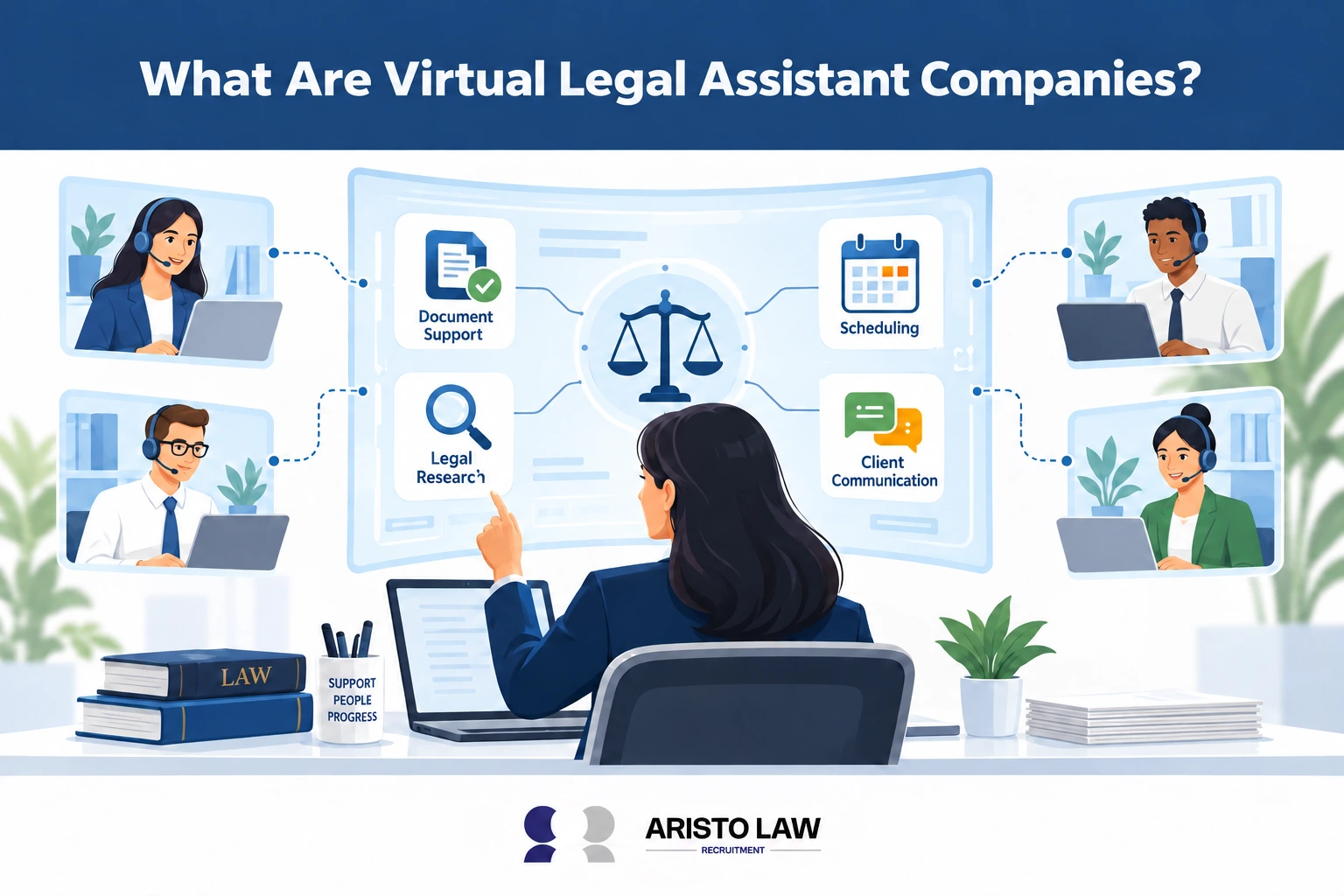
Virtual legal assistant companies support law firms by providing
remote administrative, intake, scheduling, billing, and legal support
services through outsourced professionals integrated into daily
workflows. Many firms use these providers to improve operational
efficiency, reduce staffing overhead, and expand support capacity
without building large in-house teams, making virtual
assistant companies for law firms and outsourcing
options increasingly relevant within modern legal
operations.
Many providers specialize specifically in legal-industry operations
and maintain professionals familiar with law firm procedures, legal
terminology, confidentiality standards, and legal software
platforms.
Virtual legal assistant companies commonly operate through
subscription-based, hourly, contract-based, or dedicated staffing models
depending on firm size and workload requirements. Firms use these
providers to reduce overhead costs, access specialized support talent,
improve operational scalability, and maintain flexible staffing
structures without expanding permanent in-house administrative
teams.
Most provider companies also handle onboarding, performance
monitoring, payroll administration, technical infrastructure, and
replacement staffing, allowing attorneys to integrate remote support
into existing workflows more efficiently.
What is
the future of virtual legal assistants in law firms?
The future of virtual legal assistants in law firms involves
increased adoption of remote staffing and integration with legal
technology platforms to improve efficiency.
A 2024 Thomson Reuters Staffing Ratio Survey found that law
firms reduced overall support staff ratios from 95 support staff
employees per 100 lawyers in 2017 to 81 per 100 lawyers in 2023, while
increasingly investing in specialized and technology-enabled support
roles. The report concluded that firms are restructuring traditional
administrative models to improve operational efficiency and flexibility
rather than relying solely on large in-office support
teams.
Law firms are expanding remote staffing models to improve operational
flexibility, reduce overhead costs, and maintain support coverage
without relying entirely on traditional in-office administrative
structures. Virtual legal assistants are increasingly integrated into
digital legal ecosystems that include case management software,
AI-assisted workflow tools, CRM platforms, cloud-based document systems,
automated scheduling systems, and secure communication technologies.
Technology integration is also reshaping how virtual legal assistants
support attorneys through automated intake processing, workflow
tracking, document organization, deadline monitoring, billing
coordination, and remote collaboration across geographically distributed
teams. AI-assisted administrative tools and legal automation platforms
further improve productivity by reducing repetitive manual processes and
accelerating information management.
Future law firm operations are expected to rely more heavily on
scalable remote support systems that combine human legal workflow
coordination with automation, cloud infrastructure, and data-driven
operational management to improve efficiency, responsiveness, and
client-service continuity.
How should a law firm integrate a virtual legal assistant?
Start with a written role brief that names the tasks, matter types, approved software, working hours, and person who supervises the assistant. Separate administrative work from legal judgment: an assistant may organize an intake record, request missing documents, and draft a status update, while an attorney decides whether to accept a matter, approves legal advice, and reviews substantive work.
- Map the handoff: record a new inquiry in the firm’s intake system, assign an owner, and specify when the attorney reviews it.
- Document the procedure: give the assistant a short checklist for naming files, updating status, handling exceptions, and escalating urgent or unclear matters.
- Control access: use firm-approved accounts, the minimum permissions needed for the assigned matters, and a clear process for removing access.
- Review the first tasks: check accuracy, response time, completeness, and client tone before expanding the workload.
- Measure the workflow: track intake response time, overdue tasks, missing documents, rework, and attorney review time against a baseline. These are management measures, not promised outcomes.
Software can trigger reminders, create tasks, and surface missing information. The assistant verifies the record and routes exceptions; the supervising attorney approves legal decisions and final client advice. This human-review boundary is especially important when automation or AI tools are used.
What should a firm compare when estimating the cost?
Compare like-for-like annual costs: local salary, applicable benefits, payroll obligations, equipment, office space, and recruiting time against the remote hire’s salary, equipment and supervision costs, plus any recruitment fee. Aristo Law lists a $2,997 one-time recruitment fee; the law firm pays the selected professional’s salary separately. The resulting savings depend on the role, location, schedule, compensation, and firm overhead, so a percentage from another firm is not a reliable quote for yours.
For a hiring discussion, see Aristo Law’s Virtual Legal Assistant service. For a deeper post-hire workflow, read how to work with a virtual law assistant.
Which virtual assistant role fits a law firm’s bottleneck?
Choose the role by the work that needs an owner. An intake specialist handles new inquiries, scripted qualification, scheduling, and CRM follow-up. A legal administrative assistant maintains calendars, inboxes, matter files, and approved client updates. A billing specialist supports time-entry checks, pre-bills, invoice status, and accounts receivable under the firm’s financial controls. A records specialist requests, names, indexes, and tracks missing documents. A legal marketing assistant handles approved publishing and campaign operations. A virtual paralegal is a distinct role for more substantive case support under attorney supervision. Small firms may combine compatible tasks in one brief; high-volume teams can assign separate specialists.
For each role, record the practice area, recurring deliverables, software, working hours, reporting manager, access permissions, and attorney review points before interviewing. The candidate’s actual experience and availability must be checked against that brief. Compare Aristo Law’s staffing roles to see the commercial service options.
When should a law firm hire a virtual legal assistant?
A recurring missed handoff is a better hiring signal than a single busy week. Review whether new inquiries wait for a response, follow-ups remain unassigned, calendars or records lack a clear owner, invoices stall, or attorneys repeatedly perform routine administration. Measure the current backlog, response time, rework, and hours spent on those tasks. Then write a role brief with a manageable first set of duties, supervision, and a 30-day review. These measures establish a baseline; they do not guarantee a financial result.
Build a legal support team that moves work forward.
Tell us what is slowing your practice down. We will help map the role, workflow, and support structure that fits.