
Litigation Case Manager: Definition, Legal Case Management, Litigation Support, and Law Firm Workflows

Practical guidance for building efficient, accountable legal support operations.
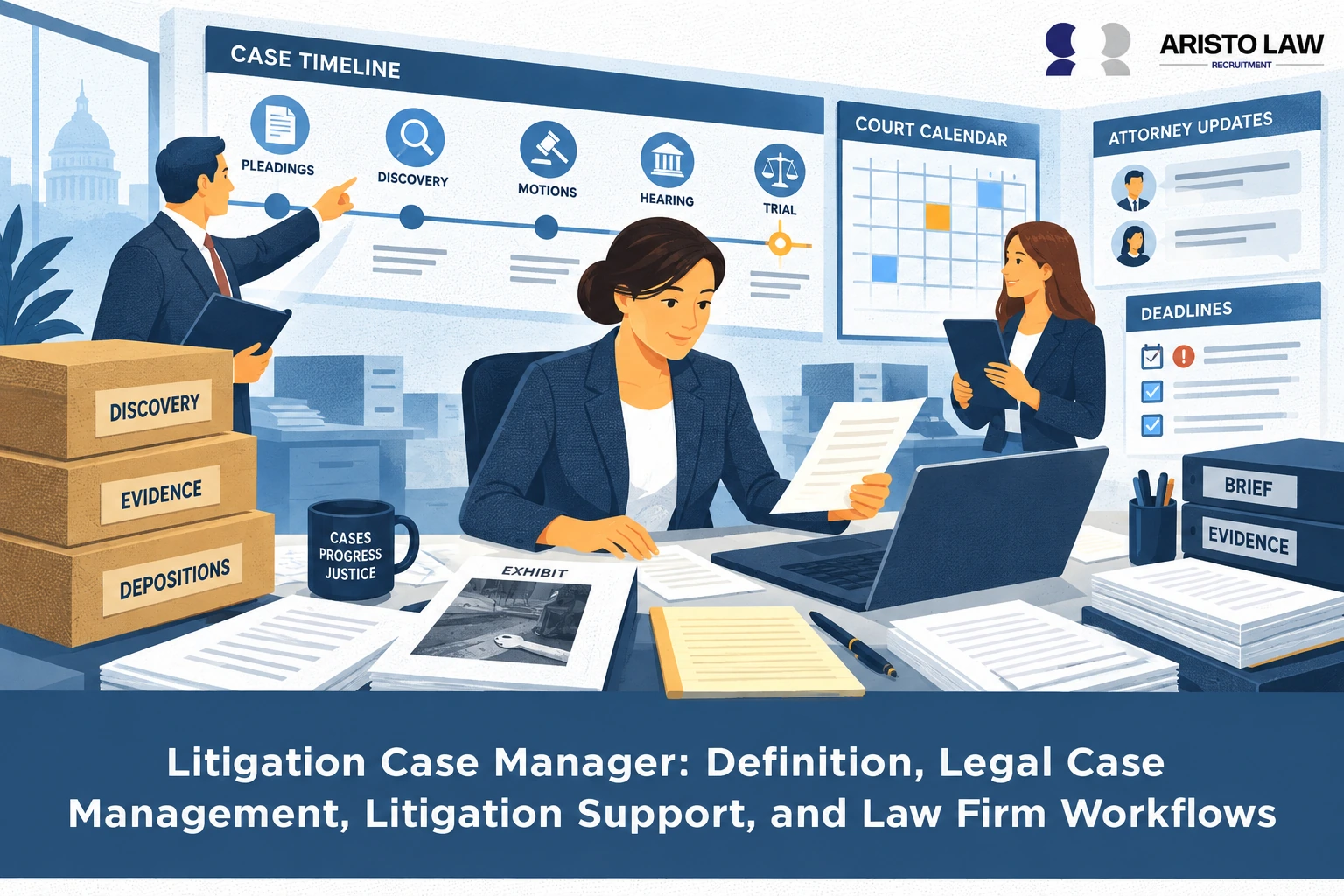
A litigation case manager coordinates legal workflows,
manages case timelines, organizes documentation, and supports attorneys
throughout the litigation process. Litigation case management
functions as a structured system for tracking deadlines, monitoring
tasks, maintaining communication, and organizing case files across
active legal matters. Litigation case managers oversee workflow
coordination, document control, scheduling, discovery tracking, filing
preparation, and attorney support through centralized legal
operations.
Litigation case managers act as case leaders who coordinate internal
teams, vendors, clients, experts, and legal staff to maintain organized
case progression and workflow visibility. Litigation management improves
case outcomes because structured tracking, organized communication, and
deadline oversight reduce missed filings, workflow delays, and
administrative errors during litigation. Core skills include
organization, communication, legal knowledge, multitasking,
problem-solving, and task management across high-volume legal
environments.
Litigation case managers differ from paralegals because litigation
case managers focus on workflow ownership, operational coordination, and
case progression oversight, while paralegals focus more heavily on legal
research, drafting, and procedural support tasks. Role overlap exists
because many litigation case managers work alongside paralegals or
transition into broader legal support functions over time.
Litigation case managers use Clio, Filevine, document systems,
workflow tracking platforms, and communication tools to support
litigation operations and attorney preparation.
The 2024 Report on the State of the US Legal Market by the Thomson
Reuters Institute and Georgetown University Law Center finds that
“Dynamic” law firms outperform competitors by investing in structured
operational systems and technology to handle rising costs. Law firms
improve legal operations, communication consistency, and
case-coordination efficiency when litigation case managers oversee
litigation workflows and support structured case-management
processes.
Aristolaw helps law firms manage litigation case management
by providing outsourced support for case tracking, deadline monitoring,
discovery coordination, trial preparation, client updates, and
litigation workflow organization. Hire a
Litigation Case Manager with Aristolaw. Aristolaw connects law
firms with outsourcing solutions that match trained litigation case
management staff to each case progress task, court deadline
responsibility, discovery workflow, trial support function, and law firm
litigation operations needs.
Who is a litigation case
manager?
A litigation case manager is a legal professional who
oversees the coordination, tracking, and execution of tasks across the
lifecycle of a legal case, particularly during litigation. Law
firms use litigation
case manager services for law firms to improve legal
workflows, deadline control, document organization, and communication
management throughout active litigation matters. Litigation case
managers coordinate scheduling, discovery tracking, filing preparation,
reporting, and attorney support across the case lifecycle to maintain
organized litigation management processes. Coordination responsibilities
remain central to the role because litigation case managers connect
attorneys, clients, experts, courts, and legal staff through structured
workflows that reduce delays and improve operational efficiency.
Deadline monitoring, case tracking, and workflow visibility improve
litigation performance by reducing procedural errors, missed filings,
and communication breakdowns during complex legal proceedings.
What do litigation case
managers do?
Litigation case managers handle case tracking, document
management, deadline monitoring, client communication, attorney
coordination, and reporting to keep legal workflows organized and
efficient. Law firms use litigation
support services for law firms to improve workflow
visibility, reduce procedural delays, and maintain structured litigation
coordination across active cases.

Listed below are the 10 core responsibilities of litigation case
managers.
-
Case tracking for monitoring litigation progress and
workflow status -
Document management for organizing pleadings,
evidence, and legal records -
Deadline monitoring for court filings, hearings, and
procedural timelines -
Client communication for updates, scheduling, and
coordination -
Coordination with attorneys for litigation
preparation and workflow support -
Reporting for case updates, workflow tracking, and
operational visibility -
Discovery coordination for evidence review and
document exchange -
Filing oversight for court submissions and
procedural compliance -
Scheduling management for depositions, meetings, and
hearings -
Workflow management for task assignment and
litigation organization
Listed below are the 10 reasons lawyers need litigation case
managers.
-
Better workflow organization across complex litigation matters
-
Lower risk of missed deadlines and filing errors
-
Faster document retrieval and case tracking visibility
-
Improved communication between legal teams and clients
-
More attorneys focus on litigation strategy and courtroom
preparation -
Stronger coordination of discovery, scheduling, and procedural
tasks -
Better reporting and operational oversight during active cases
-
Higher efficiency across high-volume litigation workflows
-
More consistent management of deadlines, records, and court
requirements -
Reduced administrative workload for attorneys and legal staff
Why
is a litigation case manager essential for legal workflows?
A litigation case manager is essential for legal workflows
because the role ensures that deadlines, documents, and communications
remain aligned across all stages of a case. Litigation case
managers improve efficiency by coordinating scheduling, tracking
procedural tasks, organizing case records, and maintaining workflow
visibility throughout litigation proceedings.
Legal workflows operate with lower risk because litigation case
managers monitor filing deadlines, court requirements, discovery
timelines, and communication updates that reduce missed obligations and
procedural errors. Coordination between attorneys, clients, courts,
experts, vendors, and legal staff becomes more consistent because
litigation case managers centralize workflow management and maintain
organized case progression across active litigation matters.
What
is the difference between a legal case manager and a paralegal?
The difference between a legal case manager and a paralegal
is that a legal case manager oversees workflow coordination and case
progression, while a paralegal focuses more on legal research, drafting,
and procedural legal support. Law firms use differences
between case managers and paralegals discussions to
clarify workflow ownership, legal support responsibilities, and attorney
coordination structures within litigation operations.
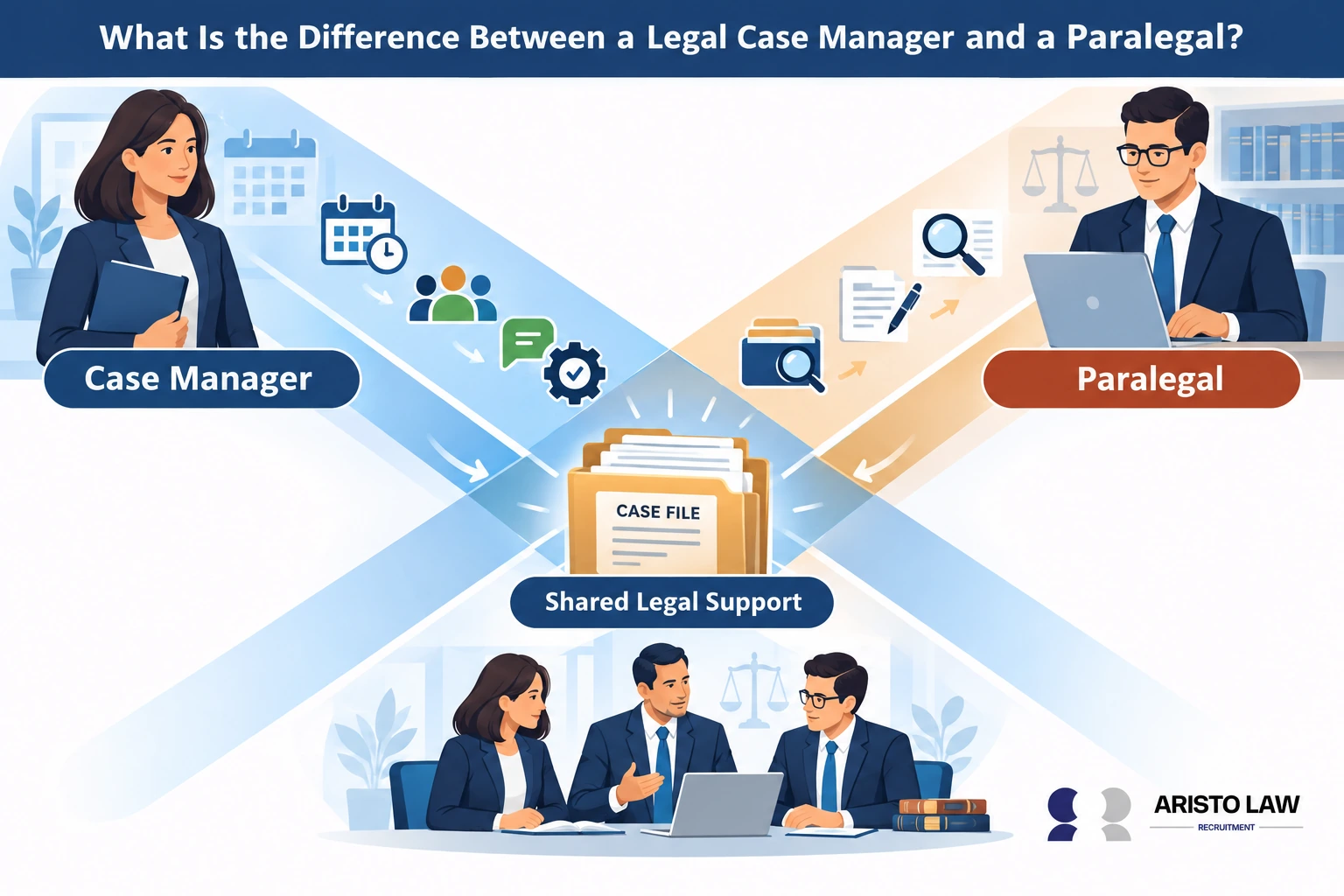
The table below shows the difference between a legal case manager and
a paralegal.
Role |
Responsibilities |
Focus Area |
Interaction with
|
|---|---|---|---|
| Legal Case Manager | Tracks workflows, manages deadlines, coordinates communication, and oversees case progression |
Workflow management and operational coordination | Supports attorneys through scheduling, reporting, and case organization |
| Paralegal | Conducts legal research, drafts documents, prepares filings, and supports legal procedures |
Legal support and document preparation | Assists attorneys with legal research, drafting, and procedural tasks |
What is a case manager in
a law firm?
A case manager in a law firm is responsible for managing
case-related processes, ensuring organization, and supporting attorneys
with administrative and operational tasks throughout legal
matters. Law firm case managers coordinate case management law
workflows through scheduling, document organization, deadline tracking,
communication management, and procedural support across active
files.
Legal support responsibilities include maintaining case records,
coordinating with clients and courts, monitoring workflow progress, and
organizing information needed for attorney preparation and litigation
management. Organization remains central to the role because case
managers maintain structured workflows that improve visibility, reduce
administrative delays, and support efficient handling of legal
operations inside the law firm.
What is litigation case
management?
Litigation case management is the process of coordinating
legal tasks, timelines, and documentation specifically during the
litigation phase of a case. Litigation case management differs
from general case management because litigation workflows involve court
deadlines, discovery procedures, motion practice, deposition scheduling,
trial preparation, filing requirements, and ongoing procedural
coordination across complex legal proceedings.
Litigation phase management requires structured tracking of legal
tasks, communication updates, evidence organization, scheduling
obligations, and procedural milestones throughout active disputes and
court actions. Timelines remain more complex during litigation because
courts impose strict filing dates, hearing schedules, discovery
deadlines, and compliance requirements that require continuous workflow
monitoring and coordination between attorneys, clients, experts, and
legal staff.
What are
the main skills of a litigation case manager?
The main skills of a litigation case manager include
organization, communication, legal knowledge, time management, attention
to detail, and multitasking because litigation workflows require
constant coordination and deadline control.
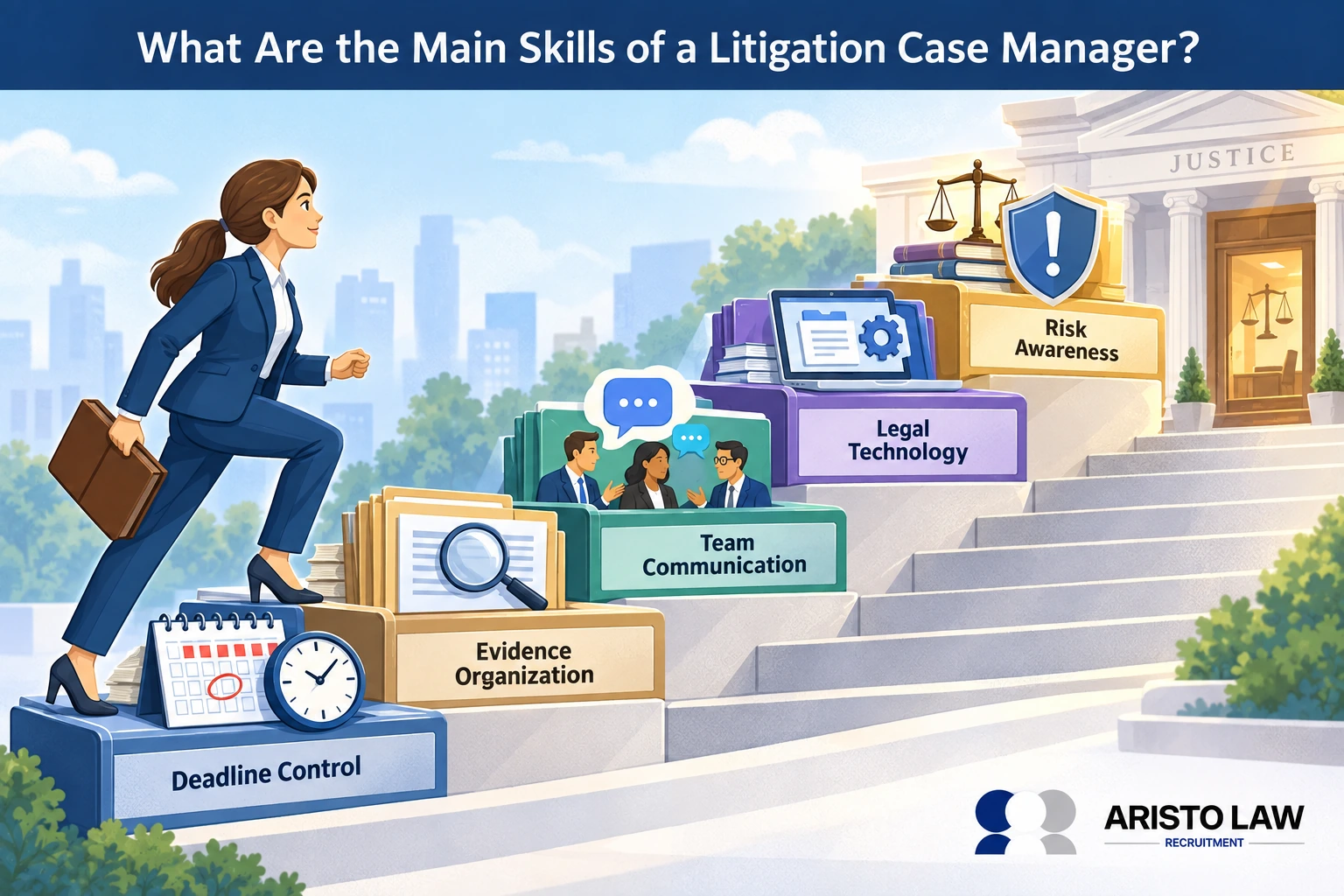
The table below shows the main skills required for a litigation case
manager.
Skill |
Function |
Impact on Workflow |
|---|---|---|
| Organization | Manages files, schedules, and litigation records | Improves workflow structure and case visibility |
| Communication | Coordinates attorneys, clients, courts, and vendors | Improves information flow and task coordination |
| Legal knowledge | Understands litigation procedures and legal terminology | Reduces procedural errors and workflow delays |
| Time management | Tracks deadlines, hearings, and filing schedules | Improves deadline compliance and efficiency |
| Attention to detail | Reviews documents, dates, and procedural requirements | Reduces mistakes and missing information |
| Multitasking | Handles multiple litigation tasks and active cases | Improves operational productivity |
| Task management | Coordinates assignments and workflow progression | Maintains organized litigation processes |
| Problem-solving | Resolves scheduling and workflow issues | Reduces disruptions during litigation |
| Technology proficiency | Uses case management and legal workflow systems | Improves tracking and operational visibility |
| Reporting | Maintains updates and case-status summaries | Improves attorney oversight and coordination |
What is the
job description of a legal case manager?
A legal case manager job description includes overseeing case
files, coordinating schedules, communicating with clients, tracking
deadlines, and supporting litigation processes throughout active legal
matters. Legal case manager responsibilities combine
administrative support and workflow coordination duties that maintain
organized case progression within law firm operations.
Case files remain structured through document management, discovery
tracking, filing oversight, billing coordination, and procedural record
maintenance across the litigation lifecycle. Schedule coordination
responsibilities include managing hearings, meetings, depositions,
consultations, and court deadlines to maintain workflow efficiency and
procedural compliance. Litigation support functions include attorney
coordination, status reporting, communication management, task tracking,
and workflow monitoring that improve organization and reduce operational
delays during legal proceedings.
How does a
litigation case manager support attorneys?
A litigation case manager supports attorneys by handling
administrative workflows, organizing case materials, and ensuring that
all required information is available for legal
decision-making. Litigation case managers improve attorney
support through structured workflow coordination, deadline monitoring,
communication management, and centralized organization of litigation
records across active cases. Case materials remain accessible and
organized because litigation case managers maintain document systems,
procedural updates, scheduling records, and workflow tracking throughout
the litigation process. Workflow efficiency improves when attorneys
receive organized filings, updated timelines, communication summaries,
and coordinated litigation support that reduce administrative
interruptions during case preparation and legal strategy development.
Legal decision-making becomes more efficient because attorneys access
accurate records, procedural information, and litigation updates through
organized case management systems maintained by litigation case
managers.
What is case management
in a court case?
Case management in a court case refers to the structured
oversight of deadlines, filings, and procedural steps required to move a
case through the legal system. Legal case management is the
structured process of organizing, tracking, and managing all aspects of
a legal case from intake through resolution. Case management in court
functions as both a workflow system and a procedural process that
coordinates filings, scheduling, discovery activities, hearings,
communication, and compliance obligations throughout the litigation
lifecycle. Intake stages involve opening case records, collecting
information, and organizing initial documentation.
Discovery stages involve evidence tracking, document exchange,
deposition scheduling, and procedural coordination between parties.
Trial preparation includes managing court filings, exhibits, witness
coordination, hearing schedules, and procedural deadlines. Resolution
stages involve settlement coordination, judgment tracking, closing
documentation, and long-term record maintenance. Court procedures and
compliance requirements remain central because missed filings,
procedural errors, or unmanaged deadlines create delays, sanctions, and
operational risk during litigation proceedings.
What tools
are used in litigation case management?
The tools used in litigation case management include case
management software, document management systems, calendaring platforms,
and communication tools that support organization and workflow
efficiency. Law firms use legal
case management systems, examples, benefits, and
reviews discussions to evaluate workflow visibility,
deadline tracking, document organization, and communication efficiency
across litigation operations.
Listed below are the 10 tools used in litigation case management.
-
Case management software for workflow tracking and
litigation coordination -
Document management systems for storing and
organizing legal records -
Calendaring tools for court dates, hearings, and
deadline management -
Communication platforms for attorney, client, and
team coordination -
Cloud storage systems for secure remote file
access -
Task management tools for workflow assignments and
progress tracking -
Billing software for time tracking and invoicing
support -
E-signature platforms for document execution and
approvals -
Reporting systems for litigation updates and
operational visibility -
Legal research databases for statutes, case law, and
procedural authority
How does
litigation management improve case outcomes?
Litigation management improves case outcomes by ensuring
structured workflows, timely actions, and accurate documentation
throughout the legal process. Law firms apply case management
best practices for improving legal outcomes to strengthen workflow
coordination, reduce procedural delays, and maintain organized
litigation operations across active cases.
Litigation management improves efficiency through deadline tracking,
scheduling coordination, document organization, communication
management, and centralized workflow oversight throughout the litigation
lifecycle. Case outcomes improve because attorneys receive organized
case materials, updated procedural information, and accurate
documentation that strengthen preparation for negotiations, hearings,
discovery, and trial proceedings. Reduced delays occur when litigation
management systems maintain visibility into filings, court requirements,
task completion, and communication updates across legal teams and
involved parties.
What is case management
for law firms?
Case management for law firms is the system used to organize,
monitor, and control all case-related activities to ensure consistency
and efficiency across legal operations. Case management for law
firms functions as a centralized process for tracking deadlines,
managing documents, coordinating communication, monitoring workflow
progress, and organizing client information across multiple practice
areas.
Legal operations use case management systems to maintain visibility
into scheduling, billing, intake, compliance, reporting, task
assignments, and procedural workflows throughout the lifecycle of legal
matters. Case management extends beyond litigation because law firms
apply structured workflow systems to transactional matters, client
intake, contract work, compliance tasks, estate planning, corporate
matters, and administrative legal operations in addition to court-based
proceedings. Organization and monitoring improve efficiency by reducing
administrative delays, improving document access, maintaining deadline
control, and supporting more consistent management of legal workflows
across the firm.
What is
the importance of case management in a law firm?
Case management in law is important because it ensures legal
cases progress efficiently, deadlines are met, and all required
documentation is properly handled throughout the legal process.
Case management law workflows improve efficiency through structured
tracking of filings, schedules, communication, procedural tasks, and
case-related activities across active legal matters. Deadline management
reduces procedural errors, missed court requirements, and workflow
delays that affect litigation progress and legal operations.
Documentation remains organized and accessible because case management
systems coordinate records, evidence, pleadings, correspondence, and
procedural information throughout the case lifecycle. Legal process
oversight improves communication, workflow visibility, and operational
consistency between attorneys, clients, courts, vendors, and legal staff
managing complex legal matters.
How
does a litigation case manager support litigation services?
A litigation case manager supports litigation services by
coordinating case workflows, managing legal documentation, tracking
deadlines, organizing evidence, and facilitating communication between
attorneys, clients, courts, and external parties throughout the
litigation process. Law firms apply personal
injury litigation support services and benefits
strategies to improve litigation workflow organization, procedural
compliance, document visibility, and communication management across
active legal matters. Litigation case managers centralize case
information through legal case management systems that coordinate
intake, scheduling, discovery tracking, evidence organization,
reporting, and workflow monitoring from intake through resolution.
Litigation support services become more efficient because litigation
case managers reduce procedural delays, maintain organized records,
track court deadlines, and support attorneys handling high-volume
litigation operations. E-discovery coordination, document review
workflows, medical record management, damages tracking, and evidence
organization remain central to litigation management because large case
volumes require structured oversight and centralized workflow control.
Litigation technology platforms, case tracking systems, and e-discovery
software improve scalability by maintaining searchable records,
automated deadline monitoring, centralized communication, and workflow
visibility across legal operations.
How
do litigation case managers and paralegals work together in case
management?
Litigation case managers and paralegals work together in case
management by combining operational coordination with substantive legal
support to help attorneys manage litigation efficiently, maintain
procedural compliance, and keep cases organized from intake through
resolution. Law firms use virtual
paralegal assistant support for litigation case
management workflows to strengthen coordination between
legal operations management and substantive litigation support across
high-volume case environments.
Litigation case managers oversee scheduling, workflow tracking,
communication coordination, deadline monitoring, and operational
logistics, while paralegals focus on legal research, drafting, discovery
preparation, exhibit organization, and attorney support tasks throughout
litigation proceedings. Both roles collaborate through centralized
litigation case management systems, e-discovery platforms, document
repositories, and legal workflow software that improve organization,
communication visibility, and procedural tracking across active matters.
Litigation operations become more scalable because attorneys rely on
litigation case managers to reduce administrative burden and on
paralegals to support legal preparation, documentation review, and
procedural execution during complex litigation workflows.
A study by Opus 2, from the operational analysis “Build an unbeatable
litigation support software stack,” in 2024, confirms that centralized
litigation support frameworks improve procedural compliance,
collaboration visibility, and case continuity across high-volume legal
environments. Citing empirical litigation research by Ari Kaplan
Advisors, the study reports that 73% of litigation leaders find
purpose-built, centralized tech stacks provide a distinct competitive
advantage over fragmented data workflows. By integrating document
management, trial preparation, and data collaboration into an
interconnected workspace, these systems remove administrative
bottlenecks and enable litigation-focused teams to securely navigate
complex case files.
The table shows how litigation case managers and paralegals work
together in case management.
Litigation Case
|
Paralegal
|
Shared Litigation
|
|---|---|---|
| Coordinates case logistics, workflow tracking, and operational oversight |
Provides legal research, drafting, and discovery preparation | Improves litigation workflow organization |
| Monitors deadlines, hearings, filings, and court schedules | Assists with pleadings, motions, exhibits, and evidence preparation |
Reduces procedural delays and missed deadlines |
| Centralizes communication between attorneys, clients, experts, and courts |
Supports trial preparation and legal documentation review | Improves communication and case continuity |
| Tracks workflow progress and operational compliance | Organizes legal materials and discovery records | Strengthens document accessibility and organization |
| Oversees scheduling and litigation coordination systems | Supports attorney preparation and procedural tasks | Improves attorney productivity and scalability |
| Uses litigation software and case tracking platforms | Uses e-discovery systems and legal research tools | Maintains centralized litigation management |
Can a case manager work
as a paralegal?
Yes, a case manager can work as a paralegal, but the roles
differ in focus because paralegals usually handle more legal research,
drafting, and procedural legal support tasks. A case manager
paralegal role overlap exists in areas such as document organization,
case tracking, client communication, scheduling coordination, discovery
support, and workflow management across legal operations. Litigation
case managers focus more heavily on operational coordination, deadline
monitoring, workflow oversight, and communication management throughout
the case lifecycle.
Paralegals focus more directly on substantive legal support such as
drafting pleadings, conducting legal research, preparing exhibits,
organizing evidence, and supporting attorneys with procedural legal
work. Law firms use professionals with combined case management and
paralegal experience because both legal roles support organized
litigation workflows, procedural compliance, and attorney productivity
across active matters.
Build a legal support team that moves work forward.
Tell us what is slowing your practice down. We will help map the role, workflow, and support structure that fits.