
How virtual assistants help law firms manage time management

Practical guidance for building efficient, accountable legal support operations.
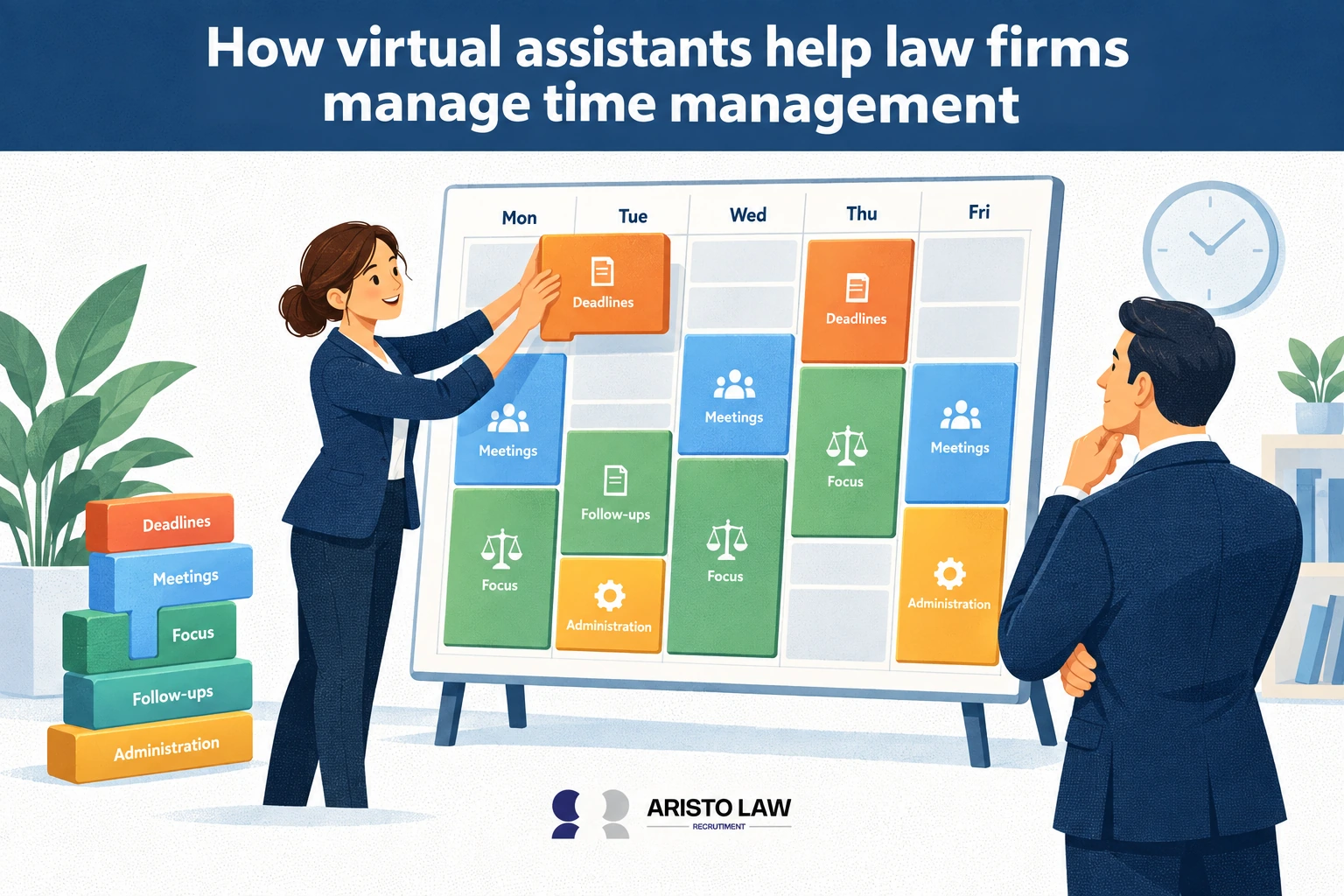
Virtual assistants help law firms manage time more
effectively by handling administrative, scheduling, communication, and
workflow responsibilities that consume attorney attention and reduce
billable capacity. Virtual legal assistants improve
productivity by blocking interruptions, filtering communications,
batching administrative work, coordinating calendars, automating
updates, and managing non-billable tasks. Legal VAs also support
real-time activity logging, template formatting, file organization,
inbox management, meeting preparation, client scheduling, deadline
tracking, and document administration.
A study by Clio in its Legal Trends Report found that lawyers
spend approximately 31-37% of the workday on billable work, indicating
significant opportunities for productivity improvement through
delegation. Reducing context switching and administrative
interruptions improves focus, efficiency, and task completion rates.
Virtual assistants improve deep-work capacity by shielding lawyers
from routine interruptions and handling operational workflows that do
not require legal judgment, directly neutralizing the severe cognitive
friction and macro-level efficiency drains identified in behavioral
research. Academic studies by Dr. Erik M. Altmann, J. Gregory
Trafton, and David Z. Hambrick titled “Momentary Interruptions Can
Derail the Train of Thought” in the year 2013 evaluated 300 participants
executing a rigorous, multi-step sequence to see how minor distractions
break memory place-keeping. The trial randomly triggered brief,
unexpected tasks before letting participants resume their primary
assignment. The researchers concluded that a brief interruption
averaging just 2.8 seconds, the time it takes to glance at a ringing
smartphone, doubles a worker’s sequence errors upon resumption, while a
4.4-second distraction triples the error rate. By intercepting
these brief but highly destructive operational triggers, virtual
assistants actively prevent the baseline error rates and systemic time
losses that otherwise derail a lawyer’s complex, rule-based legal
analysis
Virtual legal assistants are available through legal staffing
providers, including Aristolaw, which provides trained remote legal
support staff to law firms. Virtual legal assistants are also available
through other outsourced legal support companies and remote staffing
firms. Law firms should evaluate legal knowledge, communication
skills, confidentiality practices, software proficiency, reliability,
and experience with practice-management platforms.
Aristo Law supports law firms with virtual assistants focused on time
management, workflow optimization, scheduling coordination, document
administration, intake support, and operational efficiency. Virtual
assistants provide strategic value by increasing lawyer focus, improving
productivity, reducing administrative burdens, and supporting long-term
law firm profitability.
Aristolaw helps law firms manage time with virtual assistants
by providing outsourced support for scheduling, calendar coordination,
deadline tracking, task follow-up, client communication, document
coordination, and remote legal operations. Hire a
Virtual Legal Assistant with Aristolaw. Aristolaw connects law
firms with outsourcing solutions that match trained virtual assistant
staff to each time-management task, attorney schedule workflow, deadline
responsibility, client follow-up function, and law firm operations
needs.
Listed below are 15 ways virtual assistants help law firms manage
time more efficiently.
-
1. Block deep-work interruptions: Virtual assistants
shield attorneys from non-urgent requests to preserve uninterrupted
focus time. -
2. Filter incoming communications: Virtual
assistants screen emails and messages so lawyers address only
high-priority matters. -
3. Batch administrative tasks: Virtual assistants
group repetitive administrative work to reduce fragmented workflows. -
4. Coordinate attorney calendars: Virtual assistants
organize schedules and appointments to minimize conflicts and missed
commitments. -
5. Automate status updates: Virtual assistants
deliver routine case updates without requiring lawyer intervention. -
6. Delegate non-billable entry: Virtual assistants
handle administrative tasks that do not generate billable hours. -
7. Minimize task-switching triggers: Virtual
assistants reduce unnecessary context switching by managing
interruptions and routine requests. -
8. Log real-time activities: Virtual assistants
maintain activity records that improve task tracking and
accountability. -
9. Format structural templates: Virtual assistants
prepare standardized documents to reduce drafting time and maintain
consistency. -
10. Systematize file storage: Virtual assistants
organize digital records to improve document retrieval and case
management. -
11. Protect energy cycles: Virtual assistants
schedule tasks around productivity patterns to support sustained
performance. -
12. Track statutory deadlines: Virtual assistants
monitor filing dates and court deadlines to reduce compliance risks. -
13. Sort inbox distractions: Virtual assistants
prioritize communications and remove low-value distractions from
attorney inboxes. -
14. Prepare meeting agendas: Virtual assistants
compile discussion points and materials to improve meeting
efficiency. -
15. Streamline client scheduling: Virtual assistants
manage consultations and appointments to reduce scheduling delays and
administrative burden.
1. Block Deep-Work
Interruptions
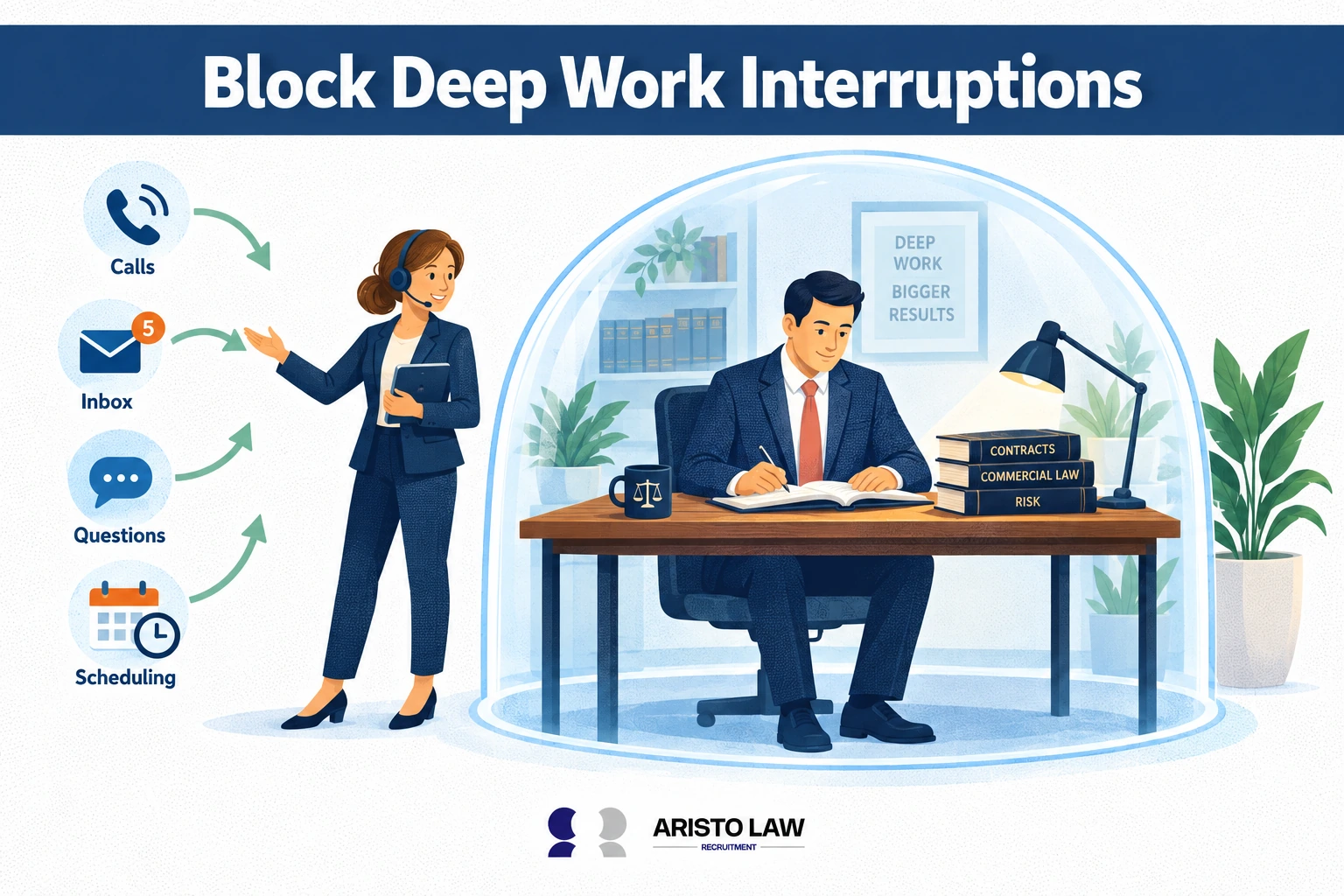
Blocking deep-work interruptions for lawyers involves
protecting uninterrupted periods of focused legal work. Legal
VAs reduce unnecessary calls, messages, meeting requests, and
administrative disruptions that fragment a lawyer’s attention.
A study by Dr. Gloria Mark, Victor M. Gonzalez, and Justin
Harris titled “No Task Left Behind? Examining the Nature of Fragmented
Work” in the year 2005 tracked 24 information workers using real-world
shadow-observations to analyze how disruptions break cognitive momentum.
The researchers tracked the duration of every activity, the frequency of
interruptions, and how long workers spent navigating an average of 2.3
intervening sub-tasks before resuming their core projects. They
concluded that 57% of workplace tasks are explicitly interrupted,
forcing employees to switch tasks every 3 minutes, and requiring an
average of 23 minutes and 15 seconds to return to the original
project.
Another research by Dr. Glenn Wilson titled “Infomania Study”
in the year 2005 monitored 80 participants in controlled corporate
environments to measure how the compulsion to check digital stimuli
harms problem-solving. By tracking cognitive performance during a steady
stream of incoming messages, the study concluded that constant digital
multitasking disrupts the prefrontal cortex, reducing efficiency to a
level comparable to losing a full night of sleep and causing a temporary
10-point fall in IQ.
Protected focus time improves lawyer productivity, legal analysis,
and billable output. Firms benefit from establishing communication
protocols and designated focus periods.
2. Filter Incoming
Communications
Filtering incoming communications involves reviewing,
prioritizing, and routing messages before they reach lawyers.
Legal VAs manage emails, calls, and inquiries based on urgency and
relevance.
Effective communication filtering reduces distractions and improves
response management. Prioritization systems improve workflow efficiency
and time utilization.
3. Batch Administrative Tasks
Batching administrative tasks involves grouping similar
activities into dedicated processing periods. Legal virtual
assistants consolidate data entry, scheduling, reporting, document
administration, and follow-up activities into structured workflows.
Task batching reduces inefficiencies and improves operational
consistency. Scheduled administrative blocks maximize productivity.
4. Coordinate Attorney
Calendars
Coordinating attorney calendars involves managing
appointments, consultations, hearings, and meetings. Legal VAs
support calendar management by organizing schedules and preventing
conflicts.
Virtual assistants help law firms manage time by coordinating
attorney calendars, scheduling meetings, and preventing appointment
conflicts across legal workflows. Law firms use virtual
legal secretary services to centralize calendar
administration and maintain accurate lawyer availability for client
matters and court deadlines.
Efficient calendar coordination reduces scheduling inefficiencies and
improves time allocation. Shared scheduling systems improve firm
performance.
5. Automate Status Updates
Automating status updates involves using systems and
workflows to automatically communicate case progress and operational
information. Legal virtual assistants support automated
notifications, reminders, and workflow communications.
Automation reduces repetitive communication tasks and improves
responsiveness. Standardized update processes improve efficiency.
6. Delegate Non-Billable Entry
Delegating non-billable entry involves transferring
administrative activities that do not directly generate
revenue. Legal virtual assistants handle data entry, scheduling
administration, reporting tasks, and documentation updates.

Delegation increases billable hours and improves resource
utilization. Firms should identify repetitive activities suitable for
delegation.
7. Minimize Task-Switching
Triggers
Minimizing task-switching triggers involves reducing
interruptions that force attorneys to move repeatedly between unrelated
activities. Legal VAs manage communications, information
requests, and administrative inquiries that disrupt concentration.
Reduced context switching improves focus and productivity. Structured
communication processes improve operational flow.
8. Log Real-Time Activities
Logging real-time activities involves recording work
performed throughout the day as tasks occur. Legal virtual
assistants support activity tracking, time records, task monitoring, and
workflow reporting.
Accurate activity records improve billing accuracy and operational
visibility. Real-time tracking systems improve efficiency.
9. Format Structural Templates
Formatting structural templates involves preparing
standardized documents for recurring legal and administrative
activities. Legal virtual assistants manage templates for
correspondence, intake forms, reports, and legal documentation.
Standardization improves consistency and reduces preparation time.
Template libraries improve productivity.
10. Systematize File Storage
Systematizing file storage involves organizing documents
within structured filing and retrieval systems. Legal VAs
support legal operations through document classification, indexing, and
storage management.
Virtual assistants help law firms manage time by organizing file
structures, standardizing document naming, and reducing time spent
locating records. Law firms use legal
data entry and records management services to maintain
searchable case files and accelerate document retrieval across daily
workflows.
Organized records improve accessibility and reduce time spent
locating information. Standard file-management procedures improve
efficiency.
11. Protect Energy Cycles
Protecting energy cycles involves preserving periods of peak
mental performance for high-value legal work. Legal VAs manage
routine tasks and communications that consume attention and energy.
Better energy management improves focus and decision-making quality.
Firms benefit from aligning administrative support with lawyer’s work
patterns.
12. Track Statutory Deadlines
Tracking statutory deadlines involves monitoring filing
dates, court requirements, and procedural obligations. Legal
virtual assistants support deadline tracking through calendar monitoring
and workflow reminders.
Virtual assistants help law firms manage time by monitoring filing
calendars, updating deadline trackers, and escalating approaching
statutory dates. Law firms use litigation
case manager services to coordinate deadline workflows,
maintain procedural compliance, and reduce missed filing risks.
Effective deadline management reduces compliance risks and missed
obligations. Centralized deadline systems improve reliability.
13. Sort Inbox Distractions
Sorting inbox distractions involves organizing and filtering
non-essential messages and communications. Legal VAs prioritize
urgent correspondence and manage lower-priority communications.
Organized inboxes improve responsiveness and reduce interruptions.
Defined communication procedures improve productivity.
14. Prepare Meeting Agendas
Preparing meeting agendas involves organizing discussion
topics, supporting documents, and meeting objectives. Legal
virtual assistants coordinate materials and scheduling requirements
before meetings occur.
Well-prepared meetings improve time utilization and decision-making
efficiency. Standard agenda formats improve consistency.
15. Streamline Client
Scheduling
Streamlining client scheduling involves improving the process
of arranging consultations, meetings, and follow-up
appointments. Legal VAs manage appointment requests,
confirmations, reminders, and calendar updates.
Efficient client scheduling improves responsiveness and reduces
scheduling conflicts. Automated scheduling tools and standardized
appointment procedures maximize attorney focus, billable time, and
overall firm performance.
Where can law
firms hire virtual legal assistants?
Law firms can hire virtual legal assistants through legal
outsourcing companies, specialized virtual assistant providers,
freelance marketplaces, and legal staffing agencies.
Law firms use virtual legal assistants to manage calendaring,
document preparation, client communication, and administrative workflows
that consume billable time. Law firms seeking to improve time management
efficiency can hire
virtual legal assistants to delegate routine tasks and
allow attorneys to focus on legal strategy and client
representation.
Listed below are the 10 places where law firms can hire virtual legal
assistants.
-
Specialized legal staffing companies: Provide
virtual legal assistants, intake specialists, legal secretaries, and
remote paralegals with legal-industry experience. These providers offer
screening, onboarding, training, and performance-management support. -
Legal process outsourcing (LPO) companies: Deliver
remote legal support services such as document management, legal
research, intake administration, billing support, and case-management
assistance through managed staffing models. -
Virtual legal assistant agencies focused on law
firms: Supply professionals trained in law firm workflows,
practice-management software, client communication, scheduling, and
legal administration. -
Remote legal staffing firms: Recruit talent from
regions such as the Philippines, South Africa, India, and other global
markets to provide cost-effective and scalable legal support. -
Freelance marketplaces: Platforms featuring legal
assistants and paralegal professionals who provide project-based or
ongoing support for administrative and legal workflows. -
Legal industry job boards: Include remote legal
support positions that allow firms to recruit virtual legal assistants
and remote paralegals directly. -
Professional paralegal and legal assistant
associations: Offer member directories that help firms identify
professionals with legal training and practice-area experience. -
Legal recruiting and staffing agencies: Provide
candidate sourcing, screening, and placement services for virtual legal
support roles. -
Managed legal services providers: Deliver integrated
support teams that handle intake, legal administration, workflow
management, and operational processes through structured service
models. -
Referral networks and legal industry communities:
Connect firms with vetted virtual professionals recommended by lawyers,
legal administrators, and industry peers.
Legal outsourcing and remote staffing have grown as law firms seek to
reduce overhead costs, improve scalability, and access specialized legal
support without hiring additional in-house employees. These hiring
channels provide different levels of legal expertise, screening
processes, management support, and staffing flexibility, allowing firms
to select solutions that align with practice-area requirements,
operational complexity, and long-term growth objectives.
How
much does it cost to hire a virtual legal assistant for time-management
support?
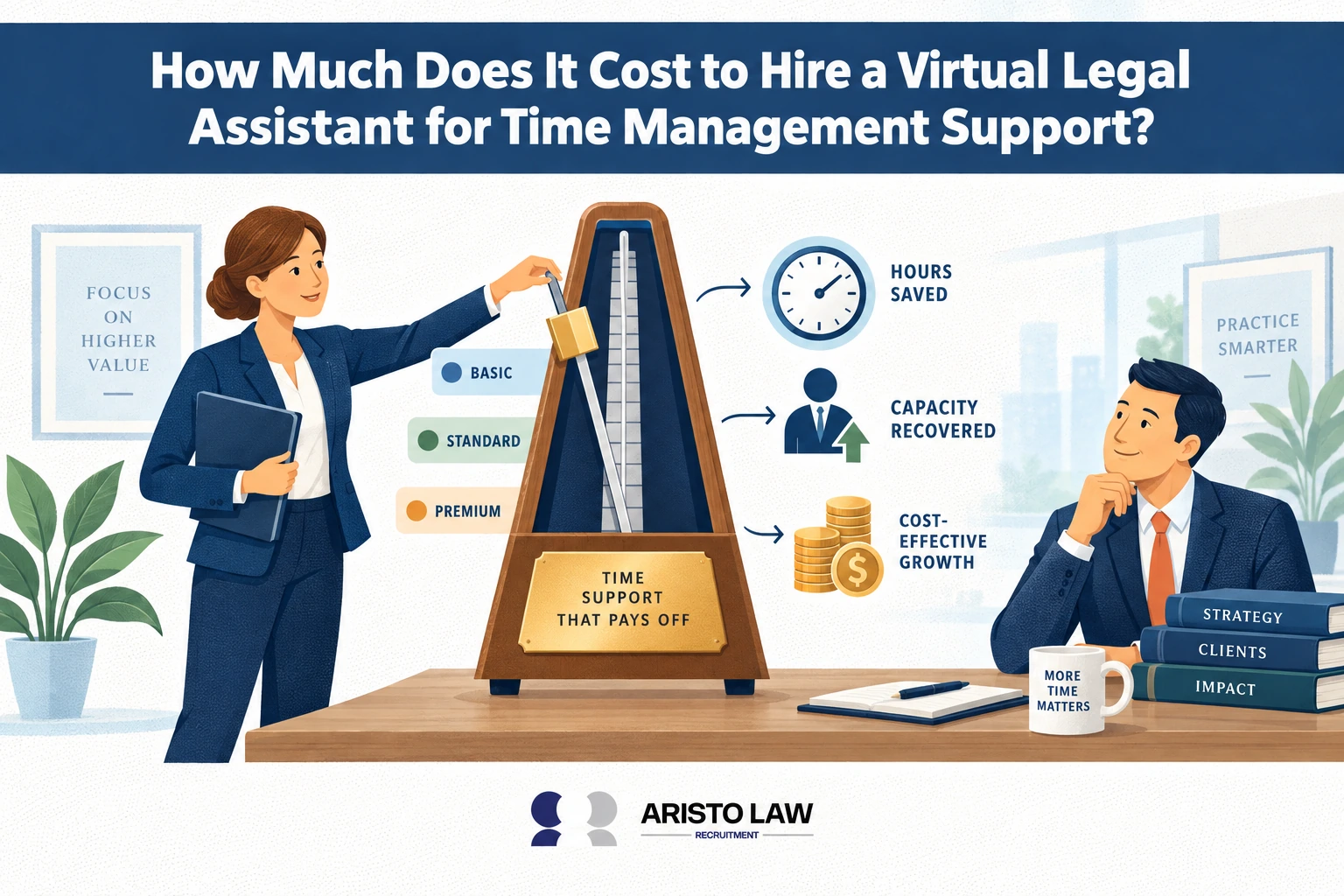
Hiring a virtual legal assistant for time-management support
costs between $15 and $60 per hour or approximately $1,000 to $4,000 per
month for dedicated part-time or full-time support, depending on
experience, legal specialization, and location. The cost of
hiring a virtual legal assistant for time-management support varies
based on experience, legal specialization, location, and whether the
assistant works on an hourly, part-time, or full-time basis.
Common pricing structures include hourly arrangements, monthly
retainers, and dedicated full-time staffing models. Entry-level virtual
legal assistants charge approximately USD $8–$20 per hour, experienced
legal assistants range from USD $20–$50 per hour, and specialized
paralegal-level support exceeds USD $50 per hour depending on expertise
and jurisdiction. Monthly costs commonly range from approximately USD
$500–$5,000+ per month based on workload, hours required, service
complexity, and staffing model.
Industry reports by legal outsourcing providers and remote
staffing firms in 2025 and 2026 state that virtual legal assistants can
cost approximately 30–70% less than comparable in-house legal support
staff because firms avoid expenses associated with office space,
equipment, employee benefits, payroll taxes, recruitment, and
onboarding. Pricing also varies according to practice area
requirements, task complexity, software proficiency, bilingual
capabilities, legal knowledge, and the geographic location of the
virtual professional.
Offshore staffing markets such as the Philippines, South Africa, and
India generally provide lower-cost support options, while U.S.-based
virtual legal assistants command higher rates because of local market
conditions and jurisdictional familiarity. Law firms frequently evaluate
these costs against productivity gains, attorney time recovery, and
improvements in workflow efficiency rather than hourly pricing
alone.
How
does Aristo Law help law firms improve time management with virtual
legal assistants?
Aristo Law helps law firms improve time management by
providing virtual legal assistants who handle routine administrative and
operational tasks, allowing attorneys to focus on higher-value legal
work. Aristo Law’s virtual legal assistants support calendar
coordination, appointment scheduling, email management, client intake,
document organization, deadline tracking, case file maintenance,
follow-up communications, CRM updates, and other legal-administration
activities that consume attorney time.
Aristo Law helps law firms manage time by assigning administrative,
intake, and document-handling workflows to virtual legal assistants,
reducing lawyer involvement in repetitive tasks. Aristo Law delivers virtual
legal assistant support for law firm time management by
reallocating operational work and increasing lawyer availability for
client representation and billable activities.
Delegating repetitive and non-billable responsibilities reduces
interruptions, minimizes task-switching, centralizes administrative
processes, and improves workflow efficiency across the firm.
Research by Scott E. Sampson and Rebecca Pires dos Santos in
2023 states that professional service organizations, including legal
services, achieve significant productivity gains and cost reductions by
offloading administrative tasks through automation, outsourcing, and
task delegation, with minimal impact on service quality.
By maintaining organized workflows, monitoring deadlines, managing
client communications, and ensuring administrative responsibilities are
completed consistently, Aristo Law’s virtual legal assistants help
lawyers spend more time on case strategy, client representation,
business development, and other revenue-generating activities.
Build a legal support team that moves work forward.
Tell us what is slowing your practice down. We will help map the role, workflow, and support structure that fits.