
15 Benefits of a Remote Social Media Assistant for Law Firms

Practical guidance for building efficient, accountable legal support operations.
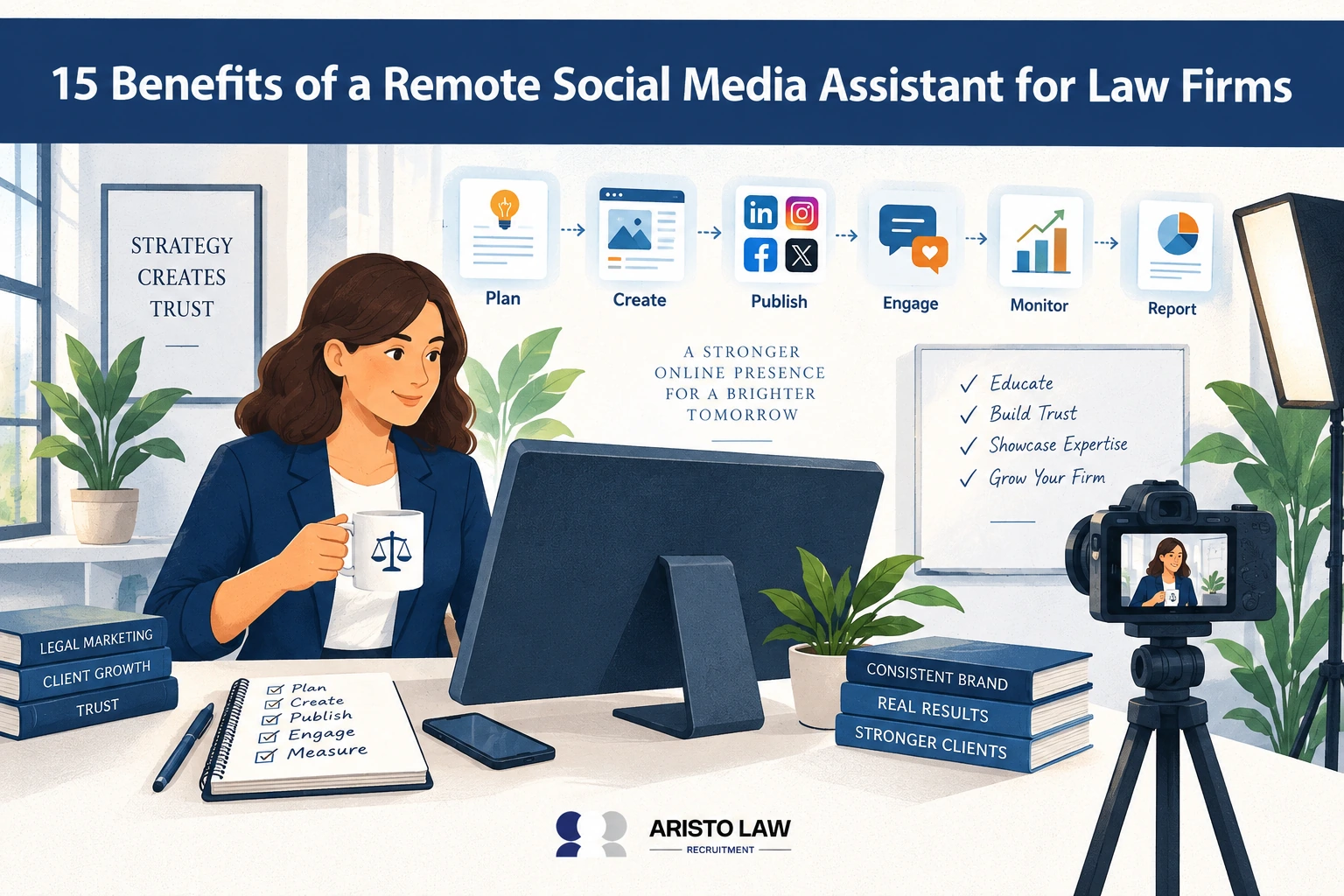
A remote social media assistant is a virtual professional who
manages a law firm’s social media marketing, audience engagement,
content publishing, and online reputation across digital
platforms. Law firms increasingly use remote social media
assistants to maintain consistent posting schedules, increase brand
visibility, engage local audiences, and support client-acquisition
initiatives without expanding internal marketing teams.
Research by Gopala Kn and Kavya Bm in 2025 states that
organizations that strategically invest in social media experience
measurable increases in sales leads, client acquisition rates, and
overall marketing return on investment (ROI), demonstrating the
value of having a dedicated social media professional managing online
activities.
Remote social media assistants manage content creation, post
scheduling, community engagement, inbox management, analytics reporting,
review monitoring, hashtag research, campaign coordination, and lead
routing. They also repurpose educational legal content into social
posts, monitor reviews and comments, coordinate video publishing,
highlight practice expertise, and promote case successes while adhering
to attorney advertising rules and professional-responsibility
requirements.
The benefits include improved marketing consistency, stronger online
visibility, increased audience engagement, enhanced online reputation,
reduced marketing overhead, scalable support capacity, improved local
brand awareness, greater referral opportunities, faster response times
to inquiries, stronger content distribution, better analytics reporting,
improved lead qualification, increased educational outreach, expanded
professional networks, and more efficient marketing operations.
Educational legal content plays a particularly important role in
trust building and client acquisition. Industry research consistently
shows that content marketing generates more leads than traditional
outbound methods while costing less per lead. Social media also provides
access to billions of users globally, creating opportunities for law
firms to educate prospective clients and strengthen brand authority
within their communities.
Remote social media assistants commonly use scheduling platforms,
analytics dashboards, design applications, reputation-monitoring
systems, and social-listening tools to manage publishing workflows and
track performance metrics. Pricing models include hourly arrangements,
monthly retainers, project-based engagements, and dedicated staffing
models. Costs vary according to content volume, platform complexity,
engagement responsibilities, reporting requirements, and the level of
legal-industry specialization required.
Law firms hire remote social media assistants through agencies,
freelance marketplaces, specialized legal virtual assistant providers,
and dedicated staffing organizations. Best practices include
implementing approval workflows, maintaining advertising-compliance
standards, monitoring communications, protecting confidentiality, and
establishing clear content guidelines.
Aristo Law provides trained remote social media assistants who
support compliant content creation, publishing, audience engagement,
analytics reporting, review management, and marketing operations for
growing law firms. By combining legal-industry awareness with scalable
virtual staffing, remote social media assistants help law firms
strengthen online reputation, improve lead generation, maintain
marketing consistency, and support cost-effective business growth.
Aristolaw helps law firms manage remote social media
assistant support by providing outsourced help for content planning,
post scheduling, brand messaging, campaign coordination, engagement
tracking, and law firm visibility workflows. Book
a Virtual Legal Marketing Assistant staffing consultation with
Aristolaw. Aristolaw connects law firms with outsourcing
solutions that match trained remote social media support staff to each
content task, platform workflow, campaign coordination duty, audience
engagement function, and law firm marketing operations
need.
Listed below are 15 benefits of a remote social media assistant for
law firms.
-
1. Maintain consistent posting: Regular content
scheduling keeps law firm social media profiles active and improves
audience expectations. -
2. Amplify brand visibility: Frequent and targeted
publishing increases awareness of the law firm’s services and
professional identity. -
3. Engage local audiences: Community-focused
interactions help law firms connect with prospective clients in their
geographic market. -
4. Repurpose educational content: Existing blogs,
videos, and legal updates are transformed into multiple social media
assets. -
5. Monitor platform reviews: Review monitoring helps
law firms identify client feedback and respond to reputation concerns
promptly. -
6. Filter consultation inquiries: Social media
inquiries are screened and directed to appropriate intake or
consultation channels. -
7. Schedule community updates: Timely announcements
keep audiences informed about events, achievements, and firm
developments. -
8. Track algorithm metrics: Performance monitoring
identifies which content generates greater reach, engagement, and
audience growth. -
9. Enforce brand compliance: Consistent messaging
and visual standards maintain the law firm’s professional identity
across platforms. -
10. Coordinate video production: Video planning and
publishing support educational campaigns and strengthen audience
engagement. -
11. Promote case successes: Approved results and
firm accomplishments help demonstrate experience and reinforce
credibility. -
12. Mitigate negative feedback: Early identification
and management of adverse comments help reduce reputational risks. -
13. Highlight practice expertise: Educational and
practice-specific content positions the law firm as a knowledgeable
authority in its areas of practice. -
14. Expand professional networks: Strategic
engagement with organizations and professionals increases industry
visibility and referral opportunities. -
15. Reduce marketing overhead: Outsourcing social
media operations lowers administrative workload and reduces in-house
marketing demands.
1. Maintain Consistent Posting
A remote social media assistant helps law firms establish
predictable content schedules that strengthen brand recognition and
audience engagement. Maintaining consistent posting is the
process of publishing social media content on a regular schedule across
platforms such as Facebook, LinkedIn, Instagram, and X.
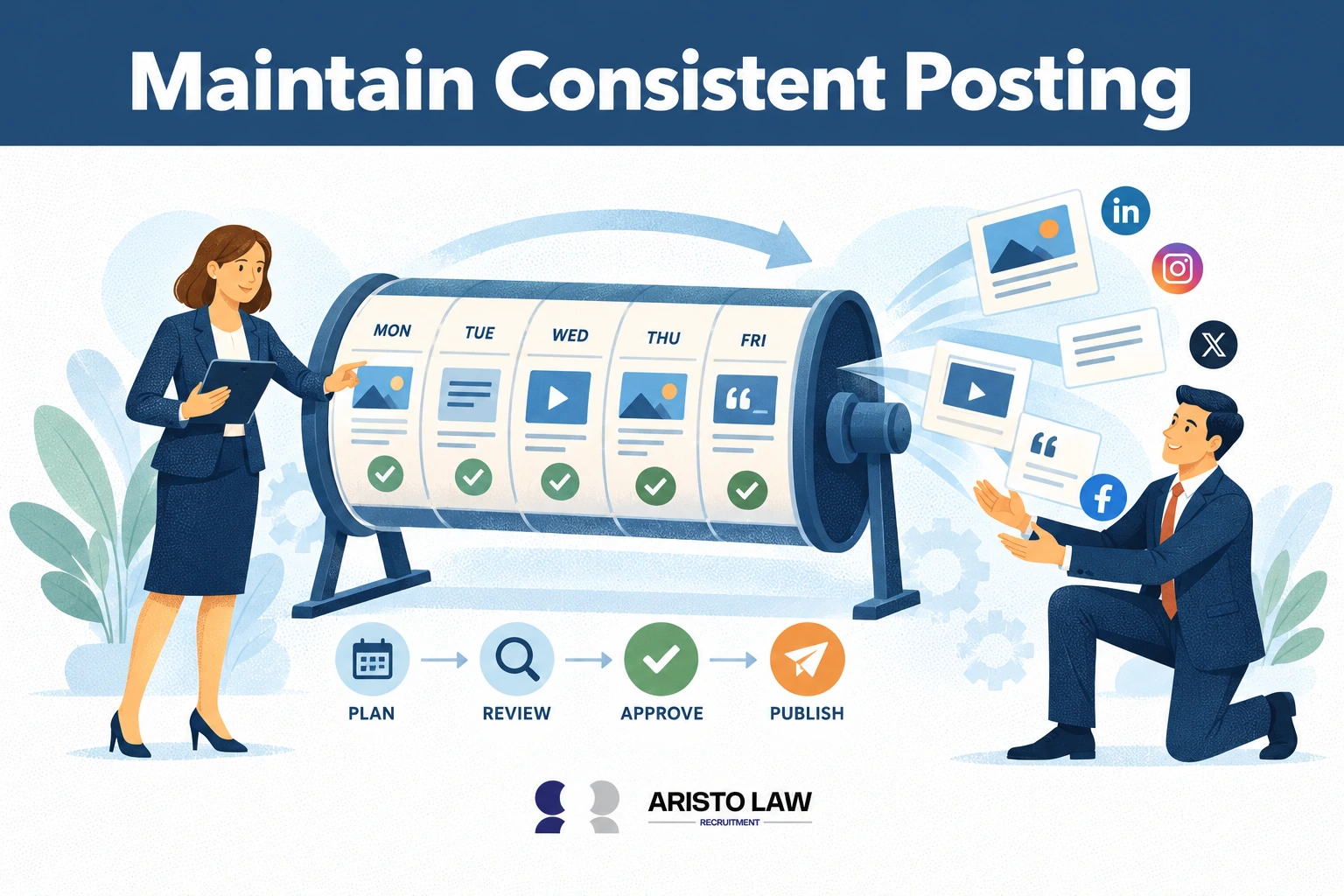
Consistent publishing keeps a firm’s services visible to prospective
clients, increases opportunities for educational outreach, and supports
long-term digital marketing performance. Social media scheduling tools,
editorial calendars, and content libraries help maintain posting
frequency and reduce workflow disruptions. Law firms must develop
content calendars, repurpose existing materials, and review performance
metrics regularly to sustain audience interest and improve brand
awareness.
2. Amplify Brand Visibility
A remote social media assistant helps expand reach through
strategic content distribution, optimized publishing schedules, and
consistent branding practices. Amplifying brand visibility
involves increasing the exposure of a law firm’s services, attorneys,
and educational content across social media channels.
Greater visibility increases audience familiarity, strengthens market
positioning, and creates more opportunities for client acquisition and
referral development. Content planning, visual branding, platform
optimization, and audience analysis all contribute to stronger brand
recognition. Firms must maintain consistent messaging, publish valuable
content frequently, and monitor engagement metrics to maximize digital
visibility.
3. Engage Local Audiences
A remote social media assistant supports community engagement
through local content, event promotion, location-based updates, and
responsive communication practices. Engaging local audiences
involves creating content and interactions that connect law firms with
people and businesses within their target geographic markets.
Strong local engagement improves brand familiarity, trust
development, and referral opportunities. Audience interaction, comment
management, community participation, and local content distribution
contribute to stronger relationships with prospective clients. Firms
must publish locally relevant information and respond promptly to
audience interactions to strengthen community presence.
4. Repurpose Educational
Content
A remote social media assistant converts existing legal
information into graphics, short videos, social posts, and educational
campaigns that extend content lifespan and increase audience
reach. Repurposing educational content involves transforming
articles, legal guides, FAQs, videos, and presentations into multiple
social media formats.
Repurposing improves marketing efficiency, strengthens authority, and
increases opportunities for audience engagement. Content libraries,
scheduling systems, and performance analytics help maximize distribution
effectiveness. Law firms must regularly convert existing educational
materials into social content to improve visibility and reinforce
practice expertise.
5. Monitor Platform Reviews
A remote social media assistant helps law firms oversee
reviews, identify trends, address concerns, and maintain reputation
standards. Monitoring platform reviews is the process of
tracking, evaluating, and responding to client feedback across online
platforms.
The benefits of a remote social media assistant for law firms include
proactive monitoring of platform reviews and better visibility into
client satisfaction trends. These benefits become more actionable when
supported by law
firm reputation management assistant services that
organize review monitoring and reputation workflows.
Review management directly affects public perception, trust
development, and client-acquisition performance. Reputation monitoring
systems and response protocols improve communication consistency and
operational responsiveness. Firms must monitor reviews routinely and
implement procedures for responding professionally to both positive and
negative feedback.
6. Filter Consultation
Inquiries
A remote social media assistant helps identify qualified
leads, prioritize urgent matters, and route inquiries to appropriate
intake processes. Filtering consultation inquiries involves
reviewing and organizing social media messages, comments, and inquiries
from prospective clients.
Benefits of a remote social media assistant for law firms include
qualifying leads from social channels, routing prospects to the correct
workflow, and reducing administrative screening time. Remote social
media assistants also complement virtual
intake specialist services by identifying
consultation-ready inquiries and directing high-intent contacts into the
intake process.
Effective inquiry management improves response times and increases
opportunities for consultation scheduling and lead conversion.
Communication workflows and CRM integration support organized lead
handling. Firms must establish intake procedures and response guidelines
to improve efficiency and client experience.
7. Schedule Community Updates
A remote social media assistant coordinates content calendars
and ensures updates are delivered consistently across
platforms. Scheduling community updates involves publishing
information about local events, office announcements, educational
initiatives, and community involvement activities.
Community-focused content strengthens local brand recognition and
demonstrates organizational engagement beyond legal services. Scheduling
tools and editorial workflows improve consistency and reduce
administrative burdens. Law firms must maintain community-oriented
content schedules that reinforce visibility and trust.
8. Track Algorithm Metrics
A remote social media assistant analyzes algorithm metrics to
understand how platform algorithms distribute content and influence
visibility. Tracking algorithm metrics involves monitoring
content performance indicators such as impressions, engagement, reach,
click-through activity, and audience interactions.
Performance analysis helps optimize content strategies and improve
resource allocation. Analytics dashboards and reporting systems support
evidence-based decision-making. Firms must review performance data
regularly and adjust content strategies based on audience behavior and
engagement trends.
9. Enforce Brand Compliance
A remote social media assistant ensures content aligns with
brand guidelines and professional responsibilities. Enforcing
brand compliance involves maintaining consistent messaging, visual
identity, communication standards, and advertising practices across
social platforms.
Brand consistency improves recognition, credibility, and audience
trust. Approval workflows, content standards, and review procedures
support compliance and quality control. Law firms must establish clear
branding guidelines and implement review processes to maintain
consistency across all communications.
10. Coordinate Video
Production
A remote social media assistant supports scheduling, content
preparation, publishing workflows, and performance monitoring for video
initiatives. Coordinating video production involves organizing
the planning, creation, editing, and distribution of video content
across social platforms.
Video content generates strong audience engagement and supports
educational marketing strategies. Production calendars and publishing
systems improve operational efficiency and content consistency. Firms
must develop video strategies that educate audiences and highlight legal
expertise.
11. Promote Case Successes
A remote social media assistant helps present accomplishments
in ways that reinforce credibility and professional reputation.
Promoting case successes involves sharing achievements, milestones,
recognitions, and outcomes while maintaining confidentiality and
complying with applicable advertising rules.
Carefully managed success stories strengthen trust and demonstrate
practice capabilities. Content governance and approval procedures help
ensure compliance. Firms must focus on educational and informative
messaging when discussing professional achievements.
12. Mitigate Negative Feedback
A remote social media assistant helps protect reputation by
identifying concerns early and coordinating professional
responses. Mitigating negative feedback involves monitoring
criticism, complaints, and unfavorable comments while implementing
appropriate response strategies.
Effective reputation management reduces the potential impact of
negative interactions and strengthens public trust. Monitoring systems
and communication procedures improve responsiveness and consistency. Law
firms must establish clear protocols for addressing concerns
professionally and promptly.
13. Highlight Practice
Expertise
A remote social media assistant helps distribute content that
reinforces authority and supports thought leadership
initiatives. Highlighting practice expertise involves
showcasing attorney knowledge, legal insights, industry experience, and
educational content that demonstrates professional capabilities.

A remote social media assistant for law firms strengthens
practice-area visibility by aligning content topics, case-related
insights, and audience interests with the firm’s legal services.
Consistent messaging supports lawyer
branding strategies and best practices by connecting
legal expertise, brand positioning, and client-facing communication
across social platforms.
Expertise-focused content improves credibility, audience trust, and
brand differentiation. Content planning and analytics help identify
topics that generate strong engagement. Firms must publish educational
materials regularly to reinforce their position within target practice
areas.
14. Expand Professional
Networks
A remote social media assistant supports
relationship-building activities by coordinating interactions, promoting
professional content, and maintaining communication
consistency. Expanding professional networks involves
developing relationships with attorneys, businesses, community
organizations, referral partners, and industry professionals through
social media engagement.
Strong networks increase referral opportunities and enhance market
visibility. Engagement strategies and relationship-management processes
improve long-term business development outcomes. Law firms must
participate actively in professional conversations and maintain
consistent networking activities.
15. Reduce Marketing Overhead
A remote social media assistant provides cost-effective
support for content management, engagement activities, analytics
reporting, and reputation monitoring. Reducing marketing
overhead involves improving operational efficiency by outsourcing social
media management responsibilities to remote professionals rather than
expanding internal marketing teams. Outsourcing reduces staffing
expenses, improves scalability, and allows attorneys to focus on client
service and legal work.
Structured workflows, technology integration, and specialized support
contribute to better resource utilization. Law firms must define
objectives clearly, establish performance metrics, and use remote
support strategically to improve long-term marketing performance and
growth.
Which
social media tasks can a remote assistant manage?
A remote social media assistant can manage content creation,
post scheduling, audience engagement, social media monitoring, and
performance reporting.
Listed below are the 15 social media tasks a remote assistant can
manage.
-
Content Calendar Management: Content calendar
management involves planning and organizing social media content weeks
or months in advance. A remote assistant helps law firms maintain a
steady publishing schedule, align content with marketing objectives,
coordinate campaigns, and ensure educational legal content is
distributed consistently. Structured planning improves brand visibility
and reduces gaps in communication. -
Post Scheduling: Post scheduling involves publishing
content at predetermined times across social media platforms. A remote
assistant uses scheduling tools to maintain consistent activity, improve
audience reach, and support ongoing engagement without requiring daily
manual posting by attorneys or internal staff. -
Blog Promotion: Blog promotion includes distributing
legal articles, guides, FAQs, and educational resources across social
channels. Promoting blog content increases website traffic, improves
audience awareness, supports content marketing initiatives, and expands
the reach of legal insights that help establish authority. -
Graphics Coordination: Graphics coordination
involves sourcing, organizing, editing, or collaborating on visual
assets used in social media campaigns. Consistent visual content
improves audience engagement, strengthens brand identity, and makes
legal information easier to consume across digital platforms. -
Profile Optimization: Profile optimization includes
updating firm descriptions, service information, contact details,
branding elements, and links across social media accounts. Optimized
profiles improve credibility, increase discoverability, and help
prospective clients understand the firm’s services quickly. -
Content Repurposing: Content repurposing transforms
existing legal content into multiple social media formats such as
graphics, short-form posts, videos, infographics, and educational
snippets. This process extends the value of existing content and
improves marketing efficiency without requiring constant creation of
entirely new materials. -
Audience Engagement Monitoring: Audience engagement
monitoring involves tracking comments, mentions, direct messages,
shares, and audience interactions. A remote assistant helps ensure
timely responses, identifies engagement opportunities, and strengthens
relationships with prospective clients, referral sources, and community
members. -
Analytics Reporting: Analytics reporting includes
monitoring performance metrics such as reach, impressions, engagement
rates, follower growth, website clicks, and content effectiveness.
Regular reporting helps law firms understand what content performs best
and supports data-driven marketing decisions. -
Review Monitoring: Review monitoring involves
tracking client feedback and ratings across social platforms and online
directories. A remote assistant helps identify reputation-management
opportunities, monitor public sentiment, and support consistent
responses that strengthen trust and credibility. -
Campaign Administration: Campaign administration
includes coordinating promotional initiatives, educational campaigns,
awareness programs, event marketing, and content distribution schedules.
Organized campaign management improves execution, maintains consistency,
and supports broader marketing goals. -
Inbox and Message Management: Inbox management
involves monitoring direct messages, consultation inquiries, referral
requests, and general communications received through social media
channels. Prompt handling of inquiries improves responsiveness and
increases opportunities for lead capture and client engagement. -
Hashtag and Keyword Research: Hashtag and keyword
research helps identify topics and search terms that improve content
visibility and audience reach. Strategic use of relevant keywords
supports discoverability and helps law firms connect with audiences
seeking legal information. -
Community Management: Community management focuses
on maintaining positive interactions within social media communities,
groups, and professional networks. Consistent participation helps
strengthen relationships, improve visibility, and increase audience
loyalty over time. -
Video Content Coordination: Video coordination
includes organizing publication schedules, managing descriptions,
monitoring performance, and supporting distribution strategies for video
content. Video content generates strong engagement and helps communicate
legal information more effectively. -
Social Media Audit and Maintenance: Social media
audits involve reviewing account performance, content quality, branding
consistency, and audience growth trends. Ongoing maintenance ensures
profiles remain current, professional, and aligned with the firm’s
marketing objectives.
Consistent management of these social media functions supports
long-term brand growth, strengthens audience development, improves
online visibility, increases engagement opportunities, enhances
reputation management, and contributes to more effective law firm social
media marketing and legal marketing performance.
How
does social media content help law firms attract clients?
Social media content helps law firms attract clients by
educating prospective clients, demonstrating expertise, and increasing
trust before consultations occur. Many individuals begin
researching legal issues online long before contacting an attorney,
making social media an important channel for answering questions,
providing guidance, and building credibility.
Research by the American Bar Association in 2024 states that
80% of responding law firms use social media as a marketing
tool, reflecting the legal industry’s recognition of social
media as an effective channel for attracting and engaging prospective
clients. Educational content helps reduce uncertainty by explaining
legal processes, clarifying common misconceptions, and addressing
concerns that prospective clients frequently encounter when evaluating
legal representation.
Law firms publish legal updates, frequently asked questions,
informational videos, practice-area explanations, and case-related
educational materials that help audiences understand relevant legal
topics. This content positions attorneys as knowledgeable professionals
and provides value before any direct client interaction takes place.
Firm culture content, attorney introductions, community involvement
updates, professional achievements, and educational event participation
further strengthen credibility by helping audiences understand the
people and values behind the practice.
Informational videos and short educational posts are particularly
effective because they simplify complex legal concepts into accessible
formats. Consistent publication of useful content increases audience
engagement and encourages prospective clients to follow the firm’s
updates over time. Repeated exposure creates familiarity, and
familiarity influences future hiring decisions when legal needs
arise.
Social media content also supports law firm lead generation by
increasing visibility, expanding audience reach, and creating
opportunities for direct engagement. Prospective clients who repeatedly
encounter helpful legal information are more likely to remember the firm
when seeking representation. Strong content strategies contribute to
greater brand recognition, improved trust, stronger audience
relationships, and more effective legal marketing outcomes. By
consistently educating audiences and demonstrating professional
expertise, law firms create a foundation for long-term client
acquisition and sustainable growth.
Where
can law firms hire a remote social media assistant?
Law firms can hire a remote social media assistant through
specialized legal outsourcing companies including Aristolaw, as well as
other virtual assistant providers, freelance platforms, and legal
staffing agencies. Industry hiring trends show that remote
staffing and outsourcing have become increasingly common as
organizations seek specialized marketing talent, operational
flexibility, and lower overhead costs without expanding internal
teams.
Listed below are the 11 places where law firms can hire a remote
social media assistant.
-
Legal Outsourcing and Legal Support Organizations:
Organizations such as Aristo Law provide remote social media assistants
and legal marketing support professionals who understand law firm
operations, content compliance considerations, audience engagement,
reporting requirements, and law firm growth objectives. These providers
help firms access trained professionals while reducing recruitment and
management burdens. -
Specialized Legal Staffing Companies Offering Remote
Marketing Professionals: Legal staffing providers recruit
professionals who understand law firm marketing, attorney advertising
considerations, legal content creation, client communication standards,
and law firm growth strategies. These providers offer pre-screened
candidates with experience supporting legal practices. -
Virtual Assistant Agencies with Dedicated Social Media
Assistants: Virtual assistant agencies provide remote
professionals who manage content scheduling, audience engagement,
analytics reporting, inbox monitoring, and social media administration.
Agencies handle recruiting, training, supervision, and performance
management. -
Digital Marketing Agencies Serving Law Firms: Legal
marketing agencies offer social media management as part of broader
marketing services that include content marketing, search engine
optimization, paid advertising, reputation management, and
lead-generation support. These agencies possess strong legal-industry
experience. -
Remote Staffing Firms Recruiting Global Marketing
Talent: Remote staffing firms recruit marketing professionals
from regions such as South Africa, Philippines, and various countries
throughout Latin America. These firms help law practices access skilled
talent pools while maintaining cost efficiency and staffing
flexibility. -
Freelance Marketplaces: Platforms such as Upwork and
Fiverr provide access to experienced social media managers, content
creators, graphic designers, and digital marketing specialists.
Freelance marketplaces offer flexibility and a wide range of skill
levels and pricing options. -
Professional Recruiting Agencies Specializing in Digital
Marketing Roles: Marketing recruiters help law firms identify
qualified social media professionals through structured screening
processes, skills assessments, and candidate evaluations. This approach
is used for long-term or dedicated remote support positions. -
Remote Job Platforms Focused on Virtual Marketing
Professionals: Remote-focused job boards provide access to
candidates seeking full-time or part-time remote marketing positions.
These platforms help firms recruit professionals with experience in
virtual collaboration and digital marketing operations. -
Social Media Management Agencies Providing Outsourced
Support: Social media agencies manage content creation,
publishing, audience engagement, campaign administration, reputation
monitoring, and analytics reporting. These agencies offer scalable
support without requiring direct employee management. -
Professional Networking Platforms with Marketing Talent
Directories: Platforms such as LinkedIn allow law firms to
identify marketing professionals based on experience, skills, industry
background, certifications, and recommendations. Networking platforms
also support direct outreach and relationship-building. -
Employee Referral Networks and Legal Industry
Communities: Referrals from attorneys, legal administrators,
marketing professionals, and legal-industry communities provide access
to vetted candidates with proven experience supporting law firms.
Referral-based hiring frequently improves candidate quality and cultural
alignment.
Law firms evaluate hiring sources based on candidate quality,
legal-industry expertise, screening standards, scalability, management
support, communication capabilities, and long-term operational fit. The
most effective hiring channel depends on the firm’s budget, workload
requirements, marketing goals, and desired level of ongoing support.
How
much does a remote social media assistant cost for law firms?
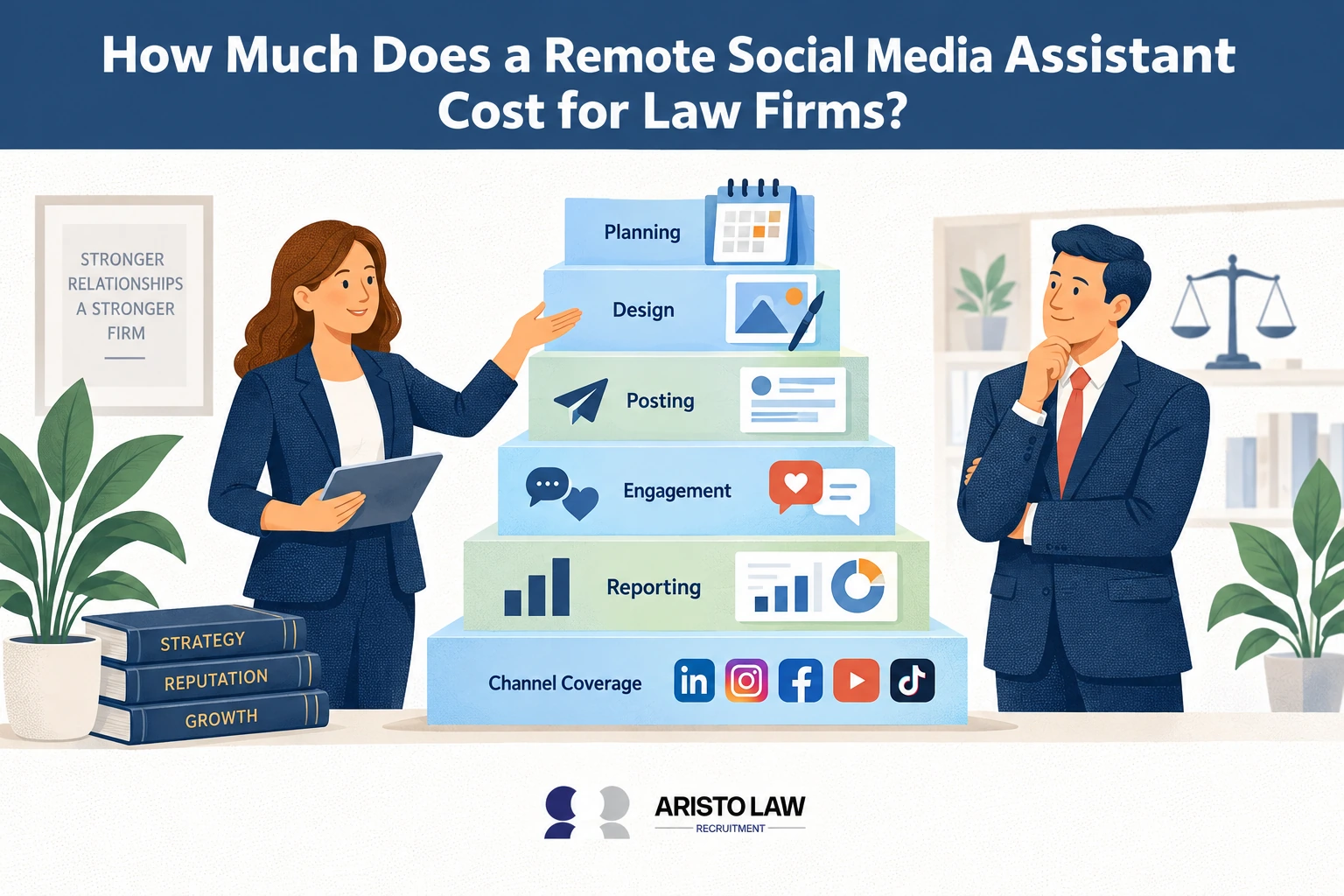
A remote social media assistant for law firms costs between
$15 and $50 per hour, or approximately $1,000 to $4,000 per month,
depending on experience, service scope, and engagement model.
The cost of hiring a remote social media assistant for a law firm
depends on the assistant’s experience, location, scope of services, and
whether they work on an hourly, part-time, or full-time basis. Most law
firms engage remote social media professionals through hourly billing,
monthly retainers, project-based arrangements, or dedicated full-time
support models.
Entry-level remote social media assistants commonly charge
approximately $8–$20 per hour for content scheduling, post publishing,
basic engagement monitoring, inbox management, and routine
administrative tasks. Experienced social media managers generally charge
$20–$50 per hour and provide content planning, audience engagement,
analytics reporting, campaign coordination, reputation monitoring, and
multi-platform management. Highly specialized professionals responsible
for legal marketing strategy, paid advertising campaigns, brand
management, advanced analytics, and comprehensive content programs
charge $50–$100+ per hour.
Monthly retainer arrangements are also common. Law firms frequently
pay between $500 and $5,000+ per month, depending on the number of hours
included, posting frequency, content creation requirements,
graphic-design support, video coordination, community management, review
monitoring, reporting complexity, and strategic marketing
responsibilities. Dedicated full-time remote marketing professionals
generally command higher monthly investments but provide consistent
support and deeper integration into firm operations.
Research by Global Workplace Analytics (Kate Lister and Tom
Harnish) and multiple outsourcing industry reports indicates that
organizations reduce staffing costs by approximately 30–70% and in some
remote outsourcing arrangements, even more when hiring remote
professionals instead of equivalent in-house employees. These
savings result from reduced office-space requirements, lower
employee-benefit expenses, decreased payroll-tax obligations, reduced
equipment costs, and fewer recruitment and onboarding expenditures.
Listed below are 12 factors that influence pricing of remote social
media assistants.
-
Experience level and marketing expertise
-
Legal marketing knowledge and compliance familiarity
-
Content creation and copywriting responsibilities
-
Graphic-design and video-production coordination
-
Number of social media platforms managed
-
Posting frequency and content volume
-
Audience engagement and community management requirements
-
Analytics reporting and performance tracking responsibilities
-
Paid advertising campaign support
-
Online reputation-management responsibilities
-
Geographic location of the remote professional
-
Dedicated versus shared support arrangements
Law firms must evaluate cost based on overall value rather than
hourly rates alone. A remote social media assistant who improves content
consistency, strengthens audience engagement, increases brand
visibility, supports lead generation, and maintains compliance with
legal marketing requirements delivers greater marketing value than the
direct service cost. The strongest return on investment generally comes
from aligning social media support with broader client-acquisition,
reputation-management, and law firm growth objectives.
How
does Aristo Law help law firms with remote social media assistant
services?
Aristo Law helps law firms strengthen their marketing
operations by providing remote social media assistants who manage
content, engagement, and administrative marketing tasks while allowing
attorneys to focus on practicing law. Aristo Law’s remote
social media assistants support law firms through content creation
coordination, social media scheduling, editorial calendar management,
audience engagement monitoring, digital asset organization, campaign
administration, and performance reporting. These professionals help
maintain a consistent presence across platforms such as LinkedIn,
Facebook, Instagram, and X by scheduling posts, coordinating educational
legal content, monitoring audience interactions, and supporting
brand-consistency initiatives.
Aristo Law helps law firms improve content scheduling, audience
engagement, and brand visibility by providing trained professionals for
remote
social media assistant support for law firms. Aristo
Law connects law firms with outsourced social media assistants who
manage platform activity, support marketing workflows, and contribute to
the operational benefits of a remote social media assistant for law
firms.
Aristo Law’s remote social media assistants also coordinate with
attorneys and law firm leadership to support marketing campaigns,
community outreach efforts, thought-leadership initiatives, and
content-promotion strategies. They assist with organizing graphics,
videos, blog content, and marketing assets while tracking basic
performance indicators such as engagement levels, audience growth,
reach, impressions, and content effectiveness. Appropriate inquiries are
identified and routed through established intake or communication
workflows to improve responsiveness and client engagement.
Research by V. Unnava, S. Aravindakshan, and A. Raman in 2021
reported that social media engagement contributes positively to brand
awareness, purchase intent, customer behavior, and business
performance. Consistent publishing helps law firms remain
visible to prospective clients, referral sources, and professional
networks while reinforcing credibility and practice-area expertise over
time.
Aristo Law’s remote staffing model helps attorneys save substantial
time by delegating repetitive marketing responsibilities such as content
scheduling, engagement monitoring, social media administration,
reporting, and workflow coordination. This allows attorneys to dedicate
more attention to client service, legal strategy, business development,
and revenue-generating activities. Because support is delivered
remotely, law firms gain flexible and scalable marketing resources
without incurring the additional overhead associated with recruiting,
training, compensating, and managing in-house marketing employees.
Through remote social media assistants, Aristo Law helps law firms
improve marketing consistency, strengthen online visibility, increase
audience engagement, support lead-generation efforts, and build a
scalable digital marketing infrastructure that supports long-term law
firm growth and operational efficiency.
Build a legal support team that moves work forward.
Tell us what is slowing your practice down. We will help map the role, workflow, and support structure that fits.