
Law Firm Reputation Management: Reviews, Tools, and Best Practices

Practical guidance for building efficient, accountable legal support operations.

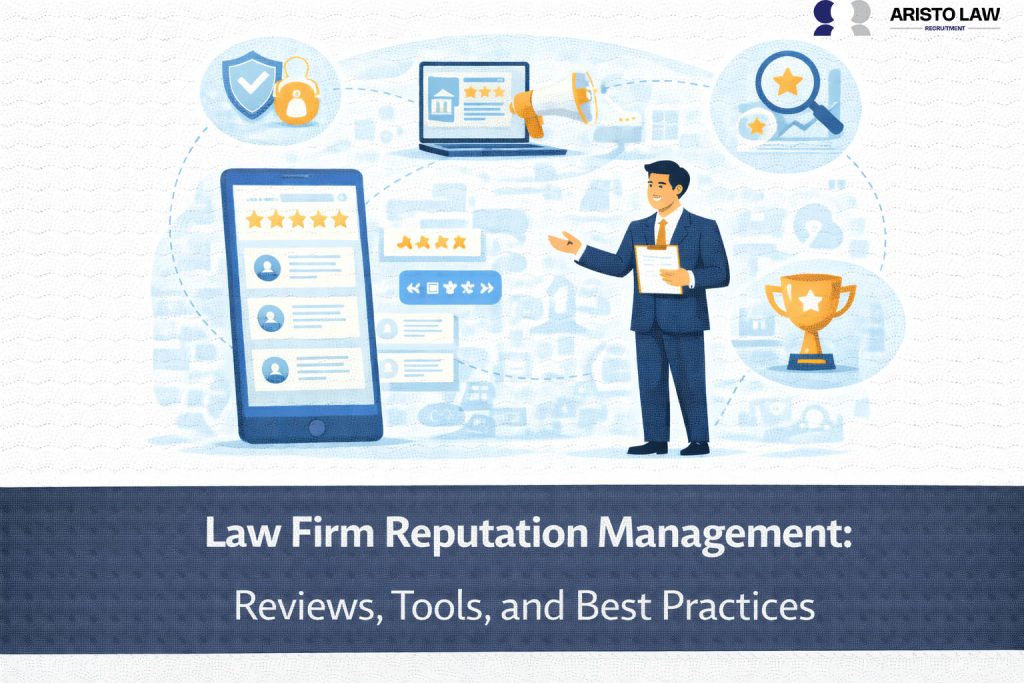
Law firm reputation management refers to the strategic monitoring, protection, and enhancement of an attorney’s online presence and client perception. Law firm reputation management directly influences trust, referral behavior, and lead conversion because prospective clients review ratings and testimonials before contacting a firm. Law firm reputation management addresses risks such as negative reviews, fake reviews, ethical violations, inconsistent branding, and unresolved complaints.
Online reviews affect lawyer credibility and local search visibility through rating averages and review frequency on platforms such as Google Business Profile, Avvo, Yelp, and legal directories. A study by BrightLocal titled “Local Consumer Review Survey 2023” found that 87% of consumers read online reviews for local businesses and 49% trust reviews as much as personal recommendations. Law firm reputation management systems implement structured review requests through automated follow-ups and compliant messaging.
Best practices include timely responses to reviews, confidentiality protection, and a neutral tone in dispute resolution. Fake reviews require documented reporting through platform dispute channels. Vendor selection criteria include monitoring coverage, response workflow support, compliance awareness, and reporting transparency. Law firm reputation management strengthens competitive positioning and supports sustainable client acquisition.
Aristolaw helps law firms strengthen online reputation management. Improve law firm credibility and client trust with reputation management support from Aristolaw today. Aristolaw helps outsourced client communication, review monitoring, intake coordination, and legal marketing support services.
What is law firm reputation management?
Law firm reputation management is the process of monitoring, influencing, and protecting a law firm’s reputation across online reviews, search results, listings, and public feedback channels. Law firm reputation management addresses online reviews on platforms such as Google Business Profile and legal directories, where client ratings shape brand perception. Law firm reputation management evaluates search results, directory listings, and social proof signals that influence legal marketing performance.
Law firm reputation management functions as an ongoing system that tracks sentiment, responds to feedback, and maintains consistent brand positioning rather than a one-time corrective action.
Why is online reputation crucial for law firms?
Online reputation is crucial for law firms because online credibility directly influences client trust, conversion impact, and intake decisions. Online reputation affects whether prospective clients contact a firm after reviewing ratings, testimonials, and public feedback. Online reputation influences local search visibility because review volume and rating quality contribute to local ranking signals.
A study by Magnani titled “The Economic and Behavioral Consequences of Online User Reviews” in 2020 found that consumers trust and rely on online reviews more than website recommendations and expert opinions, and that reviews influence purchasing behavior. Online reputation, therefore, shapes trust formation and increases the likelihood of consultation booking when review sentiment remains positive.
What are the most common reputation risks for law firms?
The most common reputation risks for law firms include negative reviews, inconsistent branding, unmonitored listings, and confidentiality missteps. Reputation risks affect online visibility and client trust when not actively managed.
Listed below are 10 main reputation risks and how to prevent them.
- Negative reviews without response: Prevent through timely, professional replies that acknowledge concerns.
- Fake or competitor-generated reviews: Prevent through monitoring alerts and formal platform dispute submissions.
- Unmonitored directory listings: Prevent through regular audits of Google Business Profile and legal directories.
- Inconsistent branding across platforms: Prevent through standardized firm descriptions and imagery.
- Confidentiality breaches in responses: Prevent through strict response policies that avoid case details.
- Slow complaint resolution: Prevent through defined intake escalation workflows.
- Staff communication failures: Prevent through training and documented client communication standards.
- Outdated attorney profiles: Prevent through scheduled profile reviews and credential updates.
- Low review volume: Prevent through structured review request systems.
- Negative press or online mentions: Prevent through monitoring tools and proactive public communication.
How do online reviews impact lawyer reputations?
Online reviews impact lawyer reputations by shaping lawyer credibility, influencing client decision-making, and affecting local search visibility. Online reviews on Google and other top lawyer review platforms influence first impressions because prospects evaluate ratings, review volume, and written feedback before contacting a firm. Online reviews create psychological validation through social proof, which affects perceived competence and trustworthiness.
Online reviews contribute to local SEO signals such as review frequency, rating consistency, and engagement, which influence placement in local search results. Online reviews, therefore, affect consultation decisions without guaranteeing conversion outcomes.
What’s the best time to ask a client for a review?
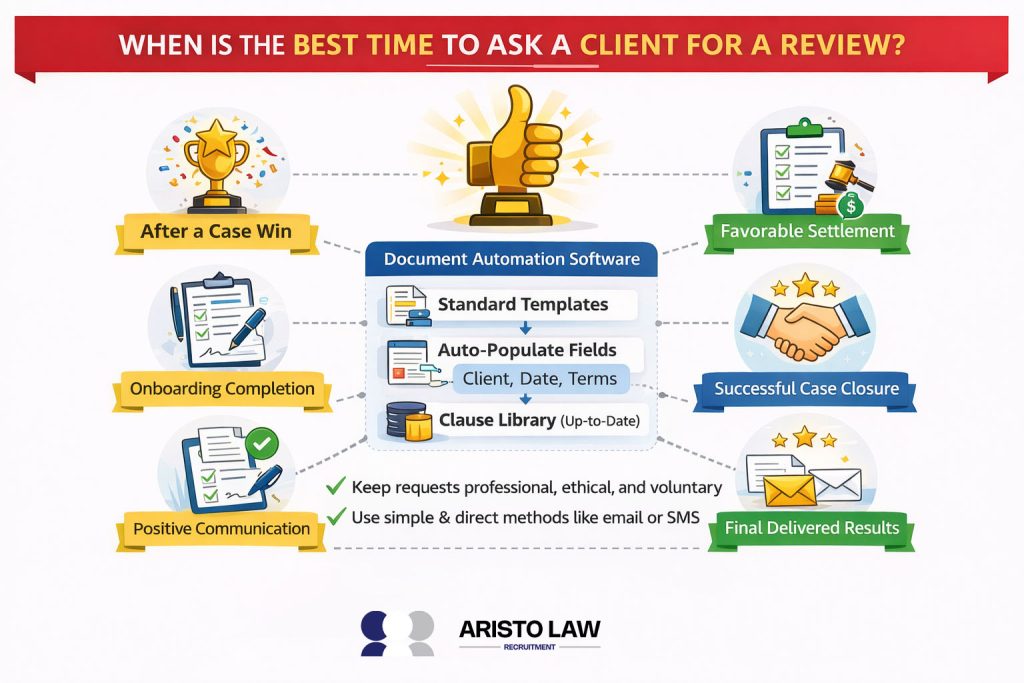
The best time to ask for a client review is immediately after a positive milestone such as a case win, favorable settlement, or successful case closure. Review timing works best when client satisfaction is high, and the outcome remains recent in the client’s mind. Review timing,g follow onboarding completion if the intake process and communication experience meet expectations.
Review requests must remain professional, voluntary, and compliant with ethical rules that prohibit incentives or coercion. Review timing improves response likelihood when the request is personalized and delivered through a simple, direct method such as email or SMS.
What review request message templates work best for law firms?
Effective law firm review requests are concise, professional, and sent through email + SMS after a positive client experience. Review templates should request client feedback without incentives and without referencing confidential case details.
Listed below are 5 short review templates.
- Email template – Case closure
Subject: Thank You for Trusting [Law Firm Name]
Body: Hello [Client First Name], thank you for choosing [Law Firm Name]. If you are comfortable, please share your experience using this link: [Review Link]. Your feedback helps others make informed decisions. - SMS template – Settlement milestone
Hi [Client First Name], this is [Attorney/Firm Name]. If you found our service helpful, please consider leaving a review here: [Review Link]. Thank you for your time. - Email template – Post-consultation
Subject: Your Feedback Matters
Hello [Client First Name], we value your input. Please share a brief review about your experience with [Law Firm Name]: [Review Link]. - SMS template – General satisfaction
Hello [Client First Name], we appreciate working with you. If you would like to leave feedback, please use this link: [Review Link]. Thank you. - Email template – Ongoing relationship
Subject: Quick Review Request
Dear [Client First Name], your feedback supports continuous improvement at [Law Firm Name]. Please leave a review here: [Review Link].
How to monitor law firm reviews across platforms?
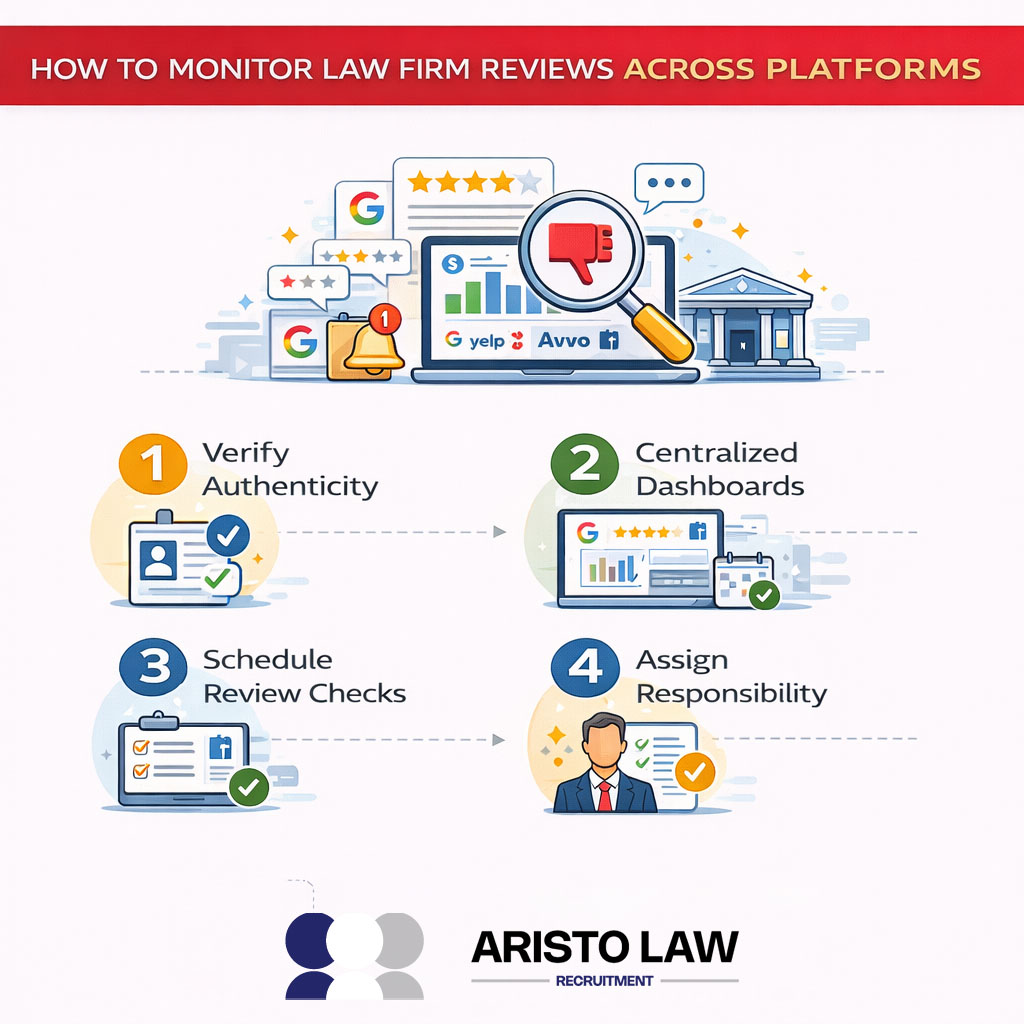
Law firms monitor reviews by tracking feedback across Google Business Profile, Yelp, Avvo, Facebook, and major legal directories through structured review monitoring systems. Review monitoring supports listing management and broader monitoring reviews and social presence efforts that influence online visibility and brand perception.
Listed below are the 4 ways to monitor law firm reviews across platforms.
- Enable platform alerts: Activate email or in-dashboard notifications on Google, Yelp, Avvo, and Facebook to receive immediate review updates.
- Use centralized dashboards: Deploy reputation management software that aggregates reviews into one reporting interface.
- Schedule weekly review checks: Assign a recurring calendar task to verify ratings, new feedback, and listing accuracy.
- Assign internal responsibility: Designate a staff member or marketing lead to oversee responses and escalation.
- Document response workflow: Maintain a standard process for drafting compliant responses to positive and negative reviews.
Review monitoring strengthens visibility control and ensures timely engagement with client feedback.
What are the best firms to fix an online reputation for attorneys?
The best reputation repair firms for attorneys are firms that demonstrate legal industry experience, compliance knowledge, transparent processes, and measurable reporting within structured reputation repair programs. Reputation repair and online brand recovery services must understand attorney advertising rules and confidentiality standards to avoid ethical violations. Reputation repair firms should provide a clear scope of work, documented reporting dashboards, and realistic timelines rather than guaranteed removal claims.
How do you vet them? Law firms review case studies involving legal clients, request compliance policy explanations, evaluate monitoring and response workflows, and confirm contract transparency before engagement. Reputation repair vendors should outline measurable objectives such as review response rate, listing accuracy, and search result stabilization without promising outcomes beyond platform control.
How do you build a review generation system for a law firm?
A review generation system for a law firm requires defined trigger moments, structured templates, automation tools, tracking, and systematic response management.
Listed below are the 7 steps to review the generation system for a law firm.
- Define trigger moments: Identify client satisfaction milestones such as case closure, settlement, or successful consultation.
- Select target platforms: Choose primary review platforms such as Google Business Profile and relevant legal directories.
- Create compliant templates: Draft concise email and SMS review requests without incentives or confidential case references, without violating ethics rules.
- Automate request delivery: Use intake or CRM systems to schedule automated messages aligned with automating review and client follow-up workflows.
- Track submission rates: Monitor response volume, rating trends, and review frequency to measure effectiveness.
- Respond systematically: Establish a response protocol for positive and negative feedback while maintaining confidentiality.
- Audit and refine process: Review monthly metrics and adjust timing, messaging, or automation triggers to improve consistency.
What are the best reputation management tools for attorneys?
The best reputation management tools for attorneys are monitoring systems, automation and follow-up platforms, listings management software, and analytics dashboards.
Listed below are the 6 main best reputation management tools for attorneys.
- Review monitoring tools: Review monitoring tools track new feedback across Google Business Profile, Yelp, Avvo, Facebook, and major directories in one stream.
- Review request automation platforms: Automation platforms schedule and send email + SMS review requests after defined trigger events in client workflows.
- Listings management software: Listings management software ensures accurate firm name, address, phone, and profile details across search engines and legal directories.
- Response workflow systems: Response tools provide templates, compliance reminders, and tracking for replies to positive and negative reviews.
- Analytics and reporting dashboards: Analytics dashboards aggregate reputation metrics such as rating trends, response times, and platform performance for stakeholder insight.
- Alert and notification services: Alert services send real-time notifications for new reviews or changes in online presence to assigned staff.
Each category supports law firm reputation needs from monitoring and outreach to tracking and response effectiveness.
How do you respond to positive reviews for a law firm?
Law firms should respond to positive reviews by expressing appreciation, reinforcing professionalism, and avoiding disclosure of confidential case details. Positive review response strengthens client relationships and signals responsiveness to prospective clients. Positive review response must remain general and must not confirm representation specifics or legal outcomes.
Listed below are 4 Short response examples.
- “Thank you for your kind words. Our team appreciates the opportunity to assist you.”
- “We value your feedback and are glad you had a positive experience with our firm.”
- “Thank you for sharing your experience. We remain committed to providing professional legal service.”
- “We appreciate your review and your trust in our firm.”
Positive review responses should remain concise, professional, and confidentiality-aware.
How to respond to negative lawyer reviews effectively?
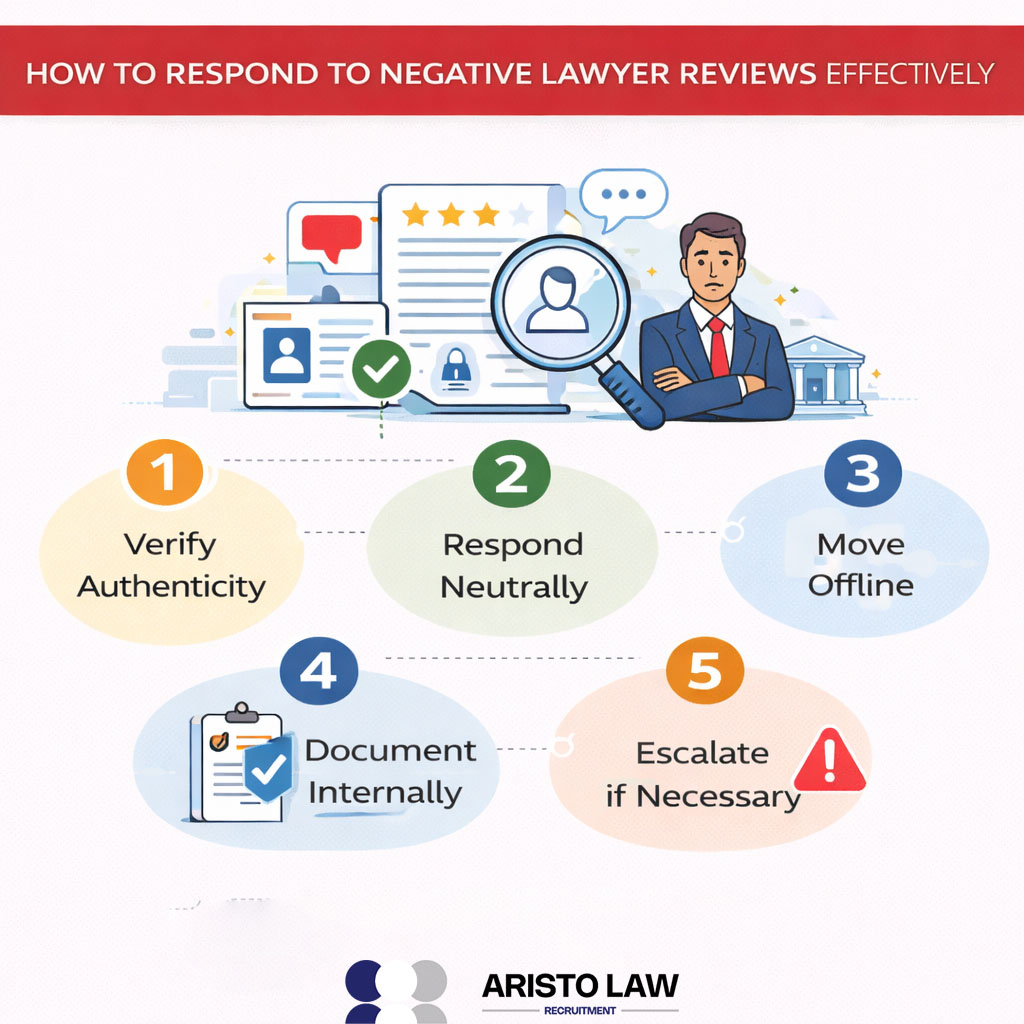
Law firms should respond to negative lawyer reviews with a neutral tone, verified facts, and a structured reputation response strategy. Negative reviews require careful handling to protect confidentiality and professional standards. Negative reviews influence public perception when responses appear defensive or disclose private information.
Listed below are the 5 ways to respond to negative lawyer reviews.
- Verify authenticity: Confirm whether the reviewer is a client and review internal records before responding.
- Respond neutrally and briefly: Acknowledge the feedback without admitting fault or discussing case details.
- Move the conversation offline: Invite the reviewer to contact the firm directly to resolve concerns privately.
- Document internally: Record the complaint, response, and any corrective action for quality control.
- Escalate if necessary: Report fake or policy-violating reviews through platform dispute channels.
Negative review management requires professionalism, confidentiality awareness, and consistent follow-up procedures.
How do you check a lawyer’s reputation?
You check a lawyer’s reputation by reviewing online ratings, verifying bar records, and examining public feedback across trusted platforms. Attorney credibility becomes clearer when reviewing Google ratings, client feedback, and legal reviews posted on platforms such as Avvo or Martindale, where available. Bar records on official state bar websites confirm license status, disciplinary history, and authorization to practice. News mentions, published articles, and professional recognitions provide additional context about professional standing. Referrals from prior clients or other attorneys add practical insight into communication quality and case handling experience.
What services offer reputation management for law firms?
Reputation management services for law firms include monitoring, automation systems, crisis response, reporting, compliance review, and staff training. Reputation services operate within broader law firm reputation management support frameworks that coordinate brand monitoring and response workflows.
Listed below are the 6 reputation services for law firms.
- Review monitoring services: Brand monitoring tracks new reviews, ratings, and online mentions across search engines and legal directories.
- Review request automation: Automation systems send structured feedback requests after defined client milestones.
- Crisis management support: Crisis response services address negative publicity, viral complaints, or coordinated review attacks.
- Reputation reporting and analytics: Reporting dashboards measure rating trends, response times, and review volume growth.
- Compliance review oversight: Compliance review ensures responses and messaging align with attorney advertising and confidentiality rules.
- Staff training programs: Training educates attorneys and staff on client communication standards and review response protocols.
How to choose a reputation management firm for legal?
Choosing a reputation management firm for legal requires compliance awareness, transparent reporting, clear contract terms, and proven legal experience. Vendor evaluation must align with legal marketing compliance standards and ethical requirements.
Listed below are the 7 steps in choosing a reputation management firm for legal.
- Legal compliance knowledge: The firm demonstratesan understanding of attorney advertising rules and confidentiality limits.
- Transparent reporting structure: Vendor provides clear dashboards with measurable metrics such as review volume, response rate, and rating trends.
- Clear contract terms: Agreement outlines scope of work, pricing model, and cancellation conditions without vague promises.
- Relevant case studies: Vendor shares documented examples involving law firms or regulated industries.
- Platform coverage breadth: Service monitors Google, legal directories, Yelp, social platforms, and news mentions.
- Realistic claims and timelines: Vendor avoids guarantees of review removal or instant ranking changes.
- Response workflow process: Firm explains structured handling of negative reviews and escalation procedures.
Vendor selection should prioritize credibility, measurable processes, and alignment with legal marketing compliance standards.
What should you do if a competitor leaves a fake review on Google?
If a competitor leaves a fake Google review, you should document the review, verify client records, report it under Google policy, and respond professionally without disclosing confidential information. Fake reviews require a structured process focused on handling fake reviews and protecting lawyers’ reputations while maintaining compliance.
Listed below are the 6 steps to follow if a competitor leaves a fake Google review.
- Take screenshots immediately: Capture the review content, reviewer profile, and date for documentation.
- Verify internal records: Confirm whether the reviewer is a non-client by checking intake and matter databases.
- Flag the review in Google Business Profile: Use the platform’s reporting tool to mark the review as violating Google policy.
- Submit a formal support ticket: Provide evidence that the reviewer is not a client and explain the policy violation.
- Post a neutral public response: State that the firm has no record of the reviewer as a client and invite direct contact to clarify, without discussing case details.
- Track review removal status: Monitor updates and follow up if the review remains visible.
Fake review management protects online credibility without escalating conflict publicly.
Build a legal support team that moves work forward.
Tell us what is slowing your practice down. We will help map the role, workflow, and support structure that fits.