
The Best Lawyer Review Sites for 2026

Practical guidance for building efficient, accountable legal support operations.

The best lawyer review sites in 2026 include Google Business
Profile, Justia, Avvo, Lawyers.com, FindLaw, Martindale-Hubbell,
LegalMatch, Nolo, Super Lawyers, Better Business Bureau, Yelp, Facebook,
HG.org, LawInfo, and Expertise. com.
Lawyer review sites help clients compare attorneys through
ratings, client experiences, practice areas, and case-related service
signals.
Google supports local discovery; Avvo, Justia, Lawyers.com, FindLaw,
Martindale-Hubbell, and LegalMatch provide attorney profiles, reviews,
credentials, and practice-area search. Nolo, HG.org, LawInfo, and
Expertise.com connect legal education with directory discovery. Super
Lawyers adds peer recognition, and BBB, Yelp, and Facebook add broader
reputation signals.
Clients assess review reliability through review volume, dates,
detailed experiences, and balanced feedback. A study by
BrightLocal, titled “Local Consumer Review Survey 2026,” in 2026, states
that 97% of consumers read online reviews when choosing or browsing for
local businesses. An official support guide by Google, titled “Tips to
improve your local ranking on Google,” in 2026 (with continuous
algorithmic updates), states that more reviews and positive ratings can
help your business’s local ranking.
Law firms select platforms through audience fit, search visibility,
review activity, and practice-area relevance. Lawyers gain reviews
through voluntary post-matter requests, simple links, trained staff, and
advertising-rule compliance.
Aristo Law is a Legal Process Outsourcing company that helps
law firms manage lawyer review site visibility by providing outsourced
law firm reputation management support for profile updates, review
monitoring, client feedback tracking, and online credibility support. Hire
a Law Firm Reputation Management Assistant with Aristo Law.
Aristo Law connects law firms with outsourcing solutions that match
trained reputation management support staff to each lawyer review site
task, profile maintenance workflow, client feedback duty, and law firm
credibility need.
Listed below are 15 best lawyer review sites in 2026
-
Google Business Profile. Google Business Profile
helps law firms collect local client reviews that influence map
rankings, trust signals, and direct calls from nearby legal service
searchers. -
Justia. Justia gives lawyers a legal directory
profile that supports visibility across practice areas, locations,
attorney bios, and client-facing firm information. -
Avvo. Avvo helps prospective clients compare
attorneys through ratings, reviews, practice-area profiles, and
question-based legal content. -
Lawyers.com. Lawyers.com supports attorney discovery
through client reviews, peer ratings, legal profiles, and
consumer-focused search by practice area and location. -
FindLaw. FindLaw gives law firms a legal marketing
directory presence connected to attorney profiles, legal content, and
practice-area search visibility. -
Martindale-Hubbell. Martindale-Hubbell supports
lawyer reputation through peer-review ratings, client reviews, and
long-standing professional credibility signals. -
LegalMatch. LegalMatch connects potential clients
with attorneys by matching legal issues to lawyers who handle those case
types. -
Nolo. Nolo supports lawyer visibility through legal
guides, attorney listings, and consumer search paths tied to common
legal problems. -
Super Lawyers. Super Lawyers builds attorney
reputation through curated recognition, peer nomination, professional
evaluation, and public lawyer profiles. -
Better Business Bureau. Better Business Bureau helps
law firms show business credibility through ratings, complaint history,
accreditation status, and client trust signals. -
Yelp. Yelp gives law firms a consumer-review profile
that helps local clients assess service quality, responsiveness, and
client experience. -
Facebook. Facebook supports law firm reputation
through page reviews, recommendations, community visibility, and direct
engagement with local audiences. -
HG.org. HG.org helps attorneys gain visibility
through legal directory listings, practice-area categories, firm
profiles, and legal article distribution. -
LawInfo. LawInfo supports client acquisition through
attorney profiles, legal information pages, and practice-area directory
placement. -
Expertise.com. Expertise.com helps clients compare
lawyers using curated local rankings, service categories, review
signals, and firm evaluation criteria
1. Google Business Profile
Google Business Profile is a free local listing that displays
a law firm across Google Search and Google Maps. Google
Business Profile supports lawyer review sites, client reviews, local SEO
for lawyers, profile details, photos, service areas, calls, directions,
and website visits.
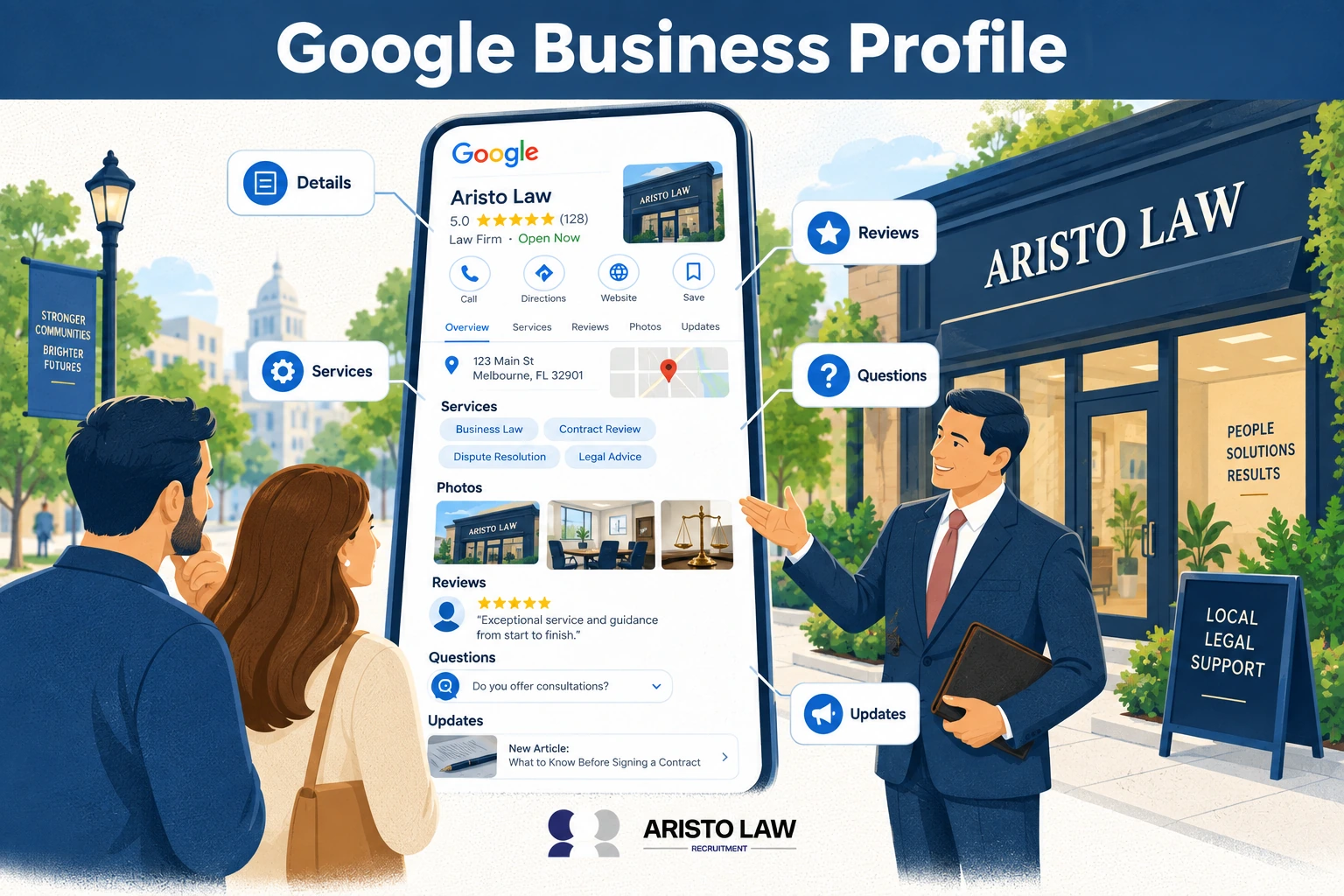
Google states that review quantity and positive ratings support local
ranking, which connects review generation with law firm SEO and legal
lead generation. Law firms gain stronger results through accurate
contact details, completed service categories, prompt review responses,
genuine client feedback, and regular profile monitoring.
2. Justia
Justia is a legal directory that gives lawyers detailed
profiles, client reviews, peer reviews, and links to firm
websites. Justia supports law firm reputation management
through education records, jurisdictions, awards, and verified profile
updates.
Justia attracts legal consumers who search by practice area and
location, which supports attorney profiles, directory authority, client
trust, and lead generation. Law firms gain stronger visibility through
complete profiles, accurate credentials, ethical review requests,
current biographies, and consistent profile maintenance.
3. Avvo
Avvo is an online legal marketplace that helps clients
compare lawyers through detailed profiles, ratings, client reviews, peer
endorsements, and contact information. Avvo supports digital
reputation because prospective clients review attorney background, legal
experience, disciplinary data, responsiveness, and client feedback
before making contact.
Avvo profile completion supports legal marketing and qualified
inquiry generation through photographs, accurate contact details,
practice-area selection, achievements, and professional history. Law
firms gain stronger profile performance through current information,
professional review responses, authentic feedback, and regular
reputation monitoring.
4. Lawyers.com
Lawyers.com is a national legal directory that helps
prospective clients search for lawyers through location, legal issue,
attorney profiles, and client reviews. Lawyers.com reports
directory coverage for 95% of United States lawyers and over one million
lawyer ratings and reviews.
Lawyers.com supports lawyer review sites, law firm SEO, client trust,
and legal lead generation through detailed profiles, office locations,
credentials, and review signals. Law firms gain stronger results through
accurate profile data, clear service descriptions, current attorney
biographies, and coordinated review generation.
5. FindLaw
FindLaw is a legal information and attorney directory
platform that connects legal consumers with detailed law firm and lawyer
profiles. FindLaw supports online reputation management through
profile completeness, client testimonials, reviews, credentials,
practice-area descriptions, legal content, and contact options.
FindLaw directory listings strengthen search visibility because
prospective clients search through legal issues, attorney names, and
geographic locations. Law firms gain better directory value through
current profile details, focused practice-area pages, review monitoring,
and accurate lead-tracking processes.
6. Martindale-Hubbell
Martindale-Hubbell is a legal directory and rating platform
that evaluates lawyers through peer reviews, client reviews, legal
ability, and ethical standards. Martindale-Hubbell supports law
firm reputation management through AV preeminent, distinguished, and
notable peer-rating designations.
Legal consumers use these ratings to compare professional standing,
experience, client service, and practice-area fit. Law firms gain
stronger reputation value through accurate credentials, verified review
participation, complete attorney profiles, and careful use of rating
badges under advertising rules.
7. LegalMatch
LegalMatch is a legal marketplace that connects people who
submit legal matters with lawyers whose profiles match the stated legal
issue. LegalMatch profiles present qualifications, credentials,
experience, and service feedback.
LegalMatch supports client acquisition because prospective clients
compare attorney responses, profile information, communication quality,
and previous client experiences before making contact. Law firms gain
better results through fast responses, accurate profiles, clear service
scope, and close tracking of lead quality.
8. Nolo
Nolo is a legal information publisher and lawyer directory
that connects educational legal content with attorney discovery and
consultation requests. Nolo supports Legal Marketing through
legal guides, practice-area resources, location searches, and matching
services.
Nolo functions more as a legal education and directory platform than
a review-first platform, which makes profile accuracy, subject
authority, and practice-area relevance central reputation signals. Law
firms gain stronger value through current biographies, focused service
descriptions, accurate location data, and measured lead-conversion
tracking.
9. Super Lawyers
Super Lawyers is a peer-influenced attorney rating service
and legal directory that recognizes selected lawyers through independent
research, peer nominations, and professional achievement
indicators. Super Lawyers evaluates candidates annually by
state and selects up to 5% of attorneys for its primary list.
Super Lawyers supports lawyer rankings, referral credibility,
attorney profiles, and law firm branding rather than open client-review
collection. Law firms gain stronger reputation value through accurate
profiles, compliant recognition badges, current practice-area
information, and clear separation between recognition and client
testimonials.
10. Better Business Bureau
Better Business Bureau is a business reputation platform that
displays law firm profiles, BBB ratings, customer reviews, and operating
information. BBB profiles help prospective clients assess
complaint patterns, response conduct, business history, and trust
signals.
BBB ratings differ from client-review scores because BBB evaluates
several business conduct factors. Law firms strengthen digital
reputation through accurate business details, professional complaint
responses, documented client-service procedures, and clear disclosure of
accreditation status.
11. Yelp
Yelp is a local consumer review platform that presents law
firm profiles, client reviews, photographs, contact details, business
information, and direct messages. Yelp supports online
reputation management, local SEO for lawyers, and location-based legal
lead generation.
Prospective clients examine review volume, detailed experiences,
recent feedback, and rating patterns before contacting a law firm. Law
firms gain stronger Yelp performance through claimed profiles, accurate
information, professional responses, and strict adherence to Yelp review
policies.
12. Facebook
Facebook is a social media and business-profile platform that
supports law firm recommendations, reviews, posts, and community
engagement. Facebook supports law firm reputation management
because prospective clients see public feedback beside legal content,
firm updates, attorney profiles, and response behavior.
Facebook recommendations give clients a direct feedback channel, and
facebook pages support local visibility and audience interaction. Law
firms gain stronger results through activated recommendations, accurate
page details, professional moderation, and consistent legal
branding.
13. HG.org
HG.org is an international legal directory and legal
information platform that lists lawyers and law firms by practice area,
location, jurisdiction, and professional focus. HG.org supports
directory authority, law firm SEO, attorney profiles, and international
visibility rather than review-led reputation alone.
Legal consumers use HG.org to identify firms, compare service areas,
read legal information, and access contact details. Law firms gain
stronger directory value through complete profiles, accurate
jurisdiction data, focused practice areas, and updated website
links.
14. LawInfo
LawInfo is a nationwide attorney directory and legal resource
platform that helps clients search for lawyers by legal issue, name,
practice area, and location. LawInfo supports credibility
through detailed profiles, state-bar experience data, legal resources,
and lead counsel verification for eligible attorneys.
Lead counsel verification reviews practice-area experience, licensing
status, disciplinary standing, and continued eligibility. Law firms gain
stronger legal lead generation through accurate profiles, focused
legal-issue coverage, current contact details, and consistent reputation
monitoring.
15. Expertise.com
Expertise.com is a local professional-ranking platform that
researches, reviews, and compares lawyers using licensing data, user
reviews, service information, and selection criteria.
Expertise.com examines thousands of businesses and publishes selected
local provider lists across legal practice areas.
Expertise.com displays review data gathered from Google, Facebook,
Avvo, and other public sources, which gives law firms cross-platform
digital reputation exposure. Law firms gain stronger visibility through
accurate public profiles, consistent review information, current
licensing records, and active management of every source feeding the
published comparison.
An official support guide by Google, titled “How to improve
your local ranking on Google,” in 2026 (with ongoing algorithmic
refinement), states that positive ratings and higher review counts
support local ranking. Justia, Avvo, Lawyers.com, FindLaw, and
Martindale-Hubbell confirm their profile, review, credential, and
directory features.
A platform operational review by LegalMatch, titled “How
LegalMatch Works for Consumers,” in 2023, states that the service allows
clients to review and confirm lawyer profiles, star ratings, past client
experiences, specific areas of expertise, pricing structures, and
immediate availability. Nolo confirms its lawyer directory and
attorney-matching functions. Super Lawyers confirms its annual
peer-influenced selection process and 5% selection limit.
BBB confirms business ratings, customer reviews, complaints,
responses, and accreditation data. Yelp confirms profile management,
review responses, messages, photographs, and business information. Meta
confirms Facebook Page recommendations and customer ratings.
HG.org’s directory scope is supported by its published company
information. LawInfo confirms its nationwide directory, detailed
profiles, practice-area search, location search, and Lead Counsel
Verification. Expertise.com confirms its research process, licensing
checks, user-review analysis, and local lawyer lists.
How do
clients use lawyer review sites to find a good lawyer?
Clients use lawyer review sites to find a good lawyer by
comparing ratings, written reviews, practice areas, and contact
options. Clients scan star ratings, read recent reviews,
identify repeated service patterns, and compare attorney profiles across
several legal directories. Clients check practice-area experience,
licensing details, disciplinary signals, and comments about
communication, fees, case updates, and response times.
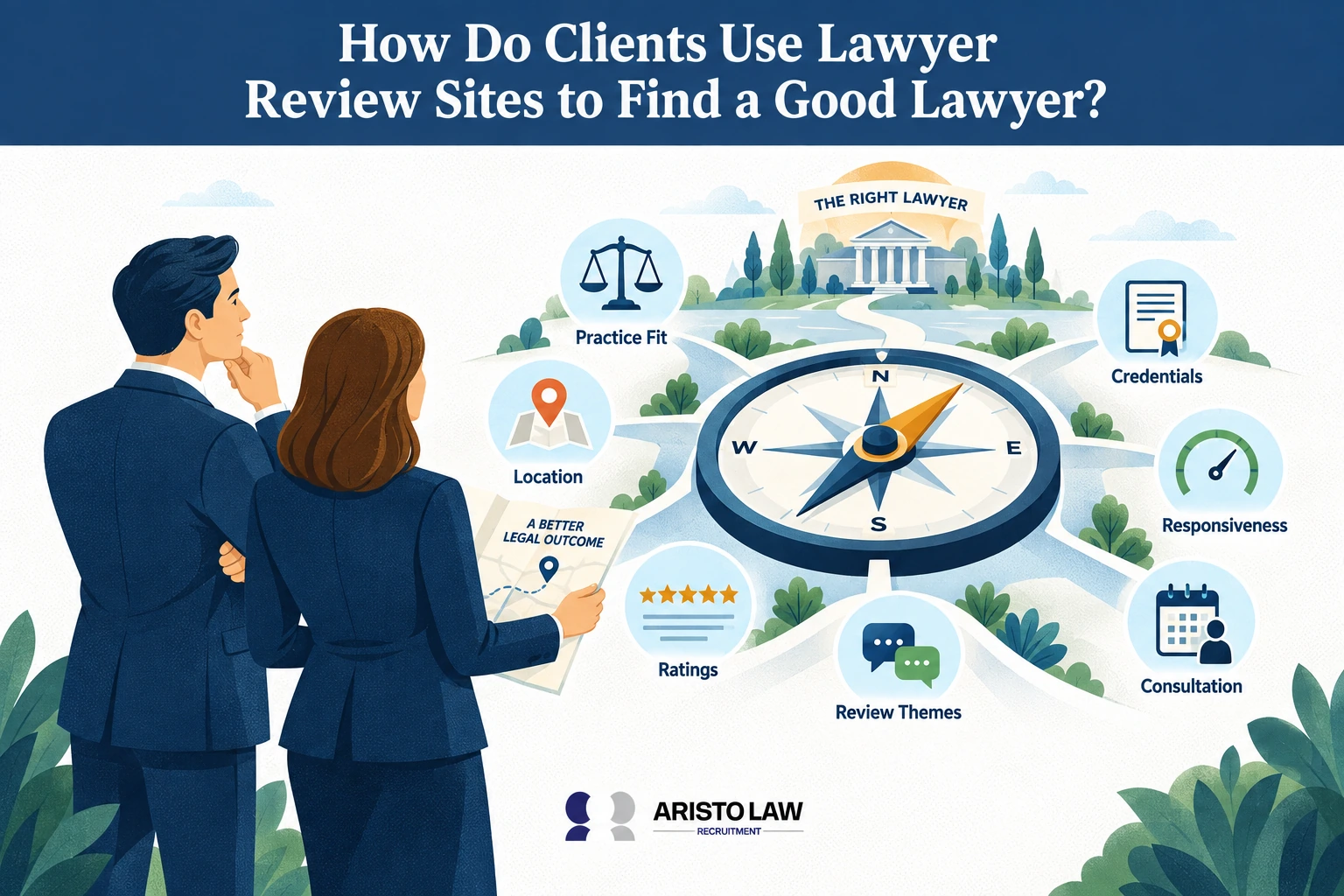
The best lawyer review sites help clients spot a good lawyer through
review patterns, practice-area match, location signals, and real client
stories, which makes them part of law
firm digital visibility and client engagement
strategies. The best lawyer review sites shape who gets
contacted first because clients trust lawyers with strong ratings,
recent reviews, clear profiles, and responses that show how the firm
treats people.
A consumer research report by BrightLocal, titled “Local
Consumer Review Survey,” in 2024 (with updated editions through 2026),
states that detailed text reviews provide stronger evidence to prospects
than short star ratings alone because detailed reviews describe the
specific legal issue, attorney conduct, service process, and overall
client experience. Consistent feedback across multiple
platforms gives attorney ratings more credibility than isolated praise
or complaints. Lawyer ratings and reviews support attorney selection,
but reviews do not replace a direct consultation, written fee review,
conflict check, credential verification, or personal evaluation of
attorney fit.
How do lawyer
review sites affect local SEO?
Lawyer review sites affect local SEO by strengthening
prominence, trust, click-through behavior, and branded search
visibility. Google attorney reviews influence local rankings
because Google states that higher review volume and positive ratings
improve local search placement.
Complete Google Business Profile information supports relevance, and
consistent law firm names, addresses, and phone numbers across legal
directories strengthen citation accuracy. Review recency, detailed
client feedback, professional responses, and strong profile engagement
support client trust and conversion, though Google does not publicly
identify these elements as direct ranking factors.
The best lawyer review sites strengthen local SEO because review
profiles create location signals, practice-area relevance, and trust
data that search engines associate with nearby legal searches involving
a law
firm SEO expert and local SEO strategies.
The best lawyer review sites influence map visibility because client
reviews, NAP consistency, star ratings, and category relevance connect
the law firm entity to local search intent, service-area authority, and
conversion-ready legal queries.
Lawyer review profiles on Avvo, Justia, Lawyers.com, and similar
directories expand branded search visibility for attorney names, firm
names, locations, and practice-area searches. Law firms improve law firm
SEO through complete profiles, consistent business details, genuine
reviews, and regular reputation monitoring.
How
should law firms choose the best lawyer review site?
Law firms should choose the best lawyer review site by
matching platform credibility, audience, search visibility, and lead
value with the firm’s practice area, location, budget, and growth
strategy.
The best lawyer review sites strengthen client acquisition when law
firms assess platform credibility, review visibility, practice-area
relevance, and alignment with lawyer
branding and online reputation strategies. The best
lawyer review sites connect client trust signals with search visibility,
so law firms choose platforms that support reputation growth, review
management, and branded legal authority.
Listed below are 12 steps law firms should take when choosing the
best lawyer review site.
-
Define the marketing objective: Law firms identify
whether the primary goal is brand reputation, local SEO, client
acquisition, or wider search visibility. -
Match the platform with the target audience: Google
Business Profile serves local search users. Avvo targets consumers
comparing ratings and disciplinary records. Justia provides detailed
credentials and free profiles. Martindale-Hubbell adds peer and client
ratings. Lawyers.com offers broad consumer reach. FindLaw provides
directory visibility and premium profiles. LegalMatch operates as a
legal marketplace. Nolo connects educational content with lawyer
discovery. -
Evaluate platform credibility: Law firms examine
platform history, moderation policies, review verification, and public
trust. -
Check search visibility: Law firms search the
attorney name, firm name, practice area, and location to identify which
legal directories appear in branded, organic, and local results. -
Assess local SEO value: Google Business Profile
deserves priority for location-based client acquisition because Google
states that complete information, higher review counts, and positive
ratings support local visibility. -
Review profile optimization features: Law firms
compare biographies, credentials, practice areas, photographs, and
analytics. -
Compare review credibility: Law firms assess review
volume, quality, recency, and business responses. A study by
BrightLocal, titled “Local Consumer Review Survey 2026,” published in
2026, states that 97% of consumers read online reviews when evaluating a
local business, and that consumers consult an average of six review
sites during their decision-making process. -
Compare free and paid options: Law firms examine
listing fees, premium placement, lead charges, and total cost of
ownership. -
Measure lead-generation potential: Law firms track
profile views, website visits, calls, and revenue per platform. -
Review reputation-management tools: Law firms
prioritize platforms with review alerts, response features, profile
controls, and dispute processes. -
Verify advertising compliance: Law firms confirm
that profiles, endorsements, ratings, and responses comply with
jurisdictional rules. A standard by the American Bar
Association, titled “Model Rules of Professional Conduct: Rule 7.1
(Communications Concerning a Lawyer’s Services),” in 2012 (with active
state-level enforcement continuing through 2026), states that a lawyer
shall not make a false or misleading communication about the lawyer or
the lawyer’s services. -
Monitor performance: Law firms review search
rankings, review growth, referral traffic, lead quality, client
conversions, platform costs, and ROI every quarter. The best lawyer
review site is the platform that produces qualified inquiries and
strengthens reputation within the firm’s target market.
How
can clients tell whether lawyer reviews are reliable?
Clients tell whether lawyer reviews are reliable by checking
factual detail, repeated themes, review recency, and consistency across
review sites. Reliable reviews on attorneys describe the legal
service, communication process, response time, and case handling without
promising legal outcomes. Ratings of attorneys support comparison, but
clients still need to verify credentials, disciplinary history, fees,
and attorney fit through direct consultation.\
Listed below are the 10 signs that show whether lawyer reviews are
reliable.
-
Concrete facts: Lawyer reviews by clients explain
the service received and the client experience. -
Repeated themes: Similar comments across unrelated
reviews reveal consistent service patterns. -
Recent dates: Current reviews reflect recent staff,
systems, and communication standards. -
Adequate volume: Several detailed reviews provide
stronger evidence than one isolated rating. -
Balanced feedback: Credible reviews include
strengths, limitations, or neutral observations. -
Professional responses: Attorney replies show
accountability without revealing confidential information. -
Verification cues: Verified profiles and platform
moderation signals strengthen review credibility. -
Cross-platform consistency: Similar ratings across
Google, Avvo, Justia, and Lawyers.com reduce reliance on one source. -
Natural language patterns: Identical wording, sudden
review bursts, generic praise, and repeated phrasing signal possible
fake reviews. -
Policy compliance: The FTC rule addresses fake,
false, and deceptive reviews. Google requires Maps reviews to reflect
genuine experiences and prohibits fake engagement.
How should lawyers get more
reviews?
Lawyers get more reviews by delivering strong client service,
requesting honest feedback at appropriate moments, simplifying the
review process, and tracking requests through repeatable law firm
reputation workflows.

The best lawyer review sites help lawyers get more reviews by
connecting verified client experiences with search visibility, referral
trust, and local intent signals through law
firm reputation management services. The best lawyer
review sites support lawyer review growth when Google Business Profile,
Avvo, FindLaw, Justia, Yelp, and Facebook reviews reinforce lawyer
credibility, client satisfaction, and practice-area relevance across
branded search results.
Listed below are 12 ways lawyers get more reviews from satisfied
clients.
-
Deliver a strong client experience: Lawyers build
reviews through clear communication, responsive service, accurate
expectations, and organized matter updates. -
Choose appropriate review moments: Law firms send a
review request after a consultation, matter closing, service handoff, or
unsolicited client praise. Review requests seek honest feedback rather
than guaranteed positive ratings. -
Select relevant review platforms: Law firms
prioritize Google Business Profile and legal directories that match the
firm’s location, practice area, and client audience. -
Create direct review links: Law firms place a Google
review link inside emails, text messages, matter-closing letters, and
follow-up workflows. -
Provide QR codes: Law firms add review QR codes to
closing packets, reception materials, printed instructions, and approved
client communications. -
Prepare request templates: Law firms create short
email and SMS templates that explain where to post client reviews for
lawyers and how long the process takes. -
Automate matter-close requests: Law firms connect
CRM automation with matter-close workflows, review request timing,
reminders, and response tracking. Clio supports review requests through
email or text and automated requests after matters close. -
Assign staff responsibilities: Intake specialists,
legal assistants, or marketing staff record client consent, send
requests, track completion, and route sensitive feedback to an
attorney. -
Respond to every review professionally: Lawyers
acknowledge feedback without confirming representation, discussing case
facts, or exposing confidential information. -
Follow review policies: Law firms avoid purchased
reviews, incentives tied to positive sentiment, fake accounts, review
suppression, and requests that misrepresent genuine client
experiences. -
Use Aristo Law staffing support: Aristo Law recruits
remote legal assistants who support CRM management, client
communications, appointment reminders, and content writing. Aristo Law
staff help firms maintain organized review-request workflows under
firm-approved scripts and attorney oversight. -
Measure review performance: Law firms track requests
sent, completion rate, average rating, and signed matters.
How
does Aristo Law help law firms improve their online reviews and
reputation?
Aristo Law helps law firms improve their online reviews and
reputation by providing trained law firm reputation management
assistants who manage review requests, monitor client feedback, optimize
profiles, and coordinate reputation tasks across legal directories and
online platforms. Aristo Law assistants maintain approved
attorney and firm information across Google Business Profile, Avvo,
Justia, Martindale-Hubbell, Lawyers.com, FindLaw, LegalMatch, and Nolo.
Aristo Law assistants organize post-matter review requests, share direct
review links, and draft professional responses for attorney
approval.
CRM records, follow-up schedules, client communication, and
reputation reports create a repeatable review generation system. Ethical
controls keep feedback voluntary, protect client confidentiality, and
prevent false or misleading statements under legal advertising
rules.
Aristo Law manages review acquisition, response workflows, profile
accuracy, as well as online
review and reputation management support for law firms.
The best lawyer review sites connect law firms to high-intent legal
clients, and Aristo Law strengthens those site profiles through trained
legal marketing support staff, review monitoring, client feedback
handling, and reputation repair workflows.
Online reputation management improves client trust, local SEO, law
firm branding, and competitive positioning. A study by
BrightLocal, titled “Local Consumer Review Survey 2026,” in 2026, states
that 97% of consumers read online reviews when evaluating a local
business, and that a core subset of 41% of consumers “always” read
reviews during their local business research. Aristo Law gives
law firms scalable remote support for profile accuracy, reputation
monitoring, client feedback management, and long-term client
acquisition.
Build a legal support team that moves work forward.
Tell us what is slowing your practice down. We will help map the role, workflow, and support structure that fits.