
Paralegal vs. Lawyer: Duties, Education, and Legal Boundaries

Practical guidance for building efficient, accountable legal support operations.
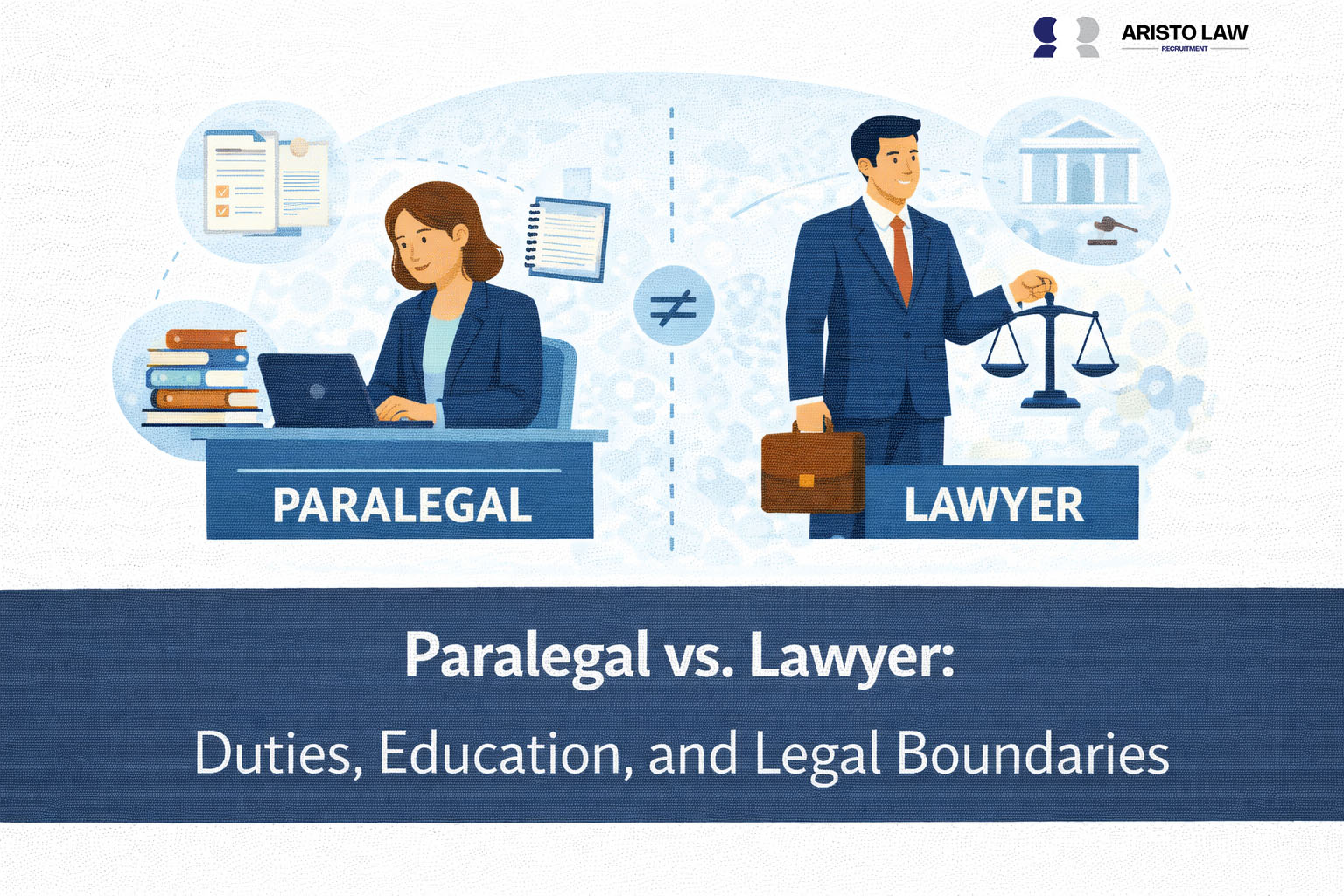
Paralegals and lawyers are distinct legal professionals, with lawyers licensed to practice law and paralegals providing structured legal support under attorney supervision. Lawyers hold legal authority to advise clients, represent parties in court, sign legal pleadings, and make binding legal decisions, while paralegals perform delegated legal tasks that do not constitute the practice of law.
Paralegal vs lawyer differences begin with education and licensing. Lawyers complete a full law degree and bar admission, which authorizes independent legal practice and professional accountability. Paralegals complete certificate, diploma, or degree programs focused on legal procedures, research, and document preparation, without licensing to practice law.
Paralegal duties include legal research, drafting documents, organizing case files, managing deadlines, preparing discovery, and supporting client communication. Lawyer duties include legal strategy, client advice, court advocacy, negotiation, and final responsibility for legal outcomes. Legal boundaries prohibit paralegals from giving legal advice, representing clients, setting legal fees, or signing pleadings.
A study by Sampson & dos Santos, “Reengineering Professional Services Through Automation, Remote Outsourcing, and Task Delegation” (2023), found that delegating tasks to semi-professional staff (including paralegals) reduces service delivery costs with negligible quality loss and increases professional productivity. Paralegals improve operational efficiency, while lawyers retain accountability, ethical responsibility, and legal authority.
Paralegal career paths lead to specialization or progression into law school, while lawyers advance through senior roles, partnership, or independent practice. Strategic use of paralegals supports cost control, service quality, and sustainable law firm operations.
Aristolaw helps law firms improve legal workflow efficiency. Strengthen legal operations with trained legal support staff from Aristolaw today. Aristolaw outsourced Paralegal support, legal administration, and case coordination services tailored to attorney-supervised environments.
What is a paralegal?
A paralegal is a trained legal professional who supports lawyers by performing substantive legal work under attorney supervision but is not a licensed attorney. Paralegal responsibilities commonly include legal research, drafting documents, preparing filings, organizing case materials, managing deadlines, assisting with trial preparation, and supporting client communication.
Paralegal roles operate within defined legal boundaries, since paralegals cannot provide legal advice, represent clients in court, set legal fees, or sign pleadings in most jurisdictions. Paralegal work strengthens law firm efficiency while attorneys retain legal authority, accountability, and responsibility for outcomes.
What is a lawyer?
A lawyer is a licensed legal professional authorized to practice law, provide legal advice, represent clients, and assume full responsibility for legal decisions and outcomes. Lawyer duties include advising clients on legal rights and obligations, drafting and signing legal documents, representing clients in court or negotiations, and developing legal strategy.
Lawyer authority is granted through formal legal education, bar admission, and ongoing regulatory compliance, which distinguishes a lawyer from paralegals and other legal support roles who work under attorney supervision and lack independent legal authority.
How do Paralegals vs. Lawyers compare?
A comparison of paralegals and lawyers reveals clear differences in legal authority, education, scope of work, accountability, and career progression, with lawyers being licensed to practice law and paralegals providing supervised legal support.
The table below shows the comparison of paralegals and lawyers.
| Comparison Area | Paralegal | Lawyer / Attorney |
| Legal role and professional status | Legal support professional assisting attorneys under supervision. | Licensed legal professional authorized to practice law independently. |
| Education and licensing requirements | Certificate, diploma, or associate/bachelor’s degree in paralegal studies; no law license. | Law degree (JD/LLB) plus bar admission and ongoing licensing compliance. |
| Authority to practice law | No authority to practice law or provide legal advice. | Full authority to practice law, advise clients, and act on legal matters. |
| Scope of permitted legal work | Legal research, drafting support, filings, discovery, and case organization. | Legal advice, strategy, document signing, negotiations, and case direction. |
| Client communication boundaries | Communicates factual updates and gathers information under attorney direction. | Communicates legal advice, options, risks, and recommendations directly. |
| Court representation and advocacy rights | Cannot represent clients or appear in court independently. | Authorized to represent clients in court and formal proceedings. |
| Decision-making and legal judgment authority | No independent legal judgment or binding decisions. | Full legal judgment and binding decision-making authority. |
| Supervision and accountability | Works under attorney supervision; attorney holds legal responsibility. | Personally accountable to clients, courts, and regulatory bodies. |
| Required skills and competencies | Research, organization, drafting accuracy, and procedural knowledge. | Legal analysis, advocacy, negotiation, judgment, ethics, and leadership. |
| Salary and career progression | Lower salary range; progression through senior paralegal or specialization roles. | Higher earning potential; progression to senior attorney, partner, or firm owner. |
What is a paralegal’s responsibility in document preparation?
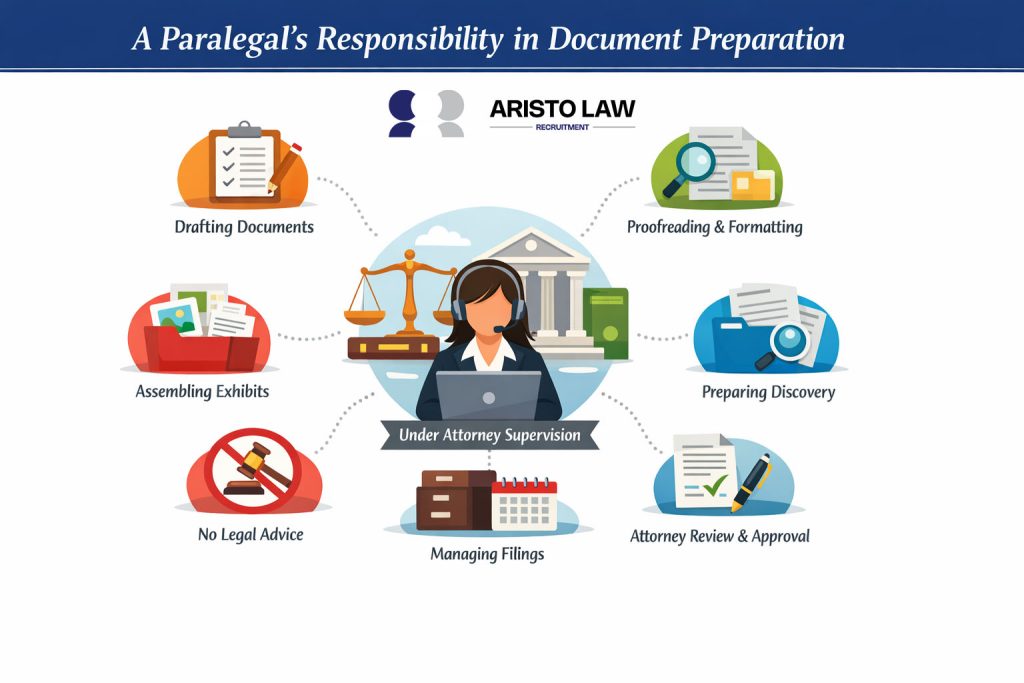
A paralegal’s responsibility in document preparation is to support attorneys by drafting, organizing, formatting, and preparing legal documents under direct attorney supervision. A paralegal’s responsibility includes document preparation and legal templates support that helps standardize filings and improve efficiency without replacing attorney judgment. Paralegal document preparation tasks involve drafting pleadings or contracts for attorney review, proofreading for accuracy, formatting documents to court or firm standards, assembling exhibits, preparing discovery packets, and managing filing requirements. Paralegals do not provide legal advice, determine legal strategy, or sign final documents, since attorneys retain authority, review responsibility, and accountability for all legal content.
What education do you need to be a paralegal?
To become a paralegal, you need formal education in legal studies through a paralegal certificate or degree program, depending on employer and jurisdiction requirements. Paralegal education commonly includes certificate programs for individuals with prior degrees or associate and bachelor’s degree programs focused on legal research, drafting, procedure, and ethics.
Optional specialization in areas such as litigation, corporate law, or estate planning improves employability and role fit. Paralegal education requirements vary by jurisdiction and employer, with some roles emphasizing practical experience alongside academic credentials.
What education do you need to be a lawyer?
To become a lawyer, candidates need a qualifying legal education followed by professional licensing to practice law. Lawyer education begins with an undergraduate degree, where required, followed by a recognized law degree, such as an LLB or JD, that provides core legal training.
Legal education includes instruction in substantive law, legal research, writing, and ethics. After completing a law degree, candidates must meet licensing requirements, which usually involve a bar or qualifying examination and a character or fitness review. Lawyer education and licensing requirements vary by jurisdiction, but formal legal study and regulatory approval remain mandatory worldwide.
What is the role of a paralegal in a law firm?
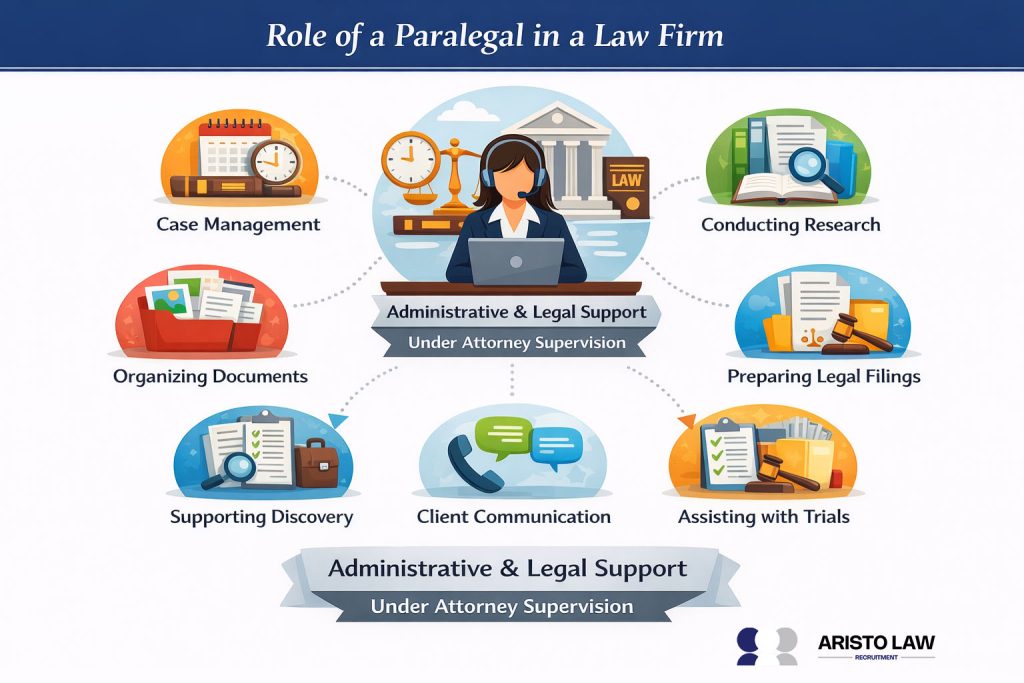
The role of a paralegal in a law firm is to provide administrative and substantive legal support that enables attorneys to focus on legal analysis, strategy, and client representation. The role reflects what paralegals do in a law firm by supporting case management, coordinating deadlines, assisting with research, preparing filings, organizing documents, and facilitating client communication under attorney supervision. Paralegals contribute to legal operations by managing workflows, maintaining case files, supporting discovery, and assisting with trial preparation while operating within defined legal boundaries. Paralegals do not provide legal advice or make binding decisions, as attorneys retain legal authority, accountability, and responsibility for outcomes.
What is the best way to use paralegals in a law firm?
The best way to use paralegals in a law firm is to delegate clearly defined research, drafting support, filings, and intake tasks through standardized workflows under attorney supervision. Effective implementation follows how to use paralegals and support staff effectively by combining clear boundaries, repeatable processes, and consistent review to improve law firm efficiency.
Listed below are the 7 best ways to use paralegals in a law firm.
- Define task boundaries. Separate permitted paralegal work from attorney-only legal judgment.
- Create SOPs. Document repeatable processes for research, drafting support, filings, and intake.
- Assign case workflows. Embed paralegals into each matter with defined responsibilities.
- Use templates and checklists. Standardize documents and procedures to reduce errors.
- Apply supervision and review. Require attorney review of all substantive legal work.
- Track productivity. Measure turnaround time, accuracy, and workload balance.
- Provide continuous training. Update skills, procedures, and compliance knowledge regularly.
How long does it take to become a paralegal?
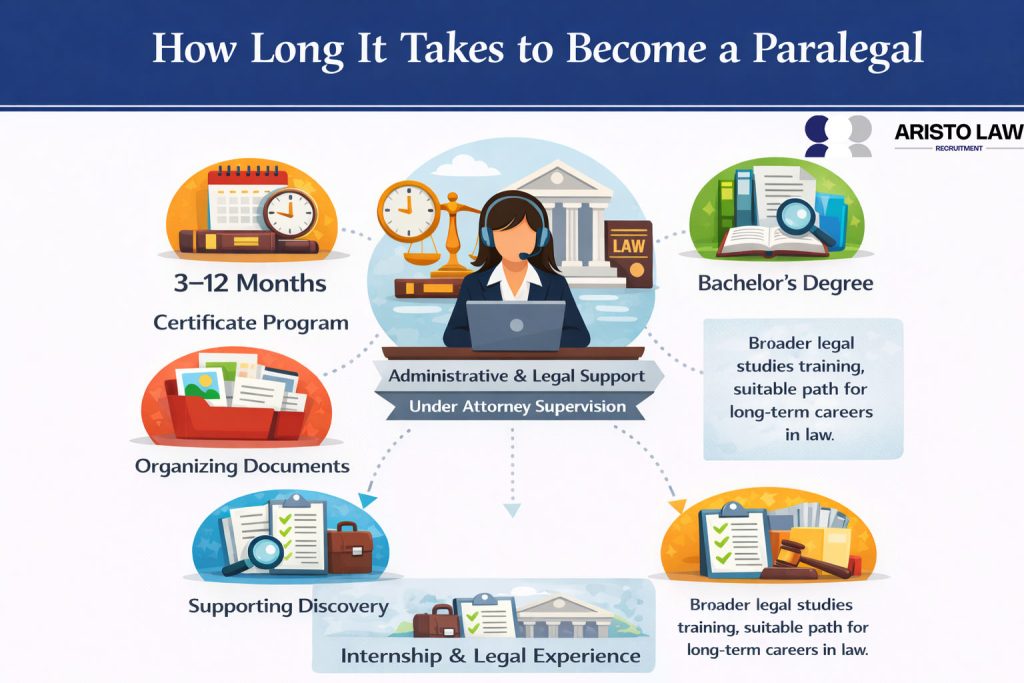
To become a paralegal, it takes about 3–12 months through a certificate program, around 2 years through an associate degree, or about 4 years through a bachelor’s degree in legal studies. The paralegal timeline depends on the chosen education pathway, prior academic background, and program structure.
Paralegal certificate duration is shorter for candidates who already hold a degree, while associate and bachelor programs provide broader legal studies training. Internships, clinical programs, or hands-on legal experience often improve job readiness and accelerate entry into paralegal roles regardless of program length.
How long does it take to become a lawyer?
Becoming a lawyer takes 6–8 years, combining formal legal education and completion of licensing or bar requirements. The lawyer timeline generally includes undergraduate study where required, a law degree such as an LLB or JD, and a bar or qualifying examination process, with exact duration varying by jurisdiction.
Can a paralegal represent in court?
No, paralegals cannot represent clients in court because paralegals are not licensed to practice law. Court representation authority belongs to lawyers who hold legal licenses and professional accountability. Limited exceptions exist in narrow administrative or regulatory settings in some jurisdictions, but those exceptions do not equal full legal representation and depend strictly on local rules.
Paralegal court-related roles focus on support functions such as preparing filings, organizing exhibits, coordinating schedules, assisting with trial preparation, and taking notes during proceedings. Paralegals always operate under attorney supervision, and legal licensing requirements define and restrict courtroom advocacy and decision-making authority.
Can a paralegal give legal advice?
No, paralegals cannot give legal advice because providing legal advice constitutes the practice of law, which requires a licensed attorney. Paralegals share factual legal information, assist with administrative tasks, conduct research, and prepare documents under attorney supervision.
Paralegals cannot interpret laws, recommend legal strategies, advise on rights or outcomes, or represent clients in legal matters. Legal licensing rules define these limits to prevent the unauthorized practice of law, with attorneys retaining full responsibility, supervision, and accountability for all legal advice and decisions.
Can paralegals become lawyers?
Yes, paralegals can become lawyers by completing a qualifying law degree and meeting bar or licensing requirements. Paralegal experience supports the paralegal vs attorney career path by building practical skills, legal familiarity, and professional readiness, but experience alone does not replace formal legal education or licensing.
Transition requires admission to law school or an equivalent qualifying program, completion of required coursework, and successful licensing or bar examination, with exact requirements varying by jurisdiction.
Can a paralegal sign legal documents?
No, paralegals generally cannot sign legal documents on behalf of clients or as attorneys because signing authority is reserved for licensed lawyers. Paralegals prepare documents, obtain client signatures, or sign internal or administrative forms when permitted by firm policy, but paralegals cannot certify legal advice, execute pleadings, or sign filings that require attorney authority. Signing rules depend on jurisdiction, court requirements, and firm policy, with attorneys retaining supervision, responsibility, and accountability for all legally binding documents.
Can hiring a paralegal reduce legal service costs?
Yes, hiring paralegals can reduce legal service costs by shifting appropriate tasks to lower-cost legal support while preserving attorney oversight. Law firms reduce legal costs by outsourcing paralegal work because paralegals handle research, drafting support, filings, and case coordination at lower billable rates, which improves throughput and reduces attorney bottlenecks.
Cost reduction occurs through better leverage, faster turnaround, and more efficient use of attorney time, while attorneys remain fully responsible for legal advice, strategy, and final work product to maintain compliance and quality.
Build a legal support team that moves work forward.
Tell us what is slowing your practice down. We will help map the role, workflow, and support structure that fits.