
Immigration paralegal work supports immigration attorneys through petition preparation, visa matter support, and client document control. Immigration paralegal job requirements cover legal writing, case-tracking software use, and confidentiality in client files. Immigration paralegal education often starts with an associate or bachelor’s program in paralegal studies, paired with immigration-law courses and a supervised practicum.
Immigration paralegal responsibilities include preparing USCIS petitions, assisting with work, family, asylum, and removal matters, assembling evidence packets, and maintaining client documentation. Immigration paralegal daily tasks cover client intake, form drafting, deadline calendars, and status updates to attorneys and clients.
Immigration paralegal salary expectations in the United States sit near $60,000–$63,000 per year, with higher pay in large metro firms and corporate immigration teams.
Immigration paralegal training routes include the AILA Paralegals Online Course, NALA Certified Paralegal credential with immigration concentration, and advanced immigration certificates from accredited paralegal schools.
Immigration paralegal steps to enter the field include completing paralegal education, taking immigration training, gaining an internship or entry-level legal support experience, and building skills in organization, client communication, and deadline control. Immigration paralegal advancement leads to senior paralegal, case manager, or team-lead roles. Immigration paralegal demand stays steady in U.S. immigration practice.
What Is an Immigration Paralegal?
An immigration paralegal is a legal assistant who supports attorneys in immigration law by managing client documentation, visa applications, and government filings. An immigration paralegal prepares petitions for work, family, and student visas, assists with permanent residency and citizenship processes, and ensures all submissions comply with legal requirements.
An immigration paralegal collaborates closely with lawyers and clients to collect evidence, organize case files, and track filing deadlines. An immigration paralegal helps maintain communication between the client and attorney, ensuring every immigration matter, from visa extensions to adjustment of status, is processed accurately and on time.
What Are the Job Requirements for Becoming an Immigration Paralegal?
The job requirements for becoming an immigration paralegal include a degree in legal studies, language proficiency, and expertise in immigration documentation. Paralegal requirements equip professionals to manage complex immigration law processes with accuracy.
Listed below are the 6 main job requirements for becoming an immigration paralegal.
- Educational credentials: An associate or bachelor’s degree in paralegal studies, legal administration, or a related discipline.
- Legal training: Certification or coursework in immigration law from accredited programs.
- Language proficiency: Fluency in English and a second language, often Spanish or Mandarin, to communicate with diverse clients.
- Documentation expertise: Knowledge of USCIS forms, petitions, and electronic filing procedures.
- Technical skills: Proficiency in legal software and digital document management systems.
- Work experience: Previous experience or internship in a law firm or immigration legal support setting.
What Are the Responsibilities of an Immigration Paralegal?
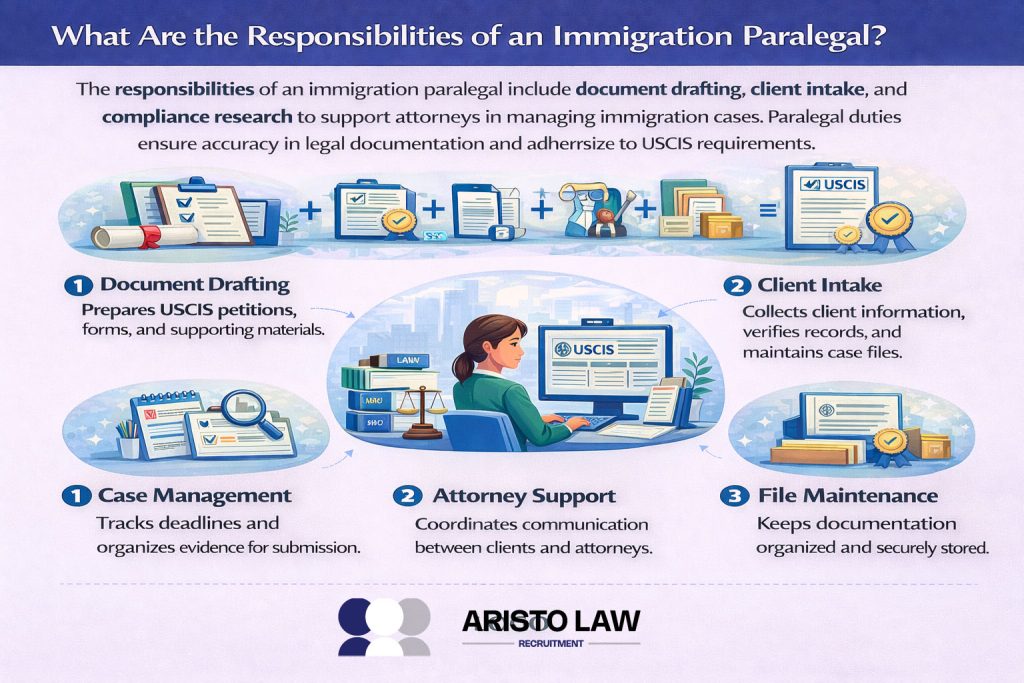
The responsibilities of an immigration paralegal include document drafting, client intake, and compliance research to support attorneys in managing immigration cases. Paralegal duties ensure accuracy in legal documentation and adherence to USCIS requirements.
Listed below are the 6 main responsibilities of an immigration paralegal.
- Document drafting: Prepares USCIS petitions, forms, and supporting materials.
- Client intake: Collects client information, verifies records, and maintains case files.
- Case management: Tracks deadlines and organizes evidence for submission.
- Compliance research: Reviews immigration laws, filing rules, and procedural updates.
- Attorney support: Coordinates communication between clients and attorneys.
- File maintenance: Keeps documentation organized and securely stored.
What Is the Career Path for an Immigration Paralegal?
The career path for an immigration paralegal includes progression from entry-level assistant to senior paralegal, case manager, or immigration program coordinator in private firms, nonprofits, and corporate departments. The immigration paralegal career path and role types expand as professionals gain experience in petition drafting, client coordination, and compliance support. Many immigration paralegals pursue certifications or transition into legal management and policy roles. Career advancement opportunities remain strong due to continued global mobility and steady demand in immigration law careers.
Do You Need a Degree to Become an Immigration Paralegal?
No, you do not need a degree to become an immigration paralegal, but having one improves job prospects and career growth. Many professionals enter the field through certification programs or on-the-job training focused on immigration procedures and documentation.
A paralegal degree or paralegal certificate in legal studies or immigration law provides structured education and stronger career mobility. Law firms often value practical experience, attention to detail, and familiarity with USCIS processes as much as formal education, allowing motivated candidates without degrees to succeed through experience and specialized training.
Where to Get an Immigration Paralegal?
To get immigration paralegals, law firms use legal staffing agencies, online job boards, and specialized recruitment platforms. Many practices now rely on virtual immigration paralegal support through services like Aristo Law, which provide experienced professionals for remote or hybrid assistance.
Reliable hiring sources include LinkedIn, law firm job boards, and dedicated legal staffing networks that screen candidates for immigration law experience and USCIS documentation skills. Outsourcing through reputable providers ensures fast placement, flexible contracts, and access to trained legal talent ready to support attorneys and clients effectively.
What Does an Immigration Paralegal Do?
An immigration paralegal assists attorneys with immigration legal support by managing compliance, documentation, and USCIS filing for clients. An immigration paralegal organizes visa petitions, prepares adjustment of status applications, drafts correspondence, and tracks case deadlines. An immigration paralegal maintains communication with clients to collect evidence, verify records, and ensure all filings meet government requirements.
A 2023 case study by Wonderbotz, titled “Immigration Law Firm uses AI to reach 65% touchless form processing,” found that moving immigration support staff onto automated/digital filing workflows reduced the average time to compile and check USCIS forms from 13 days to 5 days and increased submission accuracy to over 95%, which in turn reduced downstream case slowdowns tied to preventable form errors. An immigration paralegal strengthens case management and ensures clients remain compliant throughout the immigration process.

How Much Do Immigration Paralegals Make?
Immigration paralegal makes an average salary of about $60,000 per year in the United States, with earnings varying by state, experience, and specialization. Paralegals working in large metropolitan areas such as New York or California often earn between $65,000 and $72,000 annually, while those in smaller firms or nonprofit organizations earn closer to $48,000 to $55,000.
Specialized immigration paralegals handling corporate or employment-based visas receive higher compensation due to case complexity and workload. A 2024 report by the U.S. Bureau of Labor Statistics (BLS), titled “Paralegals and Legal Assistants Occupational Outlook Handbook,” found that the median annual wage for paralegals and legal assistants in the United States was $61,010 as of May 2024. Immigration law careers remain stable, offering consistent pay growth and long-term professional security.
How to Become an Immigration Paralegal?
The process to become an immigration paralegal involves completing paralegal education, gaining immigration law experience, and obtaining professional certification.
Listed below are the main 7 steps to become an immigration paralegal.
- Complete education: Earn an associate or bachelor’s degree in paralegal studies, legal administration, or criminal justice.
- Take immigration law training: Study visa categories, USCIS procedures, and documentation requirements.
- Gain experience: Complete an internship or entry-level position in an immigration law office or legal aid organization.
- Earn certification: Obtain credentials from accredited programs such as NALA, NFPA, or AILA immigration paralegal courses.
- Build essential skills: Develop strong organization, client communication, and document management proficiency.
- Apply for jobs: Seek roles in law firms, nonprofits, or corporate immigration departments.
- Advance career: Progress into senior paralegal, case manager, or immigration program coordinator positions.
What Are the Steps to Becoming an Immigration Paralegal?
The main steps to becoming an immigration paralegal include earning a paralegal degree, completing immigration law training, gaining legal experience, and obtaining certification.
Listed below are the 5 main steps to becoming an immigration paralegal.
- Earn a formal education: Complete an associate or bachelor’s degree in paralegal studies or legal administration.
- Take immigration law training: Learn visa procedures, USCIS requirements, and documentation standards.
- Gain legal experience: Participate in internships or entry-level positions in immigration law firms or nonprofit organizations.
- Obtain certification: Earn credentials through NALA, NFPA, or AILA immigration programs.
- Develop core skills: Build strong communication, organization, and case management abilities to support attorneys effectively.
What Courses Are Needed for Immigration Paralegal Training?
Courses that are needed for immigration paralegal training include legal research, immigration law and policy, U.S. legal systems, ethics, and case management systems. These paralegal courses combine foundational legal education with specialized immigration law training for effective client support.
Listed below are the main 5 courses that are needed for immigration paralegal training.
- Legal research and writing: Builds document drafting and analysis skills for immigration petitions.
- Immigration law and policy: Teaches visa types, asylum cases, and naturalization processes.
- U.S. government and legal systems: Explains how federal agencies regulate immigration matters.
- Ethics and professional responsibility: Focuses on confidentiality and legal compliance.
- Case management systems: Trains students on using digital tools for document tracking and client communication.
A 2020 study by the National Association of Legal Assistants (NALA), titled “2020 Utilization and Compensation Survey Report,” found that certified paralegals earn higher average salaries and report greater job stability compared with non-certified peers.