

A legal assistant is a professional who supports lawyers with administrative duties, document management, and client coordination within a law firm. Legal assistant roles involve handling case files, scheduling, correspondence, and assisting in trial preparation. Educational requirements usually include an associate degree in legal studies or business administration, though experience sometimes substitutes for formal education.
Legal assistants differ from paralegals, who perform legal research and draft legal documents, while assistants focus on clerical and organizational support. Common job titles include legal administrative assistant, litigation legal assistant, and legal support specialist. Essential skills include organization, attention to detail, and communication accuracy gained through office or legal admin experience.
The average salary for legal assistants is $48,000 per year. A study by Schollmeier and Scott, titled “Examining the Gender Wage Gap in Logistics” (2023), found that wage differences correlate strongly with experience and job stability. More experienced workers consistently earn higher pay. Career growth includes advancement to paralegal, office manager, or legal coordinator positions.
The role demands precision under deadlines but offers strong long-term career potential. Hiring legal assistants benefits law firms by improving productivity and document accuracy. Many firms find qualified candidates or outsource through AristoLaw, which provides skilled legal staffing and remote administrative solutions.
Who Is a Legal Assistant?
A legal assistant is a law office support professional who helps attorneys with administrative tasks, document preparation, and coordinated case management. A legal assistant organizes files, manages communication, maintains schedules, and supports basic paralegal duties without giving legal advice.
A legal assistant strengthens workflow in a law firm by keeping documentation accurate, deadlines organized, and client interactions structured.
What Are the Roles of a Lawyer’s Assistant?
The roles of a lawyer’s assistant include drafting correspondence, scheduling meetings, managing case files, and handling client communication. Legal assistant roles support case management, maintain organized documentation, and strengthen daily office support.
Listed below are the 6 main roles of a lawyer’s assistant.
- Drafting correspondence: Prepares letters, memos, and routine legal communications.
- Scheduling meetings: Manages attorney calendars, hearings, and client appointments.
- Managing case files: Organizes documents, updates records, and maintains filing accuracy.
- Client communication: Handles calls, emails, and appointment coordination.
- Document preparation: Formats reports, packets, and basic legal forms.
- Office support: Assists with scanning, organizing exhibits, and maintaining supplies.
What Does a Legal Assistant Do?
A legal assistant performs a mix of administrative and legal tasks that support attorneys through daily case work, documentation, and client coordination. A legal assistant manages schedules, organizes case files, prepares routine legal documents, and maintains communication between clients and the firm. A legal assistant formats briefs, drafts correspondence, and organizes exhibits for hearings or meetings.
A legal assistant strengthens attorney support by keeping documentation accurate and workflows consistent.
A study titled “Legal Documentation and Case Management: A Systematic Review of Digitization Trends and Cybersecurity Challenges in Legal Support Roles” (2023) found that electronic case management systems and digital tools improved workflow efficiency and reduced clerical errors.
What Are the Requirements to Be a Legal Assistant?
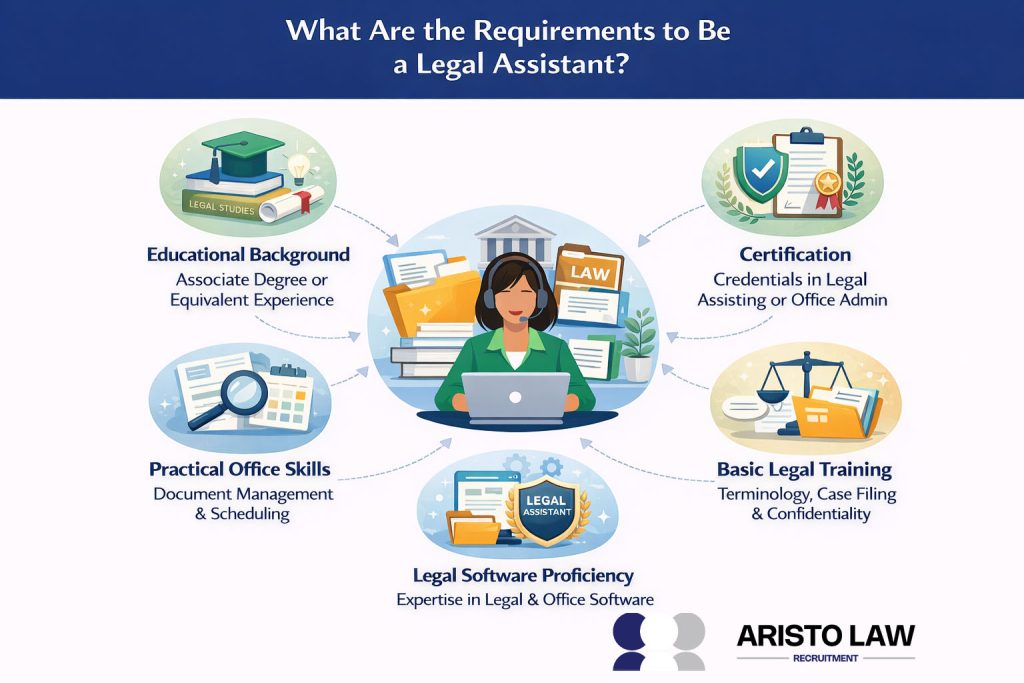
The requirements to become a legal assistant include formal education, practical office skills, and basic legal training. Legal assistant requirements usually include an associate degree in legal studies, criminal justice, or business administration, but some firms accept equivalent administrative experience.
Job qualifications include proficiency in document preparation, scheduling, and legal software. Preferred certifications include programs in legal assisting or legal office administration offered by accredited training bodies. Legal training in terminology, case filing, and confidentiality strengthens readiness for the role and improves employability in law firms.
What Are the Qualifications to Become a Legal Assistant?
The qualifications to become a legal assistant are a mix of education, certifications, and practical office experience that prepare candidates for law firm employment. Legal qualifications help candidates handle documentation, scheduling, and basic paralegal tasks with accuracy.
Listed below are the 4 main qualifications to become a legal assistant.
- Education: An associate degree in legal studies, business administration, or criminal justice.
- Certifications: Training from programs such as NALA or NFPA that strengthen legal knowledge and document accuracy.
- Work experience: Prior experience in office administration, customer communication, or legal support roles.
- Technical skills: Familiarity with legal software, document preparation tools, and case management systems.
Do You Need a Degree to Be a Legal Assistant?
No, you do not need a degree to become a legal assistant, but having one improves employment prospects and salary potential. A legal studies degree or a business administration degree strengthens understanding of terminology, documentation, and office procedures. Many law firms hire candidates with professional training or a paralegal education certificate instead of a full degree.
A study by Shtunder and Shkuropadska, titled “Global Trends in Wage Dynamics” (2025), found that high-skilled and formally educated workers earn substantially higher wages worldwide, reinforcing the wage gap between low- and high-skilled employees. Career readiness improves when candidates combine structured training with hands-on administrative experience, making degree programs helpful but not mandatory.
What Is the Difference Between a Legal Assistant and a Paralegal?
The difference between a legal assistant and a paralegal involves the type of support each role provides, the level of legal training required, and the responsibilities assigned within a law firm. The difference between a legal assistant and a paralegal appears in daily duties: a legal assistant handles clerical work such as scheduling, communication, and file organization, while a paralegal performs research, drafts legal documents, and supports substantive case work.
Paralegal roles usually require formal legal education or a paralegal certificate, while legal assistant roles rely on administrative experience. Career paths differ as well, with paralegals advancing into specialized legal practice areas and legal assistants progressing into office management or paralegal positions over time.
What Are the Job Titles of a Paralegal?
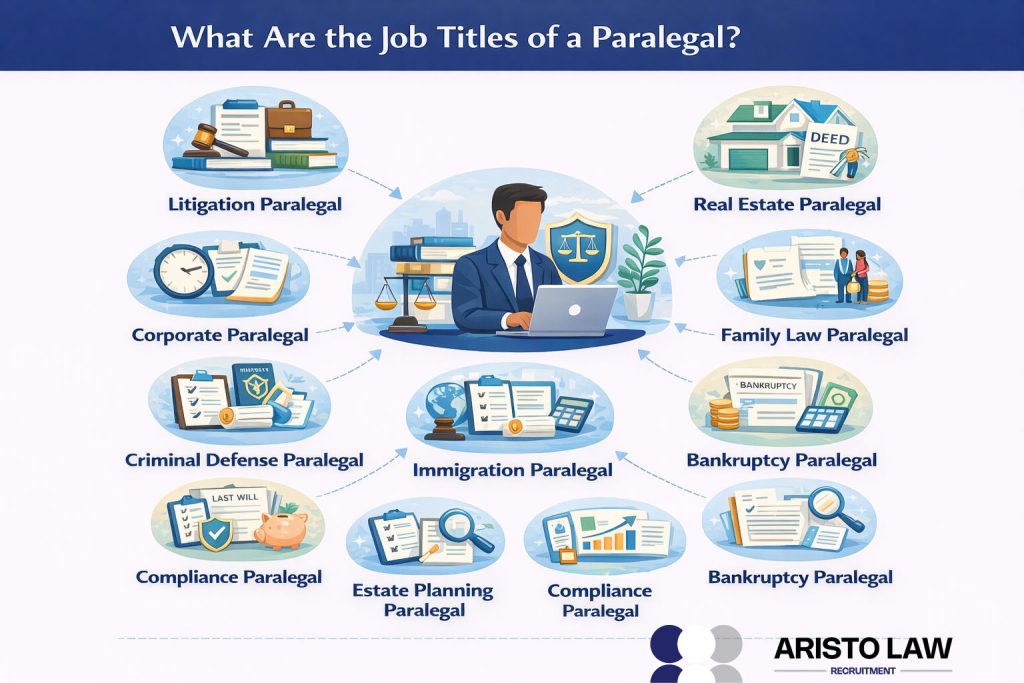
The job titles of a paralegal include Litigation Paralegal, Corporate Paralegal, Real Estate Paralegal, Legal Analyst, and several other practice-specific roles. Paralegal roles support attorneys in specialized law firm positions.
Listed below are the 10 main job titles of a paralegal.
- Litigation Paralegal
- Corporate Paralegal
- Real Estate Paralegal
- Family Law Paralegal
- Criminal Defense Paralegal
- Immigration Paralegal
- Bankruptcy Paralegal
- Estate Planning Paralegal
- Compliance Paralegal
- Legal Analyst
What Skills Are Needed to Be a Legal Assistant?
Skills that are needed to become a legal assistant include strong organization, communication accuracy, document drafting ability, and strict confidentiality. Legal assistant skills support law office operations and connect with the skills needed to be a legal assistant discussed in professional hiring guides.
Listed below are the 6 main skills that are needed to become a legal assistant.
- Organization: Maintains structured case files and schedules.
- Communication: Delivers clear written and verbal updates to clients and attorneys.
- Document drafting: Prepares letters, forms, and routine legal documents.
- Confidentiality: Protects sensitive case information.
- Time management: Handles deadlines and multiple case tasks smoothly.
- Technical proficiency: Uses legal software and document management tools effectively.
What Experience Is Required to Be a Legal Assistant?
Experience required to be a legal assistant includes prior administrative work, exposure to legal documentation, and hands-on training through law office internships. Legal assistant experience begins with entry-level office roles where candidates learn filing, scheduling, and communication procedures.
Law office internships provide early case-handling exposure, helping candidates understand terminology, document formats, and attorney support tasks. Progressive experience in customer communication, record management, and basic legal workflows strengthens readiness for full legal assistant positions and improves long-term career entry success.
What Is the Salary of a Legal Assistant?
The salary for a legal assistant is about $61,010 per year, with significant variation depending on location, experience, and area of specialization. The U.S. Bureau of Labor Statistics reported a median annual salary of $61,010 for paralegals and legal assistants in May 2024. Salary data from Salary.com places a range between $52,431 and $65,281 for Legal Assistant I positions as of July 2025.
Variance emerges by state, with higher pay found in California, Massachusetts, and Washington, where cost-of-living raises compensation. Specializations such as litigation support or corporate legal operations raise pay above standard administrative roles. Experience, firm size, and skill level directly influence compensation.
What is the Career Path of a legal assistant?
The career path of a lawyer assistant is a progression from administrative legal support into advanced legal roles through experience and structured training. Legal career growth begins with entry-level assistant work that develops skills in documentation, scheduling, and attorney support. Professional advancement includes pursuing paralegal certification, which opens opportunities for research-based tasks and specialized practice areas.
Continued progression leads to senior paralegal, case coordinator, or office management roles where responsibility expands into supervision and workflow oversight. A lawyer assistant strengthens long-term career mobility by combining practical experience with targeted legal training and accredited certifications.
Is Being a Legal Assistant Hard?
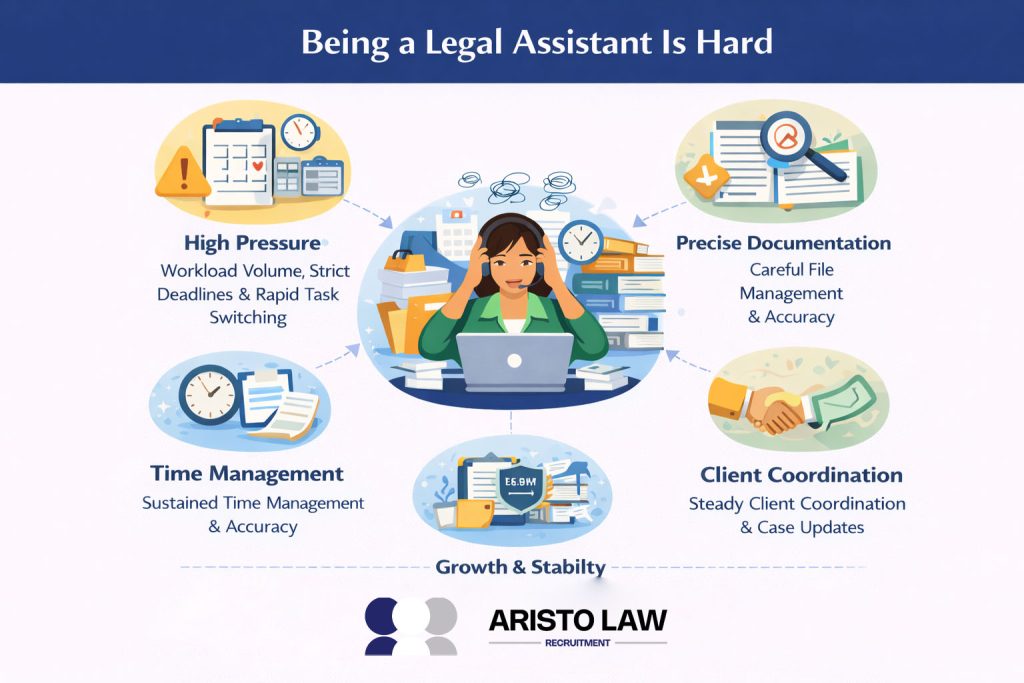
Yes, being a legal assistant is hard, especially when workload volume, strict deadlines, and rapid task switching increase pressure. Legal assistant challenges include sustained time management, precise documentation, and steady client coordination.
Legal assistant work demands a strong focus during case updates and careful handling of attorney requests. Legal assistant roles still offer stability, steady learning, and long-term growth for individuals who adapt to structured processes and maintain consistent accuracy.
What Are the Job Duties of a Litigation Legal Assistant?
The job duties of a litigation legal assistant include organizing discovery documents, preparing exhibits, scheduling depositions, and managing court filings. Litigation assistant tasks support trial preparation and structured case support throughout disputes.
Listed below are the 6 main duties of a litigation legal assistant.
- Organizing discovery documents: Maintains evidence, disclosures, and document sets.
- Preparing exhibits: Formats and labels exhibits for hearings and trial presentation.
- Scheduling depositions: Coordinates deposition dates, notices, and attorney calendars.
- Managing court filings: Submits motions, pleadings, and required case materials.
- Supporting trial preparation: Assists with timelines, witness lists, and case summaries.
- Maintaining case records: Tracks deadlines, updates logs, and organizes litigation folders.
What Does a Legal Administrative Assistant Do?
A legal administrative assistant does clerical work that supports office coordination and legal documentation for attorneys. A legal administrative assistant manages schedules, organizes records, drafts routine correspondence, and maintains communication flow between clients and the legal team.
A legal administrative assistant prepares forms, updates case logs, arranges meetings, and ensures documents stay filed and accessible for daily work.
What Is the Job Description of a Legal Support Specialist?
The job description of a legal support specialist involves managing documentation, coordinating legal operations, and supporting attorneys with technical administrative tasks. A legal support specialist differs from paralegals by focusing less on research and drafting, and differs from administrative assistants by handling more structured operational tasks such as database updates, case tracking, and document quality control.
A legal support specialist maintains digital records, prepares standardized forms, oversees workflow checkpoints, and ensures attorneys receive accurate information for case movement.
What Are the Benefits of Having a Legal Assistant?
The benefits of having a legal assistant are stronger law firm efficiency, improved administrative support, and increased productivity across daily operations.
Listed below are the benefits of having a Legal Assistant.
1. Increased Efficiency: Handles documentation, communication, and scheduling.
2. Improved Productivity: Streamlines routine processes and reduces overtime.
3. Cost Savings: Prevents errors, reduces operational delays.
4. Enhanced Client Service: Provides fast responses and organized records.
5. Better Workflow: Supports attorneys, allowing focus on high-value legal work.
Where to Find a Legal Assistant?
To find legal assistants through reliable legal recruitment channels, law firms use staffing agencies, professional job boards, and specialized outsourcing services. Legal recruitment sources include platforms that focus on law firm hiring, such as legal-specific job sites and administrative talent networks.
Many firms use staffing partners that pre-screen candidates for documentation skills, case support experience, and law office familiarity. Firms also hire legal assistants through outsourcing providers like AristoLaw, which offers trained legal assistants for remote or on-site roles and supports fast placement with consistent service quality.