
A virtual assistant is a remote human professional; an AI assistant is software that automates selected tasks. Law firms choose between them by task, risk, supervision needs, and workload, and many use both.
This guide compares the work each can perform, their advantages and limits, and how a law firm can use them with attorney oversight. Neither a virtual assistant nor an AI tool replaces a lawyer’s legal judgment or responsibility for client work.
Virtual assistants for law firms
What is a virtual assistant for a law firm?
A virtual assistant for a law firm is a remote human team member who completes assigned administrative, client-service, and legal-support tasks under the firm’s direction. The assistant can understand context, ask for clarification, follow a firm’s procedures, and flag unusual situations to a supervisor.
What tasks can a legal virtual assistant handle?
A legal virtual assistant can coordinate calendars, organize matter files, update case-management records, route intake inquiries, prepare attorney-approved documents, and follow up with clients. The firm defines the scope, gives system access, and reviews work before any legal decision or external filing.

What are the benefits of a virtual assistant?
A virtual assistant gives a firm flexible human support for tasks that need communication, prioritization, and judgment. The firm can delegate recurring work, maintain client follow-up, and add capacity without assigning every routine task to an attorney.
What are the disadvantages of a virtual assistant?
A virtual assistant requires onboarding, clear instructions, secure access, and ongoing supervision. Human capacity also scales with scheduled hours, and the firm remains responsible for confidentiality, quality checks, and attorney-only decisions.
How should a law firm protect client information when using a virtual assistant?
A law firm should protect client information by limiting access to assigned matters, using approved devices and secure systems, documenting confidentiality duties, and training the assistant on the firm’s policies. The supervising lawyer should review vendor agreements, access controls, and local professional-responsibility requirements.

AI assistants for law firms
What is an AI assistant for a law firm?
An AI assistant for a law firm is software that analyzes prompts or documents and generates outputs such as summaries, extracted data, draft text, or workflow suggestions. Its results depend on the tool, the input, the firm’s configuration, and human verification.
What tasks can AI assistants support?
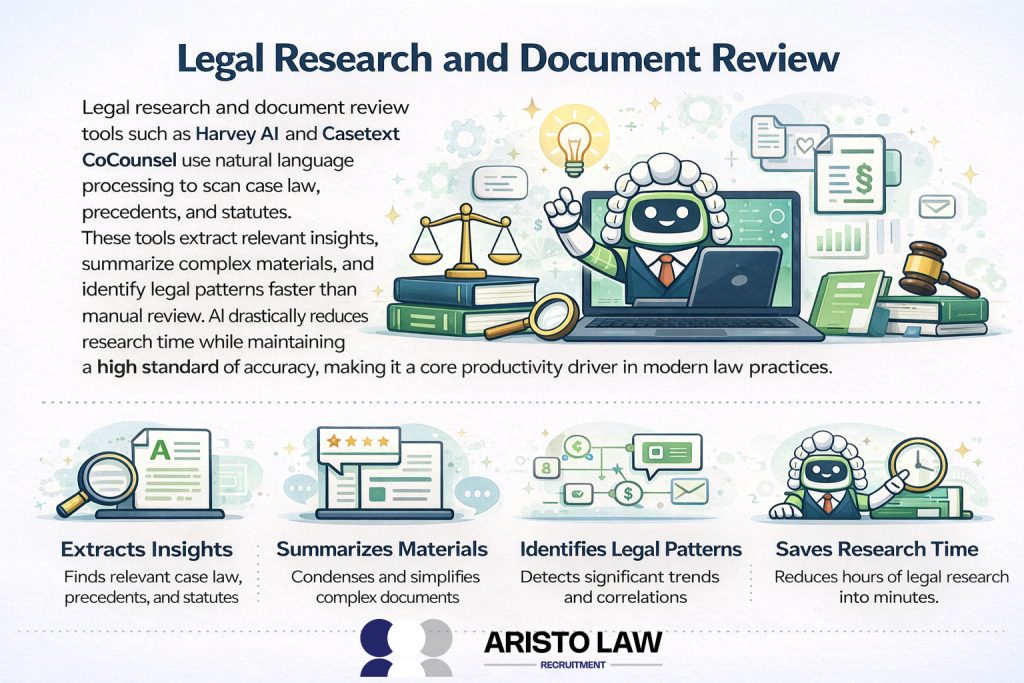
AI assistants can support tasks such as summarizing documents, extracting information, preparing first drafts from approved materials, classifying records, and automating repeatable workflows. Lawyers must verify sources, facts, citations, and final work before relying on it.
What are the benefits of AI assistants?
AI assistants can process large volumes of structured information quickly and support repeatable tasks across many files. They can reduce manual handling when a firm has a validated workflow, suitable data protections, and a reviewer who checks outputs.
What are the disadvantages of AI assistants?
AI assistants can produce inaccurate, incomplete, or unsupported outputs, and they may mishandle confidential data if the firm uses an unsuitable tool or configuration. They do not reliably exercise professional judgment, understand every case nuance, or accept responsibility for legal work.
How should law firms protect client data when using AI?
A law firm should review the tool’s data retention, training, access, and security terms before entering client information. The firm should set approved use cases, restrict sensitive inputs, require human review, and follow its professional duties and client agreements.
Compare virtual assistants and AI assistants
How do virtual assistants and AI assistants differ?
A virtual assistant performs work as a human professional, while an AI assistant generates or processes outputs as software. The distinction affects context, accountability, cost structure, security review, and the amount of supervision needed.
| Decision factor | Virtual assistant | AI assistant |
|---|---|---|
| What it is | Remote human support | Software that generates or processes outputs |
| Strength | Communication, context, follow-up, and task coordination | Speed on repeatable, high-volume information tasks |
| Limits | Scheduled capacity, onboarding, and supervision | Errors, limited judgment, and data-handling risks |
| Accountability | Works within assigned role; firm supervises | Firm validates output; tool does not assume legal responsibility |
| Best fit | Ongoing workflows that need human coordination | Defined tasks with measurable inputs and review steps |
Which option costs less for a law firm?
Neither option is always less expensive because total cost depends on workload, tool pricing, implementation, supervision, and rework. Compare the cost of completed and reviewed work, including onboarding, subscriptions, security controls, and error correction, rather than comparing an hourly rate with a software subscription alone.
Can AI replace a legal virtual assistant?
AI can automate selected tasks, but it cannot fully replace a legal virtual assistant when the work requires human communication, prioritization, follow-up, or situational judgment. A firm should assess each task separately and keep a person accountable for review and client-facing decisions.
When should a law firm use a virtual assistant?
A law firm should use a virtual assistant when recurring work needs dependable human coordination, client communication, or matter-specific follow-through. Relevant support may include a virtual legal assistant, virtual paralegal assistant, legal intake specialist, litigation case manager, virtual demand writer, or medical records specialist.
When should a law firm use AI?
A law firm should consider AI when a task is repeatable, the data and output can be checked, and the tool’s privacy terms meet the firm’s requirements. For background on AI workflows, read Aristo Law’s AI assistant guide and review its legal document automation resource.
How can a law firm combine virtual assistants and AI?
A law firm can combine AI and a virtual assistant by assigning AI a bounded first-pass task and assigning a trained human to verify the output, update the matter, and escalate exceptions. For example, AI may extract dates from approved records while a case assistant checks the dates against the source documents and the firm’s deadline process.

Which legal practice areas can use virtual support?
Virtual support can help practice teams organize workflows when tasks are defined and supervised. Aristo Law’s practice-area pages cover personal injury, immigration, family law, business law, real estate, and employment law.
How should a law firm choose between a virtual assistant and AI?
A law firm should choose by listing the work, identifying risk and human judgment needs, checking data restrictions, estimating total cost, and defining who reviews the result. Start with one limited workflow, document quality measures, and expand only when the process is reliable.
Bottom line: match the tool to the task
Virtual assistants provide human coordination; AI assistants provide software-driven processing. Law firms can use both when attorneys set clear boundaries, protect client information, and retain responsibility for reviewing legal work.