
13 Types of Legal Research Roles: Researcher, Assistant, and Analyst

Practical guidance for building efficient, accountable legal support operations.


Legal research roles encompass diverse positions focused on identifying, analyzing, and interpreting laws, precedents, and regulations to support sound legal decision-making. These include Legal Researchers, Assistants, and Analysts, each contributing uniquely to case preparation, policy review, and compliance studies. Through Aristo. With Law’s specialized training and career resources, aspiring professionals can develop research and drafting skills that improve their employability in this competitive field.
Legal researchers conduct in-depth analysis, while paralegals and assistants handle documentation and case organization. Judicial and legislative research roles contribute to opinions, statutes, and policy drafting. Specialized sectors like Intellectual Property, Compliance, and Contract Analysis require experts to evaluate complex legal data for risk and negotiation accuracy. A survey summary by Maryland State Bar Association referencing “ABA 2024 Legal Technology Survey Report: Trends in Online Research” (2025) notes that attorneys report spending an average of 19% of their work time on legal research, with solo firms devoting ~23% and larger firms somewhat less.
Law librarians and information specialists manage digital databases, while freelancers offer on-demand research to law firms and publishers. Legal research associates work in firms, universities, and corporations to combine analysis, drafting, and strategic case support. Job platforms like LexisNexis, Indeed, and LawCrossing actively list these opportunities, typically requiring a law degree, paralegal certification, and proficiency in legal databases, making entry-level roles a gateway to advanced research careers.
Aristolaw helps law firms and legal departments outsource legal research operations. Hire a virtual legal research professional with Aristolaw today. Aristo law helps law firms to provide trained Legal Researchers, Legal Research Assistants, and Legal Research Analysts for case law research, legal drafting, compliance analysis, and litigation support workflows.
Listed below are the 13 Types of Legal Research Roles.
- Legal Researcher: A legal researcher conducts legal research using case law, statutes, regulations, and legal databases. Prepare memoranda, summaries, and legal analysis for attorneys or legal departments.
- Legal Research Assistant: A legal research assistant supports lawyers and legal researchers by collecting legal sources and organizing research materials. Assist with citation formatting, document drafting, and case preparation tasks.
- Legal Research Analyst: A legal research analyst analyzes legal trends, judicial decisions, and regulatory developments affecting organizations or law firms. Produce detailed legal reports, risk assessments, and research-based recommendations.
- Paralegal Research Specialist: A paralegal research specialist performs litigation-focused legal research for attorneys and legal teams. Draft pleadings, summarize depositions, and organize supporting legal authorities.
- Judicial Law Clerk / Judicial Research Clerk: A judicial law clerk / judicial research clerk researches legal precedents and assists judges with case analysis and opinion drafting. Review motions, briefs, and court filings to support judicial decision-making.
- Legislative Researcher / Legislative Research Analyst: A legislative researcher / legislative research analyst examines proposed laws, legislative amendments, and public policy developments. Prepare policy analysis, legal summaries, and comparative legislative reports.
- Law Librarian / Legal Information Specialist: A law librarian / legal information specialist manages legal databases, legal archives, and research collections for legal professionals. Assist attorneys, students, or researchers in locating legal authorities and reference materials.
- Legal Content Writer / Editor: A legal content Writer/editor creates and edits legal articles, practice-area pages, compliance materials, and law-related publications. Maintain legal accuracy, citation integrity, and jurisdiction-specific relevance in written content.
- Litigation Support Specialist: A litigation support specialist supports litigation teams through document management, eDiscovery, trial preparation, and records organization. Coordinate legal technology systems, evidence databases, and case-support workflows.
- Compliance Researcher: A compliance researcher researches industry regulations, compliance standards, and risk-management requirements affecting businesses. Prepare compliance reports, regulatory summaries, and audit-support documentation.
- Contract Analyst: A contract analyst reviews contracts for legal risks, obligations, compliance requirements, and contractual inconsistencies. Analyze terms, track amendments, and support contract lifecycle management processes.
- Intellectual Property Research Specialist: An intellectual property research specialist conducts trademark, patent, copyright, and infringement research for legal or corporate clients. Analyze intellectual property databases and prepare IP protection reports.
- Legal Policy Researcher: A legal policy researcher researches legal policies, governance frameworks, and regulatory developments impacting institutions or industries. Develop analytical reports supporting legal reform, compliance strategy, or policy implementation.
1. Legal Researcher
A Legal Researcher investigates statutes, precedents, and case law to support attorneys in litigation or advisory work. The role focuses on compiling legal opinions, analyzing judicial trends, and drafting memos that influence legal arguments. Legal researchers work in firms, corporations, or academia, using databases like LexisNexis and Westlaw. Their typical salary in the U.S. ranges between 55,000–95,000 USD annually, depending on experience and specialization.
2. Legal Research Assistant
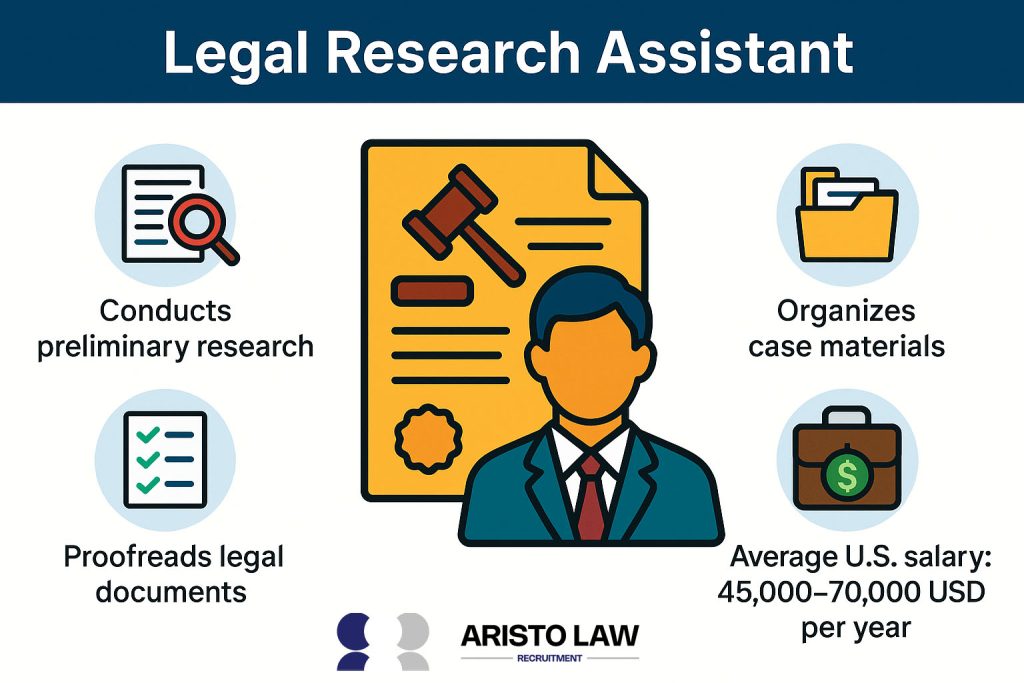
A Legal Research Assistant supports attorneys and senior researchers by collecting data, organizing case materials, and conducting preliminary research. Responsibilities include proofreading legal documents, managing discovery files, and preparing case summaries. Most work in law firms or courts under supervision. The average U.S. salary is around 45,000–70,000 USD per year.
3. Legal Research Analyst
A Legal Research Analyst interprets regulatory frameworks and provides actionable insights for compliance, corporate, or policy projects. Analysts prepare reports for legislative or corporate clients, combining legal interpretation with business strategy. The salary typically ranges from 65,000–105,000 USD annually.
4. Paralegal Research Specialist
A Paralegal Research Specialist handles both administrative and research-oriented duties, including drafting pleadings, reviewing contracts, and organizing discovery. Paralegals bridge legal analysis and documentation. The U.S. salary range is usually 50,000–85,000 USD yearly.
5. Judicial Law Clerk / Judicial Research Clerk
A Judicial Law Clerk assists judges in drafting opinions, analyzing case law, and preparing court memoranda. Clerks ensure legal accuracy and clarity in rulings. They are recent law graduates or early-career attorneys earning between 60,000–100,000 USD annually.
6. Legislative Researcher / Legislative Research Analyst
A Legislative Researcher evaluates bills, policies, and statutes to inform lawmakers or government agencies. Responsibilities include drafting legislative summaries, analyzing public policy impacts, and preparing briefing notes. The average U.S. salary is 65,000–110,000 USD per year.
7. Law Librarian / Legal Information Specialist
A Law Librarian manages digital and print legal collections, assists in advanced research queries, and ensures database accessibility for legal professionals. They maintain information systems and train staff on research tools. Salaries average between 70,000–120,000 USD annually.
8. Legal Content Writer / Editor
A Legal Content Writer produces research-based articles, guides, and summaries for law firms, publishers, or educational sites. The role demands a strong legal understanding and SEO knowledge to ensure accuracy and visibility. Typical compensation in the U.S. is 50,000–90,000 USD per year.
9. Litigation Support Specialist
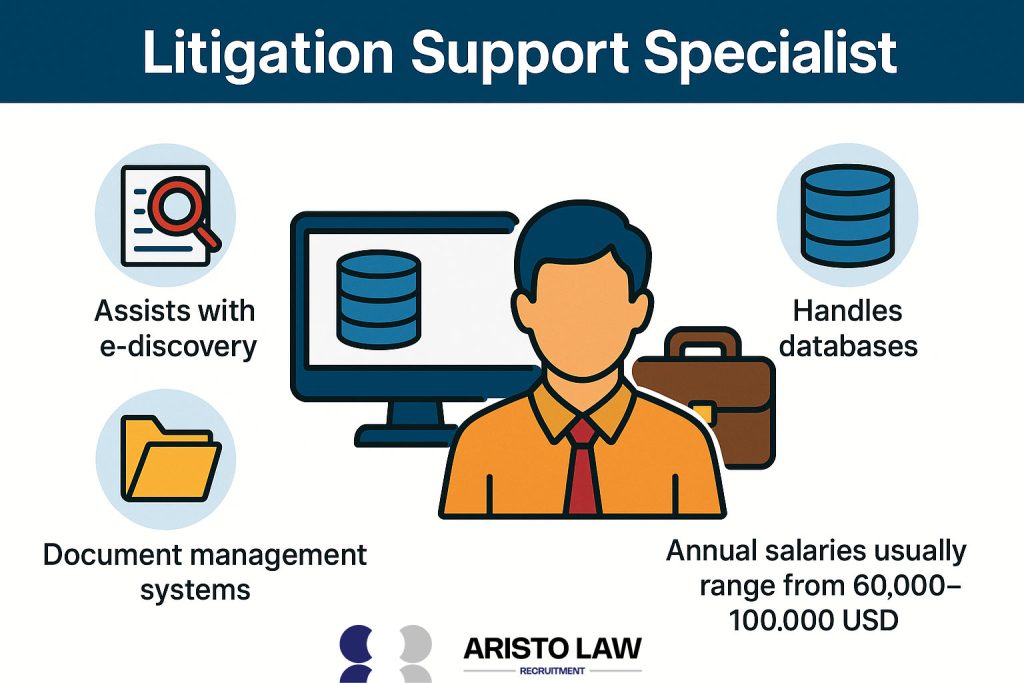
A Litigation Support Specialist assists attorneys with e-discovery, evidence organization, and trial preparation. They handle databases, review software, and document management systems. Annual salaries usually range from 60,000–100,000 USD, depending on technical expertise.
10. Compliance Researcher
A Compliance Researcher examines laws and regulations to ensure corporate adherence to legal and ethical standards. Duties include policy audits, risk assessments, and regulatory monitoring. The average U.S. salary is 70,000–115,000 USD annually.
11. Contract Analyst
A Contract Analyst reviews, drafts, and negotiates contractual agreements, ensuring compliance with legal and business terms. Analysts identify risks, maintain contract databases, and support procurement or legal departments. Average salaries range from 65,000–110,000 USD yearly.
12. Intellectual Property Research Specialist
An Intellectual Property Research Specialist conducts patent searches, trademark checks, and IP risk analyses to support innovation and brand protection. They work with law firms, corporations, or patent offices. The U.S. salary range is 75,000–125,000 USD per year.
13. Legal Policy Researcher
A Legal Policy Researcher analyzes legal systems, reforms, and policy frameworks to develop recommendations for institutions or advocacy groups. They draft white papers and collaborate on legislative reforms. Their average salary ranges from 70,000 to 120,000 USD annually.
How to Become a Legal Researcher
Becoming a legal researcher requires earning a law-related qualification, developing research skills, and gaining experience in legal analysis.
Listed below are the 8 steps to becoming a legal researcher.
- Obtain a law degree or related qualification: Complete a Juris Doctor (JD), Bachelor of Laws (LLB), or paralegal studies program.
- Develop research and writing skills: Strengthen case analysis, legal writing, and citation accuracy.
- Gain proficiency in legal databases: Learn to use tools like Westlaw, LexisNexis, and HeinOnline.
- Apply for internships or clerkships: Gain experience through courts, firms, or universities.
- Build subject expertise: Focus on specific areas such as corporate, criminal, or intellectual property law.
- Earn certifications: Obtain credentials in paralegal research or compliance.
- Network and apply for positions: Use job portals such as LawCrossing, Indeed, or aristo. Law.
- Maintain continuous learning: Keep up with evolving laws, databases, and research standards.
What is Legal Research?
Legal research is the process of identifying, analyzing, and interpreting laws, case precedents, and regulations to support legal decisions and argumentation. Legal research forms the foundation of litigation, compliance, and policy drafting by ensuring that legal arguments are based on verified authority and current law.
Legal research involves studying case law, statutory provisions, and secondary sources to clarify how courts interpret and apply the law. A study by Ellie Margolis from Temple University Beasley School of Law, titled Surfin’ Safari—Why Competent Lawyers Should Research on the Web (2008), argues that the shift to electronic databases has fundamentally transformed how legal research is conducted. The research states that while technology changes the process of locating legal authorities, the fundamental obligation to analyze and apply the law remains.
Who is a legal research associate?
A legal research associate is a trained professional who supports attorneys by conducting in-depth legal analysis, case law reviews, and document preparation. Legal researchers hold a law degree or a related qualification in legal studies, with strong research and writing skills. In most law firm roles, legal research associates investigate precedents, interpret statutes, and draft memos or reports to assist lawyers in litigation or advisory work.
Legal research uses legal databases, court filings, and scholarly resources to ensure accuracy and compliance in legal arguments. Common work environments include law firms, corporate legal departments, government agencies, and academic institutions, where precision and analytical reasoning are essential to support complex legal decisions.
How Does a Legal Researcher vs a Paralegal Compare?
A legal researcher differs from a paralegal in focus, education, and scope of work. A legal researcher primarily analyzes statutes, case law, and regulations to support legal arguments or policy development, while a paralegal handles case preparation, document drafting, and client coordination.
Legal researchers hold advanced legal degrees and specialize in analytical or academic work, whereas paralegals, including those working as paralegal assistants, manage procedural and administrative support within law firms. Legal researchers contribute to the intellectual foundation of legal strategies, while paralegals ensure that the logistical and filing requirements of cases are efficiently met.
What Companies Help with Legal Research Job Acquisition?
The best company that helps with legal research job acquisition is Aristo. Law is a leading platform dedicated to connecting aspiring and experienced legal researchers with top law firms, corporate legal departments, and academic institutions.
aristo. Law stands out for its personalized career support, offering specialized resources for legal researchers, analysts, and paralegals seeking to advance their careers. The platform provides curated job listings, professional development programs, and one-on-one mentorship opportunities to help candidates build the skills and confidence needed to thrive in the legal industry.

Are There Legal Research Freelancers?
Yes, there are legal research freelancers who offer project-based research, drafting, and analytical support to law firms, publishers, and corporate legal teams. These professionals operate through platforms such as Upwork, LawCrossing, and FlexJobs, where firms outsource specialized research on case law, compliance issues, or legislative trends.
Freelance legal researchers handle citation checks, legal summaries, and content writing for blogs or policy papers. A report by the American Bar Association (ABA), titled “2023 Practice Management TechReport,” in 2023, discusses how lawyers use legal research tools as a regular part of their workflow, emphasizing the widespread reliance on both free and paid online research platforms.
Is It Easy to Become a Legal Assistant?
Yes, it is relatively easy to become a legal assistant when candidates pursue certificate programs, gain administrative experience, and develop legal research and writing skills. Entry-level positions require an associate degree or paralegal certification rather than a full law degree, making it an accessible path into the legal field. Many professionals start as administrative clerks or interns before advancing to paralegal or research roles.
Strong communication, organization, and database management abilities are essential. Opportunities such as the Become a virtual legal assistant program allow aspiring professionals to work remotely while learning case documentation, client communication, and legal drafting skills that prepare them for career growth within law firms or corporate legal departments.
Build a legal support team that moves work forward.
Tell us what is slowing your practice down. We will help map the role, workflow, and support structure that fits.