
Affordable Virtual Paralegal companies

Practical guidance for building efficient, accountable legal support operations.

Virtual paralegal companies provide remote legal support
professionals who assist law firms with legal research, document
preparation, case management, and discovery coordination.
Virtual paralegal companies also support client intake, billing
processes, and administrative workflows without requiring law firms to
hire additional in-house staff.
These providers help law firms expand legal service capacity, improve
operational efficiency, and control staffing costs through flexible
outsourcing models.
Affordable virtual paralegal companies commonly used by law firms
include Zirtual, Aristo Law, SEOforLawFirm, Legal Soft, Virtual
Paralegal Services (VPS), There Is Talent, Virtual Staffing, LexHelper
(LexParalegal), Upwork, HazenTech, Christina Virtual Paralegal Services,
Elite Virtual Assistants (EVA), Virtual Paralegal Pros, and Wyzer
Staffing.
Aristolaw helps law firms find affordable virtual paralegal
support by providing outsourced assistance for case preparation,
document drafting, discovery coordination, legal research, client
communication, and remote legal workflows. Book
a Virtual Paralegal Assistant staffing consultation with
Aristolaw. Aristolaw connects law firms with outsourcing
solutions that match trained virtual paralegal staff to each
cost-control goal, case support task, document workflow, discovery duty,
research function, and law firm operations need.
Core services include legal research, drafting support, discovery
management, document organization, litigation support, case management,
client intake, scheduling, CRM updates, billing assistance, records
management, and workflow coordination. By delegating these functions,
attorneys spend more time on legal analysis, negotiations, client
counseling, and court-related responsibilities.
Cost efficiency is one of the primary reasons firms use virtual
paralegal companies. U.S. based paralegals earn approximately
$55,000-$95,000+ annually, excluding benefits, payroll taxes,
office space, equipment, and training costs. Virtual paralegal services
frequently range from approximately $10–$50 per hour, depending on
experience, specialization, and provider model. Offshore and blended
staffing models reduce legal-support costs by 40–70% compared with
equivalent in-house staffing arrangements.
Virtual paralegal companies improve law firm efficiency by reducing
administrative burdens, accelerating document preparation, supporting
case-management activities, improving intake responsiveness, and helping
firms manage workload fluctuations without permanent staffing
commitments. Firms also gain scalability because support capacity
expands during litigation surges, growth initiatives, major
transactions, or seasonal workload increases.
Factors that make a virtual paralegal company affordable include
flexible hourly pricing, project-based engagement models, offshore
staffing resources, shared-service structures, reduced recruitment
expenses, lower overhead costs, and the ability to pay only for the
support required. Many providers also offer dedicated staffing
arrangements that remain less expensive than hiring full-time internal
personnel.
When selecting a provider, law firms evaluate legal experience,
practice-area familiarity, confidentiality safeguards, communication
quality, responsiveness, supervision standards, technology proficiency,
legal-software experience, scalability, and workflow integration
capabilities. Firms should also assess experience with case-management
systems, document-management platforms, legal research tools, billing
systems, and client-communication workflows.
Virtual paralegal companies provide law firms with a cost-effective
method of increasing productivity, improving operational flexibility,
expanding legal-support capacity, and maintaining efficient legal
workflows. Through scalable staffing models, specialized expertise, and
reduced overhead costs, these providers help law firms improve
profitability while supporting long-term operational growth.
Listed below are 14 companies that provide virtual paralegal
services.
-
1. Zirtual: Zirtual provides remote virtual
assistant support, including administrative and operational assistance
for professional service businesses. -
2. Aristo Law: Aristo Law provides outsourced legal
support staff for law firms, including virtual paralegals, legal
assistants, intake specialists, and litigation support
professionals. -
3. SEOforlawfirm: SEOforlawfirm supports law firms
with legal marketing, content development, search engine optimization,
and law firm growth services. -
4. Legal Soft: Legal Soft offers legal staffing
solutions that help law firms outsource paralegal, intake, case
management, and administrative functions. -
5. Virtual Paralegal Services (VPS): Virtual
Paralegal Services provides freelance and contract paralegal support for
legal research, drafting, and case preparation tasks. -
6. There Is Talent: There Is Talent connects
businesses and law firms with remote professionals for administrative,
legal, and operational support roles. -
7. Virtual Staffing: Virtual Staffing supplies
remote professionals who assist organizations with back-office,
administrative, and legal support functions. -
8. LexHelper (LexParalegal): LexHelper provides
virtual paralegal services that support document preparation, legal
research, and case management activities. -
9. Upwork: Upwork is a freelance marketplace where
law firms hire independent virtual paralegals, legal researchers, and
legal support professionals. -
10. HazenTech: HazenTech provides virtual staffing
and outsourcing services that include legal support and administrative
assistance. -
11. Christina Virtual Paralegal Services: Christina
Virtual Paralegal Services offers remote paralegal assistance for legal
documentation, research, and case support tasks. -
12. Elite Virtual Assistants (EVA): Elite Virtual
Assistants provides virtual administrative and professional support
services for businesses and legal practices. -
13. Virtual Paralegal Pros: Virtual Paralegal Pros
delivers remote paralegal support for litigation, document management,
legal drafting, and case coordination. -
14. Wyzer Staffing: Wyzer Staffing helps
organizations source remote professionals, including legal support staff
and administrative personnel.
1. Zirtual
Zirtual is a virtual staffing provider that supplies remote
assistants who support administrative, scheduling, communication, and
operational functions for professional-service organizations, including
law firms. The purpose of Zirtual is to help firms reduce
administrative workloads, improve responsiveness, and increase
productivity without hiring additional in-house personnel. Services
commonly include calendar management, email administration, appointment
scheduling, client communication support, and workflow coordination.
From a staffing perspective, Zirtual provides flexible remote support
that allows firms to scale assistance according to workload demands.
Technology integration with communication, scheduling, and productivity
platforms helps maintain operational efficiency. Law firms evaluating
Zirtual should assess legal-industry familiarity, confidentiality
practices, workflow compatibility, responsiveness standards, and the
provider’s ability to support legal operations effectively.
2. Aristo Law
Aristo Law is a legal outsourcing and legal staffing provider
that connects law firms with trained virtual legal professionals,
including virtual paralegals, legal assistants, intake specialists,
contract managers, and administrative support staff. The
purpose of Aristo Law is to help law firms solve staffing challenges
while improving operational efficiency and reducing overhead costs.
Services include legal research support, document preparation,
case-management assistance, client intake, CRM administration,
scheduling, billing support, and legal workflow coordination. Aristo Law
emphasizes legal-industry expertise, scalable staffing models, and
workflow integration. Law firms should evaluate staffing quality,
supervision processes, communication standards, technology proficiency,
and practice-area alignment when selecting outsourced legal support
providers.
3. SEOforLawFirm
SEOforLawFirm is primarily a legal marketing provider that
supports law firms through digital marketing, lead-generation
strategies, search-engine optimization, and growth initiatives.
Some firms utilize related support resources to assist with intake
workflows and operational coordination connected to marketing
activities.
The value of SEOforLawFirm lies in helping law firms improve
visibility, generate leads, and support business growth. Firms
considering marketing-related outsourcing should evaluate
lead-management processes, communication workflows, intake integration
capabilities, and operational support alignment with broader growth
objectives.
4. Legal Soft
Legal Soft is a legal outsourcing company that provides
remote legal support professionals for law firms. Services
commonly include virtual paralegals, intake specialists, legal
assistants, case managers, and administrative support personnel.
The organization helps law firms improve productivity through
dedicated staffing solutions that support legal operations, case
administration, document preparation, and client communication.
Technology integration, workflow standardization, and staffing
scalability contribute to operational efficiency. Law firms should
evaluate experience levels, onboarding support, supervision structures,
confidentiality standards, and software proficiency when selecting legal
outsourcing partners.
5. Virtual Paralegal Services
(VPS)
Virtual Paralegal Services (VPS) provides remote paralegal
support for attorneys and law firms. The organization focuses
on legal research, drafting assistance, case-management support,
document preparation, discovery coordination, and administrative legal
workflows.
VPS helps firms access experienced legal support without maintaining
full-time internal staffing. Cost efficiency is achieved through
flexible engagement models that allow firms to utilize support based on
actual workload requirements. Evaluation criteria should include legal
experience, turnaround times, communication quality, and familiarity
with relevant practice areas.
6. There Is Talent
There Is Talent is a staffing and outsourcing provider that
connects organizations with remote professionals across multiple
business functions. For law firms, remote legal support
personnel assist with administrative operations, client communication,
intake processes, and workflow management.
The organization helps firms expand staffing capacity while
controlling labor costs. Firms should assess candidate qualifications,
legal-support experience, communication skills, and workflow
compatibility before engagement.
7. Virtual Staffing
Virtual Staffing provides remote staffing solutions that
support legal operations through outsourced administrative and
legal-support professionals. Services include client intake,
document organization, scheduling, billing support, records management,
and workflow coordination.
The provider’s value comes from helping firms scale operations while
reducing recruitment costs and staffing overhead. Law firms should
evaluate management processes, performance standards, technology
capabilities, and operational support depth when considering virtual
staffing providers.
8. LexHelper (LexParalegal)
LexHelper, also known as LexParalegal, focuses on virtual
paralegal services designed specifically for legal practices.
Services include legal research, document drafting support, litigation
assistance, case-management administration, and legal workflow
coordination.
The provider supports attorney productivity by handling
time-consuming legal-support functions that do not require attorney
involvement. Law firms should assess legal specialization,
confidentiality safeguards, legal-software proficiency, and
communication standards before selecting virtual paralegal
providers.
9. Upwork
Upwork is a freelance marketplace that allows law firms to
hire independent virtual paralegals, legal assistants, researchers, and
administrative professionals on a project, hourly, or long-term
basis. The platform provides flexibility and access to a large
talent pool.
Cost efficiency varies depending on experience and specialization.
Because freelancers operate independently, firms should conduct thorough
screening, verify qualifications, establish supervision protocols, and
implement confidentiality safeguards before engagement.
10. HazenTech
HazenTech provides outsourcing and staffing services that
support legal and business operations. Remote legal-support
professionals assist with document management, administrative workflows,
intake coordination, and legal operations support.
The company helps firms improve operational capacity through scalable
staffing solutions. Evaluation should focus on staffing quality,
technology infrastructure, communication practices, and operational
support capabilities.
11. Christina Virtual
Paralegal Services
Christina Virtual Paralegal Services provides remote
paralegal support for attorneys and law firms. Services
commonly include document preparation, legal research assistance, file
organization, case administration, and legal workflow support.
The organization helps law firms access specialized legal-support
resources without expanding internal staffing. Firms should evaluate
legal experience, responsiveness, confidentiality practices, and
practice-area familiarity when selecting virtual paralegal services.
12. Elite Virtual Assistants
(EVA)
Elite Virtual Assistants (EVA) provides remote staffing
support that helps law firms manage administrative, operational, and
client-service responsibilities. Services include scheduling,
communication management, intake support, CRM administration, and
workflow coordination.
The organization supports operational efficiency through flexible
staffing models and scalable support coverage. Law firms should assess
training standards, communication quality, and legal-industry
familiarity before engagement.
13. Virtual Paralegal Pros
Virtual Paralegal Pros specializes in providing remote
paralegal support services for legal practices. Services
include legal research support, document drafting assistance, discovery
administration, case-management activities, and litigation support
workflows.
The provider helps attorneys increase productivity by delegating
routine legal-support responsibilities. Firms should review experience
levels, supervision structures, software proficiency, and
quality-control practices when evaluating virtual paralegal
providers.
14. Wyzer Staffing
Wyzer Staffing is a staffing provider that helps
organizations access remote professionals for operational and
administrative support functions. Law firms utilize staffing
resources for intake management, client communication, scheduling,
administrative support, and legal workflow coordination.
The provider supports scalability and staffing flexibility while
reducing recruitment and overhead expenses. Firms should evaluate talent
quality, onboarding processes, performance monitoring systems, and
legal-support experience before selecting a staffing partner.
Best
Practices for Selecting Virtual Paralegal Companies
When evaluating virtual paralegal companies, legal
outsourcing providers, and remote legal support organizations, law firms
should prioritize legal-industry experience, confidentiality safeguards,
communication quality, and legal-software proficiency. Law
firms should also assess workflow integration capabilities, scalability,
supervision standards, and responsiveness to ensure effective long-term
support.
Structured onboarding processes, clearly defined performance
expectations, secure technology infrastructure, and regular performance
reviews help maximize the value of outsourced legal services. Proper
provider selection enables law firms to improve productivity, expand
legal service capacity, strengthen legal operations, and achieve
cost-effective growth through scalable legal support.
What
should law firms look for in a virtual paralegal company?
Factors law firms should evaluate when selecting a virtual
paralegal company include legal-industry experience, scalability, and
workflow compatibility.
Virtual paralegal companies provide trained legal support staff,
structured workflows, and practice-area experience that align with law
firm operational requirements. Law firms evaluating virtual paralegal
companies compare staffing quality, supervision models, and onboarding
processes alongside how
to hire a virtual legal assistant.
Listed below are 19 factors law firms should evaluate.
-
Legal-Industry Experience: Evaluate whether the
provider has experience supporting attorneys, law firms, legal
departments, and litigation teams. Companies with legal-industry
knowledge understand legal terminology, court procedures, document
workflows, client-service expectations, and legal operations more
effectively than general virtual-assistant providers. -
Practice-Area Expertise: Assess experience in
relevant practice areas such as personal injury, family law,
immigration, criminal defense, employment law, corporate law, estate
planning, litigation, or real estate law. Practice-area familiarity
improves accuracy, efficiency, and workflow integration. -
Communication Quality: Review responsiveness,
professionalism, written communication skills, verbal communication
standards, and client-interaction capabilities. Strong communication
improves collaboration, reduces misunderstandings, and supports more
efficient legal workflows. -
Confidentiality Standards: Examine confidentiality
agreements, information-security policies, access controls,
data-handling procedures, and privacy safeguards. Virtual paralegal
companies routinely work with sensitive legal information that requires
strong security and confidentiality protections. -
Technology Proficiency: Evaluate experience with
legal technology platforms, document-management systems, billing
software, CRM platforms, communication tools, e-signature systems, and
case-management applications. Technology proficiency reduces onboarding
time and improves operational efficiency. -
Scalability: Determine whether the provider supports
increasing workloads, additional matters, practice-area expansion,
seasonal fluctuations, and long-term growth. Scalable staffing models
help law firms avoid operational bottlenecks during periods of increased
demand. -
Workflow Compatibility: Assess whether the provider
adapts to existing procedures, communication protocols, approval
workflows, documentation standards, and operational processes. Strong
workflow alignment improves productivity and reduces implementation
challenges. -
Legal Software Familiarity: Review experience with
platforms such as Clio, MyCase, PracticePanther, Smokeball,
document-management systems, legal research platforms, and client-intake
tools. Familiarity with legal software accelerates onboarding and
improves workflow integration. -
Quality-Control Processes: Evaluate review
procedures, supervisory structures, documentation standards, accuracy
checks, performance monitoring systems, and escalation protocols. Strong
quality-control practices help maintain consistency and reduce
errors. -
Turnaround Capabilities: Assess the provider’s
ability to meet deadlines, manage urgent projects, support litigation
schedules, and respond to changing workload requirements. Reliable
turnaround performance supports client service and operational
efficiency. -
Staffing Models: Review whether the company offers
dedicated paralegals, shared staffing teams, project-based support,
full-time resources, or hybrid arrangements. Different staffing models
affect consistency, availability, scalability, and cost structures. -
Client-Service Standards: Examine professionalism,
responsiveness, issue-resolution procedures, communication protocols,
and service-level expectations. Strong client-service standards support
long-term outsourcing success and operational reliability. -
Onboarding Procedures: Evaluate training processes,
workflow implementation support, documentation requirements,
knowledge-transfer procedures, and transition planning. Structured
onboarding helps providers become productive more quickly. -
Reporting Systems: Review available productivity
reports, workload tracking, task-management dashboards, performance
metrics, and communication records. Reporting visibility helps firms
monitor outsourced operations and maintain accountability. -
Security Practices: Assess cybersecurity controls,
password-management procedures, encrypted communications, secure
file-sharing methods, access permissions, and data-protection protocols.
Strong security measures reduce operational and compliance risks. -
Supervision and Management Structure: Determine who
oversees virtual paralegals, manages performance, handles quality
assurance, and resolves workflow issues. Clear management structures
improve accountability and service consistency. -
Cost Structure and Pricing Transparency: Review
hourly rates, monthly plans, project fees, dedicated staffing costs, and
any additional charges. Transparent pricing helps firms evaluate overall
value and budget accurately. -
Recruitment and Screening Standards: Examine hiring
criteria, background verification processes, skills assessments,
legal-experience requirements, and training programs. Strong screening
procedures improve talent quality and reduce hiring risk. -
Business Continuity and Coverage: Assess backup
staffing arrangements, workload coverage procedures, continuity plans,
and availability during employee absences or staffing changes. Business
continuity support helps maintain uninterrupted operations.
Provider selection directly influences outsourcing success, legal
workflow efficiency, service quality, operational scalability,
compliance performance, and attorney productivity. The best virtual
paralegal companies combine legal expertise, strong security standards,
scalable staffing models, reliable communication, and effective workflow
integration to support long-term law firm growth and operational
performance.
What
services do virtual paralegal companies provide?
Services virtual paralegal companies provide include legal
research, client communication coordination, litigation support, and
legal administration.
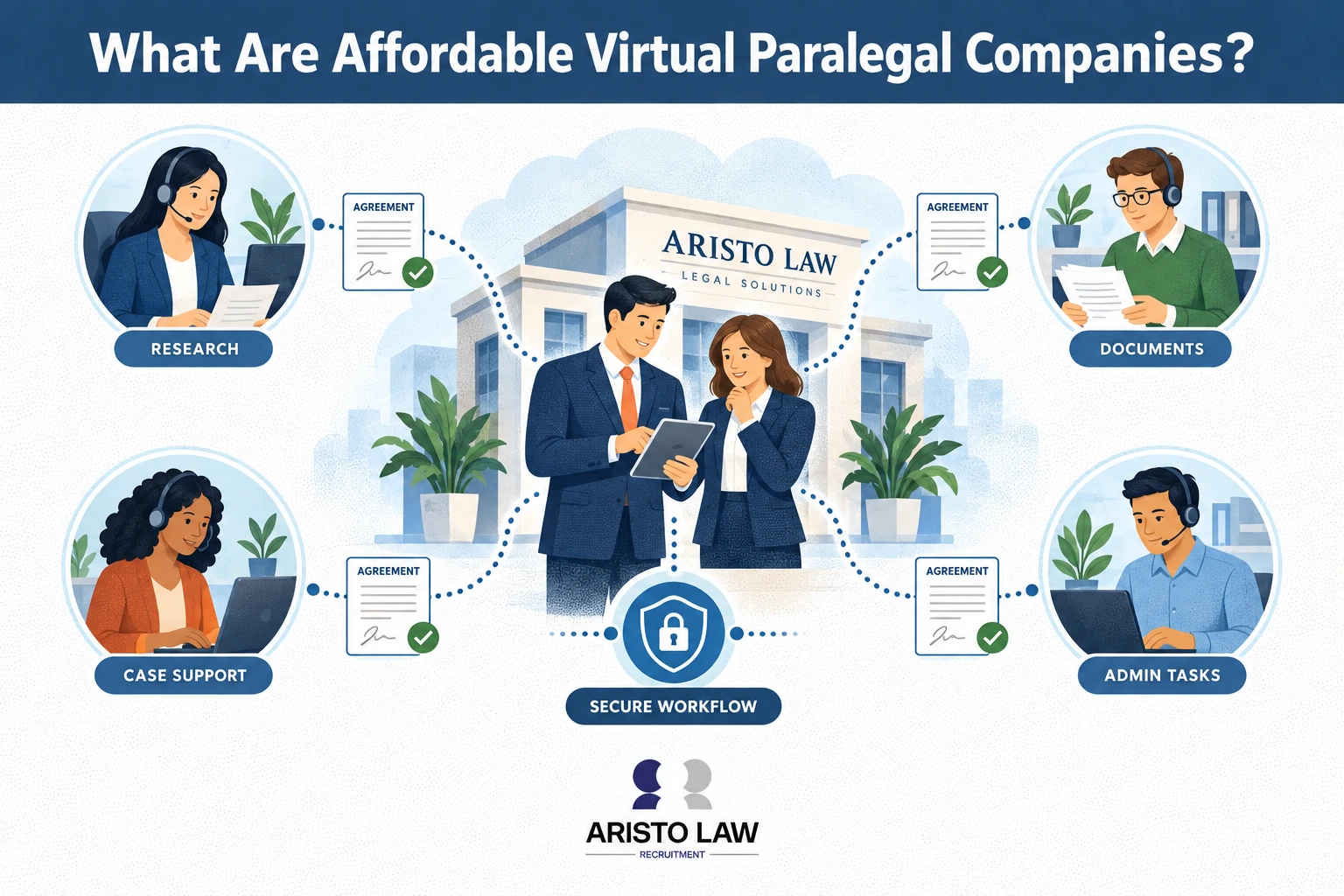
Virtual paralegal companies provide litigation support, legal
document preparation, case management assistance, and administrative
support for law firms. Virtual paralegal companies expand operational
capacity through virtual
paralegal assistant services that support research,
filing coordination, records organization, and client communication
workflows.
Listed below are 16 services virtual paralegal companies provide.
-
Legal Research: Virtual paralegal services assist
attorneys by researching statutes, regulations, case law, court rules,
and legal authorities relevant to ongoing matters. This support reduces
attorney research time and helps legal teams prepare more efficiently
for case development, negotiations, and litigation activities. -
Document Preparation: Virtual paralegals support the
preparation, formatting, organization, and review of legal documents
such as pleadings, motions, contracts, correspondence, discovery
responses, and client forms. Structured document support improves
consistency, reduces administrative workload, and accelerates legal
workflows. -
Case Management Support: Case-management assistance
includes maintaining case files, updating matter records, tracking
deadlines, monitoring task completion, organizing case documents, and
coordinating workflow activities. Effective case management improves
visibility, organization, and operational control throughout the matter
lifecycle. -
Discovery Assistance: Discovery support helps law
firms manage document collection, records organization, production
tracking, document indexing, and discovery-related administration. These
services reduce the workload associated with large document volumes and
improve litigation preparedness. -
Contract Review Support: Virtual paralegals assist
with contract organization, clause identification, document comparison,
version tracking, contract administration, and review coordination. This
support improves efficiency while helping attorneys focus on substantive
legal analysis and negotiation strategy. -
Client Communication Coordination: Client
communication support includes appointment scheduling, status updates,
follow-up communications, information requests, document collection, and
administrative correspondence. Consistent communication improves client
experience and reduces administrative interruptions for attorneys. -
Litigation Support: Litigation support services help
manage court filings, exhibit organization, trial preparation materials,
deadline tracking, witness coordination, document management, and case
administration. These services improve workflow efficiency during active
litigation matters. -
Legal Administration: Legal administration includes
records management, calendar coordination, deadline monitoring, file
maintenance, workflow tracking, document organization, and
administrative process support. Strong administrative support helps law
firms maintain operational consistency and productivity. -
Document Drafting Support: Virtual paralegal
companies assist with drafting legal forms, correspondence, discovery
requests, summaries, intake documents, and procedural filings under
attorney supervision. This support accelerates document-production
workflows and improves resource utilization. -
Records Organization and Management: Organizing
client files, evidence records, correspondence, contracts, medical
records, financial documents, and litigation materials helps improve
accessibility and reduces time spent locating information. -
Case-File Management: Virtual paralegals maintain
organized case files, monitor updates, track activity, and ensure
documentation remains current. Effective file management improves
collaboration and reduces workflow disruptions. -
Client Intake Assistance: Intake support includes
collecting preliminary information, coordinating consultations, managing
intake forms, updating CRM systems, and routing inquiries appropriately.
Structured intake processes improve lead conversion and client
onboarding efficiency. -
Trial Preparation Support: Trial-preparation
activities include organizing exhibits, preparing trial binders,
coordinating documentation, maintaining evidence inventories, and
supporting pretrial workflow administration. These services help legal
teams remain organized and prepared. -
Compliance-Related Tasks: Virtual paralegals assist
with obligation tracking, document-retention processes, reporting
requirements, policy documentation, audit preparation, and
compliance-related record management. These activities help strengthen
governance and reduce operational risk. -
Billing and Timekeeping Support: Many online
paralegal services assist with invoice preparation, billing
coordination, time-entry management, expense tracking, and payment
administration. These functions help improve financial organization and
billing efficiency. -
CRM and Workflow Management: Virtual paralegals
maintain client records, update matter-management systems, track tasks,
monitor deadlines, and coordinate workflow activities across legal
teams. Better workflow management improves operational efficiency and
accountability.
By supporting legal research, document preparation, case management,
discovery administration, litigation workflows, intake processes,
compliance activities, and legal administration, virtual paralegal
companies help attorneys reduce administrative burdens, improve workflow
efficiency, increase productivity, and expand legal service capacity
without increasing internal staffing requirements.
How much do virtual
paralegal services cost?
Virtual paralegal services cost $20–$75 per hour or
$1,000–$5,000+ per month for dedicated support, depending on experience,
workload, and provider structure. Law firms pay for virtual
paralegal support through hourly billing, monthly retainers,
project-based engagements, dedicated staffing arrangements, or
subscription-based service models. The most appropriate pricing
structure depends on the firm’s workload consistency, practice-area
requirements, and operational objectives.
Virtual paralegal companies determine service pricing based on
workload complexity, practice area requirements, and staffing structure
rather than a fixed industry rate. Firms comparing outsourced legal
support models evaluate virtual
assistant hiring costs for law firms alongside virtual
paralegal services to assess overall staffing expenditure and
operational coverage.
Hourly billing is commonly used when firms require flexible support
for legal research, document preparation, case administration, discovery
assistance, or short-term projects. Monthly retainer arrangements
provide a set level of ongoing support and are frequently selected by
firms with recurring workflow needs.
Project-based pricing is used for document-review projects,
litigation support initiatives, contract-management activities, or large
administrative assignments. Dedicated staffing arrangements provide a
virtual paralegal who works consistently with a firm and are generally
preferred when firms require long-term workflow integration and
predictable support capacity. Subscription-based models offer recurring
access to legal support services under predefined service
agreements.
Several factors influence virtual paralegal pricing. Experience level
is one of the most significant variables, as professionals with
extensive legal backgrounds, litigation experience, regulatory
knowledge, or specialized practice-area expertise command higher rates.
Practice-area complexity also affects pricing because areas such as
complex litigation, corporate law, intellectual property, healthcare
compliance, and regulatory matters require greater subject-matter
knowledge.
Workload volume influences overall cost as well. Firms with higher
volumes of document preparation, case management, client intake,
discovery administration, or legal research frequently require more
extensive support resources. Turnaround expectations also affect
pricing, particularly when firms require expedited work, extended
availability, or support for time-sensitive legal matters.
Additional pricing considerations include support coverage
requirements, technology proficiency, legal-software familiarity,
reporting responsibilities, workflow complexity, supervision needs, and
integration with existing legal operations. Dedicated support teams,
broader operational responsibilities, and specialized legal workflows
generally increase service costs.
When evaluating virtual paralegal rates, law firms focus on overall
value rather than hourly cost alone. Effective virtual paralegal support
reduces administrative burdens, improves workflow efficiency, increases
attorney productivity, accelerates turnaround times, supports
scalability, and reduces the need for additional in-house staffing. As a
result, the true value of virtual paralegal pricing is frequently
measured by operational efficiency, resource optimization, and the
firm’s ability to expand legal service capacity while controlling
overhead costs.
What
are the benefits of using virtual paralegal companies?
Benefits of using virtual paralegal companies include lower
staffing costs, improved attorney productivity, and access to
specialized legal support.

Listed below are 15 benefits of using virtual paralegal
companies.
-
Lower Staffing Costs: Virtual paralegal companies
help law firms reduce expenses associated with recruiting, onboarding,
salaries, benefits, payroll taxes, office space, equipment, and ongoing
employee management. Firms gain access to legal support resources
without the full financial commitment required for permanent in-house
staffing, improving profitability and cost control. -
Increased Scalability: Virtual support allows firms
to expand or reduce staffing capacity based on changing workload
demands. As case volumes, client matters, or practice areas grow, firms
add support resources quickly without lengthy hiring processes or
significant infrastructure investments. -
Workload Flexibility: Law firms experience
fluctuations in workload because of litigation activity, transactional
projects, regulatory deadlines, client growth, or seasonal demand.
Virtual paralegal companies provide flexible support that adapts to
these changing requirements, helping firms maintain operational
stability during both busy and slower periods. -
Faster Turnaround Times: Dedicated virtual paralegal
support improves the speed of document preparation, case administration,
legal research coordination, records organization, discovery management,
and workflow execution. Faster turnaround times improve client service
and help attorneys meet deadlines more efficiently. -
Improved Attorney Productivity: By delegating
administrative and procedural tasks to virtual paralegals, attorneys
spend more time on legal strategy, negotiations, client counseling,
litigation activities, and other high-value responsibilities. This
improved allocation of resources increases overall productivity and
operational efficiency. -
Access to Specialized Legal Support: Many virtual
paralegal companies provide professionals with experience in specific
practice areas such as personal injury, litigation, immigration, family
law, corporate law, estate planning, employment law, and compliance
matters. Access to specialized knowledge improves workflow quality and
supports more efficient legal operations. -
Operational Efficiency: Virtual paralegals support
document management, case tracking, deadline monitoring, intake
coordination, CRM administration, and workflow management. These
services help streamline legal operations, reduce bottlenecks, and
improve organizational consistency. -
Staffing Agility: Firms gain the ability to adjust
support levels quickly without making long-term employment commitments.
This agility is especially valuable when entering new markets, launching
new practice areas, handling major cases, or responding to unexpected
workload increases. -
Business Continuity: Virtual paralegal companies
provide backup resources and staffing redundancy that help maintain
workflow continuity during employee absences, turnover, vacations, or
unexpected operational disruptions. This continuity reduces service
interruptions and operational risk. -
Workflow Optimization: Outsourced legal support
helps standardize administrative processes, improve task management,
strengthen communication workflows, and maintain more organized
case-management practices. Better workflow coordination improves
efficiency across the firm. -
Growth Opportunities: By reducing administrative
burdens and increasing operational capacity, virtual paralegal support
enables firms to accept additional matters, expand service offerings,
improve client responsiveness, and pursue growth initiatives without
proportionally increasing internal staffing costs. -
Expanded Service Capacity: Virtual support teams
help law firms handle larger caseloads, manage additional clients, and
process more legal work without overburdening attorneys or existing
staff. This expanded capacity supports sustainable business growth. -
Resource Optimization: Virtual paralegals perform
time-consuming support activities such as legal research coordination,
document preparation, file management, discovery administration, and
client communication. Delegating these responsibilities allows firms to
use internal resources more effectively. -
Improved Client Service: Faster responses, better
document organization, consistent communication, and stronger workflow
management contribute to a more positive client experience. Improved
service quality strengthens client retention and referral
opportunities. -
Support During Expansion Phases: When firms open new
offices, enter new practice areas, increase marketing efforts, or
experience rapid client growth, virtual paralegal companies provide
additional support capacity without requiring immediate investment in
full-scale internal staffing structures.
By providing scalable legal support, operational flexibility,
specialized expertise, and cost-effective staffing solutions, virtual
paralegal companies help law firms improve efficiency, maintain service
quality during workload spikes, optimize workflows, and support
long-term business growth through outsourced legal support services.
How
do virtual paralegal companies improve law firm efficiency?
Virtual paralegal companies improve law firm efficiency by
reducing administrative bottlenecks, increasing support capacity,
streamlining workflows, and allowing attorneys to focus on higher-value
legal work. Law firms face operational challenges involving
document preparation, case administration, client communications,
scheduling, legal research coordination, records management, and
litigation support. When attorneys handle too many administrative
responsibilities, billable productivity decreases and workflow delays
become more common.

Virtual paralegal companies reduce administrative workload by
handling document management, legal research, case preparation, and
deadline tracking for law firms. Virtual paralegal companies support workflow
efficiency in law firms through standardized processes,
task delegation, and consistent case-support operations.
Virtual paralegal services improve document-management efficiency by
organizing case files, maintaining records, preparing legal documents,
tracking deadlines, managing discovery materials, and supporting
document-review processes. Better organization reduces time spent
searching for information and improves workflow consistency across legal
matters.
Case administration also becomes more efficient through outsourced
paralegal support. Virtual paralegals monitor deadlines, update
case-management systems, coordinate workflow activities, maintain matter
records, and help ensure that procedural requirements are completed on
schedule. These activities reduce administrative delays and improve
overall case progression.
Client communication and scheduling functions contribute additional
efficiency gains. Virtual paralegals assist with intake coordination,
appointment scheduling, follow-up communications, document collection,
status updates, and CRM management. This support improves responsiveness
while reducing interruptions that would otherwise consume attorney
time.
Research support is another significant area of operational
improvement. Virtual paralegals help gather legal authorities, organize
research materials, summarize information, and coordinate
research-related workflows. Attorneys receive organized information more
quickly, improving turnaround times and productivity.
Litigation preparation also benefits from outsourced support. Virtual
paralegals assist with exhibit organization, discovery management, trial
preparation materials, document indexing, records review, and case-file
maintenance. These functions help legal teams prepare more efficiently
while maintaining better control over large volumes of information.
Research by Jack Newton, Joshua Lenon, and Clio’s Data
Science Team in 2025 states that lawyers spend an average of only 2.9
hours per day on billable work, indicating substantial time
lost to administrative and operational activities that are delegated to
support staff such as virtual paralegals. By delegating procedural and
administrative tasks to outsourced paralegal services, law firms
increase support capacity without proportionally increasing internal
staffing. Attorneys spend more time on legal analysis, negotiations,
strategy development, court appearances, and client representation.
This improved allocation of resources increases billable
productivity, reduces workflow bottlenecks, accelerates turnaround
times, and strengthens overall operational performance. As firms grow
and workload demands increase, virtual paralegal companies provide
scalable legal support that helps maintain efficiency, service quality,
and profitability across legal operations.
Build a legal support team that moves work forward.
Tell us what is slowing your practice down. We will help map the role, workflow, and support structure that fits.