
How to Increase Lead Generation for Law Firms With Virtual Assistants? (14 Strategies)

Practical guidance for building efficient, accountable legal support operations.
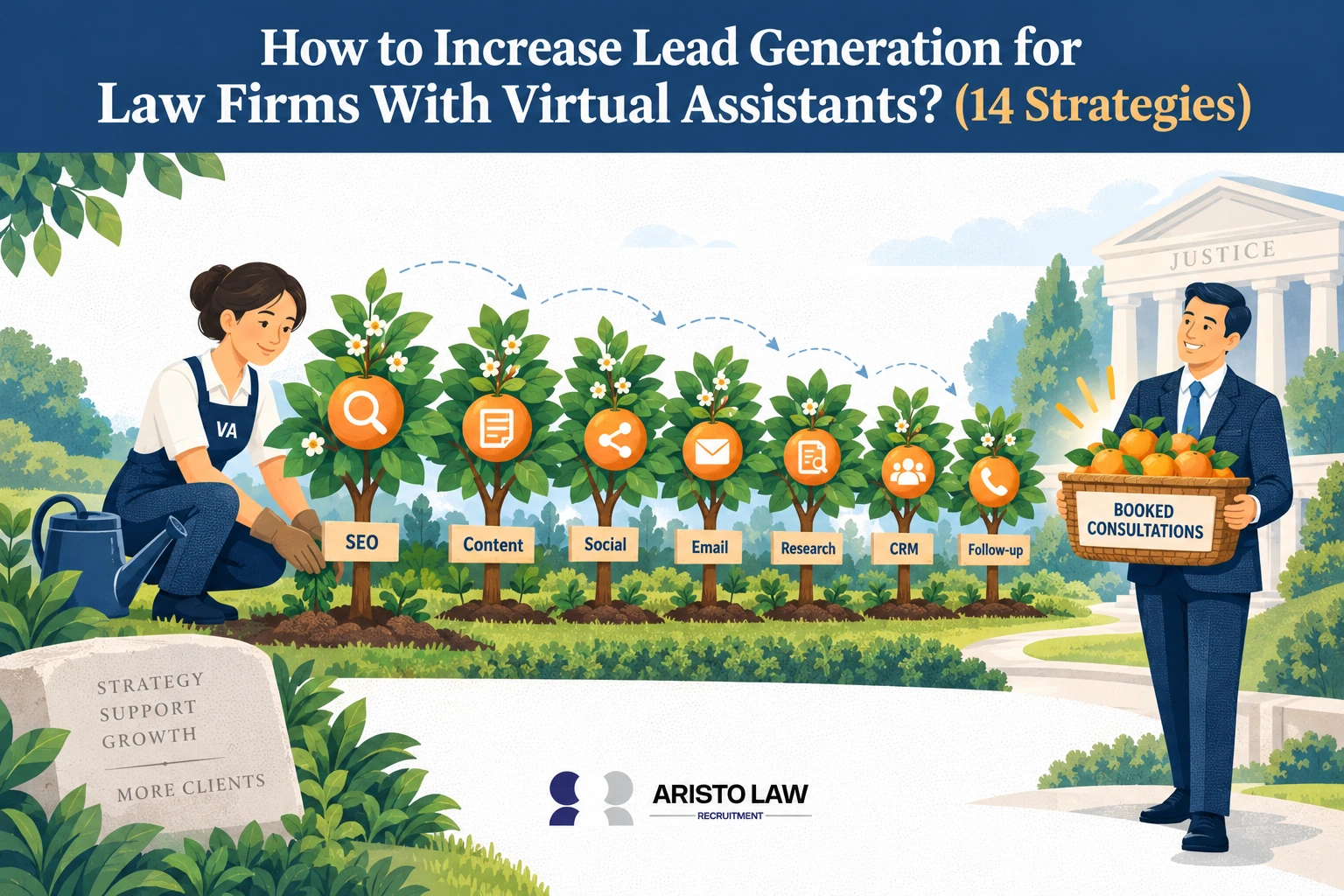
Law firm lead generation is the process of attracting
prospective clients, capturing inquiries, nurturing interest, and
converting prospects into consultations and retained matters through
structured marketing and intake systems. Lead generation is
important for law firms because it sustains client pipelines, increases
consultation volume, improves revenue growth, and supports long-term
firm scalability.
Research by Marketing Donut (cited in REVA Global) shows that
80% of sales require at least five follow-ups, yet many businesses fail
to maintain consistent follow-up. This supports the role of virtual
assistants in managing follow-up workflows that move prospects toward
consultations. Virtual assistants strengthen lead generation by
supporting marketing execution, intake coordination, follow-up
workflows, and operational systems that convert interest into
consultations.
Key lead-generation strategies supported by virtual assistants
include SEO optimization, Google Business Profile management, intake
coordination, live chat support, legal content marketing, social media
engagement, PPC campaign support, email nurturing, CRM management,
automated follow-up workflows, webinar promotion, market research,
competitor analysis, online review management, and campaign performance
tracking. Virtual assistants improve consultation booking rates by
responding to inquiries quickly, updating CRM records, coordinating
appointments, sending reminders, tracking lead status, and maintaining
structured intake communication.
Virtual assistants support tools such as CRM systems, SEO platforms,
marketing-automation software, analytics dashboards, scheduling
platforms, communication tools, and case-management systems. Benefits
include reduced marketing costs, improved workflow efficiency, stronger
client responsiveness, scalable operations, improved lead tracking, and
higher conversion consistency. Virtual assistants also support
business-development workflows through referral tracking, review-request
coordination, reporting, and lead-source monitoring.
Law firms commonly hire lead-generation virtual assistants through
legal outsourcing agencies, remote staffing providers, specialized
virtual assistant companies, and legal-support staffing firms. Law firms
should invest in virtual assistant support when marketing activity
generates leads but intake follow-up, consultation scheduling,
communication management, or operational capacity limits growth. Remote
marketing and intake support improve scalable client acquisition,
operational efficiency, lead conversion performance, and long-term law
firm growth.
Aristolaw helps law firms increase lead generation with
virtual assistants by providing outsourced support for lead response,
client intake, prospect follow-up, consultation scheduling, CRM updates,
campaign coordination, and conversion workflow management. Call
Aristolaw at +1 307 888 9491 for virtual assistant staffing support.
Aristolaw connects law firms with outsourcing solutions that match
trained intake and legal marketing support staff to each lead capture
task, prospect follow-up workflow, appointment-setting duty, CRM
management function, and law firm growth responsibility.
Listed below are the 14 ways to increase lead generation for law
firms with virtual assistants.
1. Improving Law Firm SEO and Local Search
Visibility: Improving law firm SEO and local search visibility
increases organic rankings, strengthens geographic relevance, and
attracts qualified legal inquiries.
2. Optimizing Google Business Profile for Local
Leads: Improving law firm SEO and local search visibility
increases organic rankings, strengthens geographic relevance, and
attracts qualified legal inquiries.
3. Managing Client Intake and Rapid Lead Response:
Managing client intake and rapid lead response improves conversion rates
by reducing delays between inquiry submission and firm engagement.
4. Handling Live Chat and Website Lead Inquiries:
Handling live chat and website lead inquiries captures prospective
clients in real time and routes qualified opportunities into the intake
process.
5. Supporting Legal Content Marketing and Blogging:
Supporting legal content marketing and blogging expands topical
authority, improves search visibility, and educates potential
clients.
6. Managing Social Media Marketing and Engagement:
Managing social media marketing and engagement increases brand
awareness, audience interaction, and referral opportunities.
7. Running Email Marketing and Lead Nurturing
Campaigns: Running email marketing and lead nurturing campaigns
maintains prospect engagement and supports long-term client
acquisition.
8. Assisting With PPC and Paid Advertising
Campaigns: Assisting with PPC and paid advertising campaigns
drives targeted traffic and improves lead generation from paid
channels.
9. Conducting Lead Qualification and CRM Management:
Conducting lead qualification and CRM management improves intake
efficiency by organizing prospects and prioritizing high-value
opportunities.
10. Automating Follow-Up Communication With Prospective
Clients: Automating follow-up communication with prospective
clients increases response consistency and reduces lead attrition.
11. Coordinating Webinar and Online Event Promotion:
Coordinating webinar and online event promotion expands audience reach
and generates educational engagement opportunities.
12. Performing Market Research and Competitor
Analysis: Performing market research and competitor analysis
identifies growth opportunities, market gaps, and competitive
positioning strategies.
13. Managing Online Reviews and Law Firm Reputation:
Managing online reviews and law firm reputation strengthens credibility,
trust signals, and client decision-making confidence.
14. Tracking Lead Generation Metrics and Campaign
Performance: Tracking lead generation metrics and campaign
performance supports data-driven marketing decisions and resource
allocation.
1. Improving
Law Firm SEO and Local Search Visibility
Improving law firm SEO and local search visibility is the
process of increasing a law firm’s presence in search-engine results for
legal services within target geographic markets. SEO
Optimization supports Law Firm Lead Generation because prospective
clients frequently begin legal-service searches through search engines
before contacting a law firm.
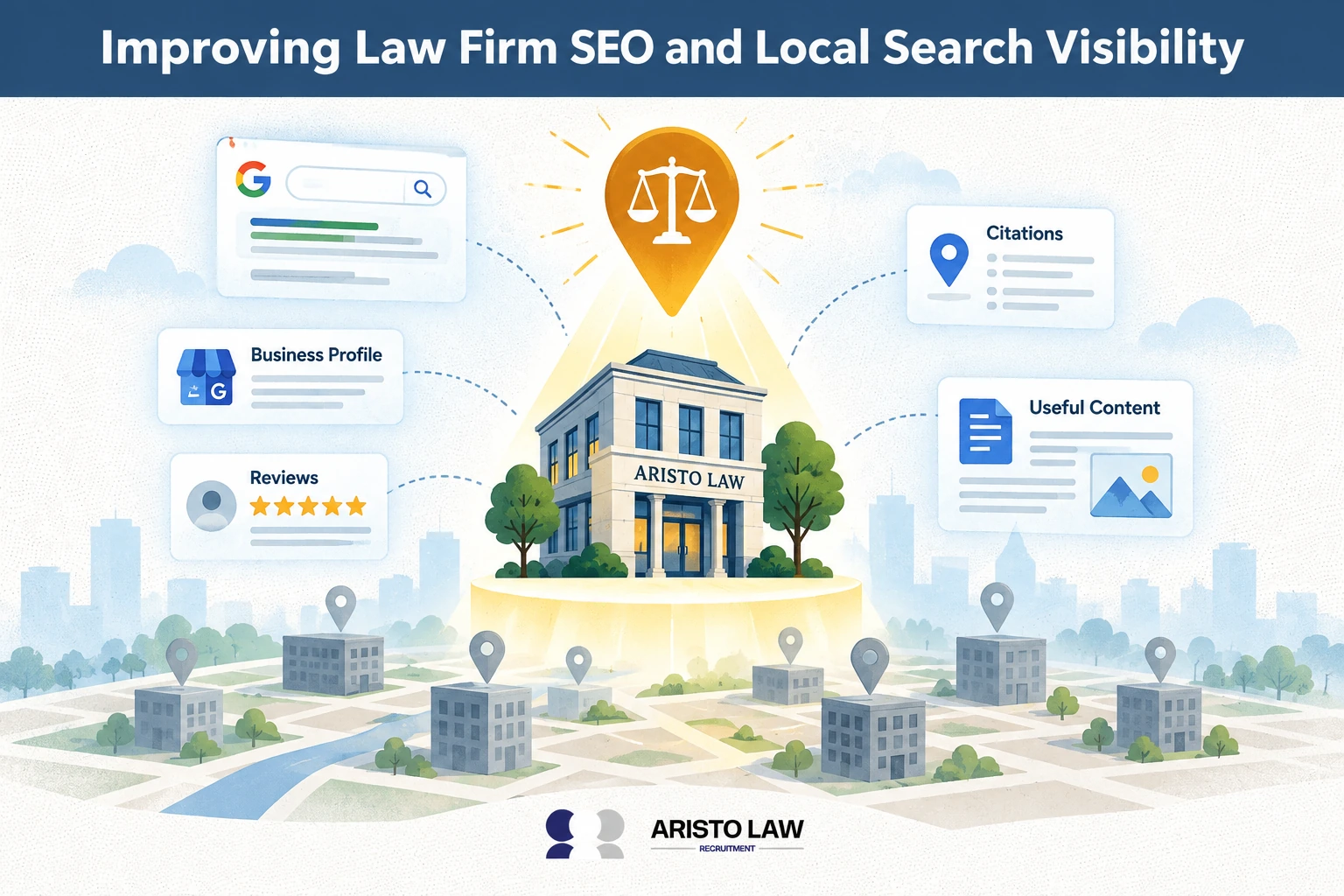
Virtual Assistants support Legal Marketing by coordinating content
updates, tracking rankings, monitoring local listings, managing metadata
updates, organizing keyword research, maintaining internal-link records,
and supporting Content Marketing workflows. Technological considerations
include analytics platforms, SEO software, CRM Management integration,
website performance monitoring, and local-search optimization.
Increasing lead generation for law firms with virtual assistants
involves improving local search visibility, optimizing practice-area
content, and maintaining accurate business listings across search
platforms. Lead generation for law firms with virtual assistants
benefits from law
firm SEO expert virtual assistant support that manages
keyword targeting, on-page optimization, citation consistency, and local
SEO performance.
Client acquisition improves when practice-area pages, location pages,
and legal content align with search intent and intake workflows. Law
firms improve SEO performance through consistent content updates,
local-listing accuracy, technical audits, ranking reports, and intake
tracking connected to lead-generation outcomes.
2.
Optimizing Google Business Profile for Local Leads
Optimizing Google Business Profile for local leads is the
process of maintaining accurate business information, reviews, service
descriptions, and local visibility signals within Google search results
and map listings. Google Business Profile management supports
Law Firm Lead Generation because local prospects select legal providers
directly from local search results.
Virtual Assistants support profile updates, review monitoring,
question management, service-category maintenance, photo uploads, and
listing accuracy verification. Operational considerations include intake
tracking, call monitoring, and consultation attribution from
local-search traffic. Client acquisition improves when business
information remains accurate and reviews remain active. Law firms
improve local-lead performance through regular profile audits,
review-request workflows, accurate contact information, and
response-management procedures.
3. Managing
Client Intake and Rapid Lead Response
Managing client intake and rapid lead response is the process
of capturing inquiries and responding quickly through structured intake
workflows. Client Intake directly supports Law Firm Lead
Generation because delayed responses reduce consultation conversion
opportunities.
Increasing lead generation for law firms with virtual assistants
depends on immediate prospect engagement, qualification workflows, and
consistent follow-up across intake channels. Law firms improve
conversion rates and reduce lead leakage through virtual
intake specialist support for lead response, connecting
inquiries to scheduled consultations more efficiently.
Virtual Assistants support intake screening, consultation scheduling,
CRM Management updates, lead routing, communication tracking, and
appointment reminders. Operational considerations include response-time
standards, intake scripts, lead-source tracking, and workflow
automation. Client acquisition improves when inquiries receive immediate
attention and organized follow-up. Law firms improve intake performance
through documented procedures, intake automation, escalation rules, and
response-time monitoring.
4. Handling Live
Chat and Website Lead Inquiries
Handling live chat and website lead inquiries is the process
of engaging website visitors and converting inquiries into
consultations. Virtual Assistants support live-chat workflows
by answering approved questions, collecting contact information,
qualifying inquiries, scheduling consultations, and routing leads into
CRM systems.
Technological considerations include chat software integration,
website forms, lead tracking, and communication platforms. Client
acquisition improves because prospects receive immediate engagement. Law
firms improve conversion performance through monitored chat coverage,
response templates, intake workflows, and lead-routing systems.
5. Supporting
Legal Content Marketing and Blogging
Supporting legal content marketing and blogging is the
process of publishing educational legal content that attracts
prospective clients through search engines and referral
channels. Content Marketing supports Law Firm Lead Generation
by increasing visibility for legal-service searches and informational
queries.
Virtual assistants support content
marketing for lawyers by researching topics, drafting
articles, and maintaining publishing workflows that attract qualified
prospects. Increasing lead generation for law firms with virtual
assistants depends on consistent content production, audience targeting,
and conversion-focused legal marketing activities.
Virtual Assistants coordinate content calendars, upload
attorney-approved articles, manage publishing schedules, organize
content assets, and track publishing performance. Operational
considerations include content workflows, SEO coordination, and intake
attribution. Lead quality improves when content addresses client
questions and practice-area topics. Law firms improve content
performance through editorial calendars, publishing consistency, and
analytics review.
6. Managing
Social Media Marketing and Engagement
Managing social media marketing and engagement is the process
of maintaining law firm visibility across social platforms and
strengthening audience interaction. Virtual Assistants support
Legal Marketing by scheduling content, monitoring engagement, responding
to approved inquiries, organizing campaigns, and tracking performance
metrics.
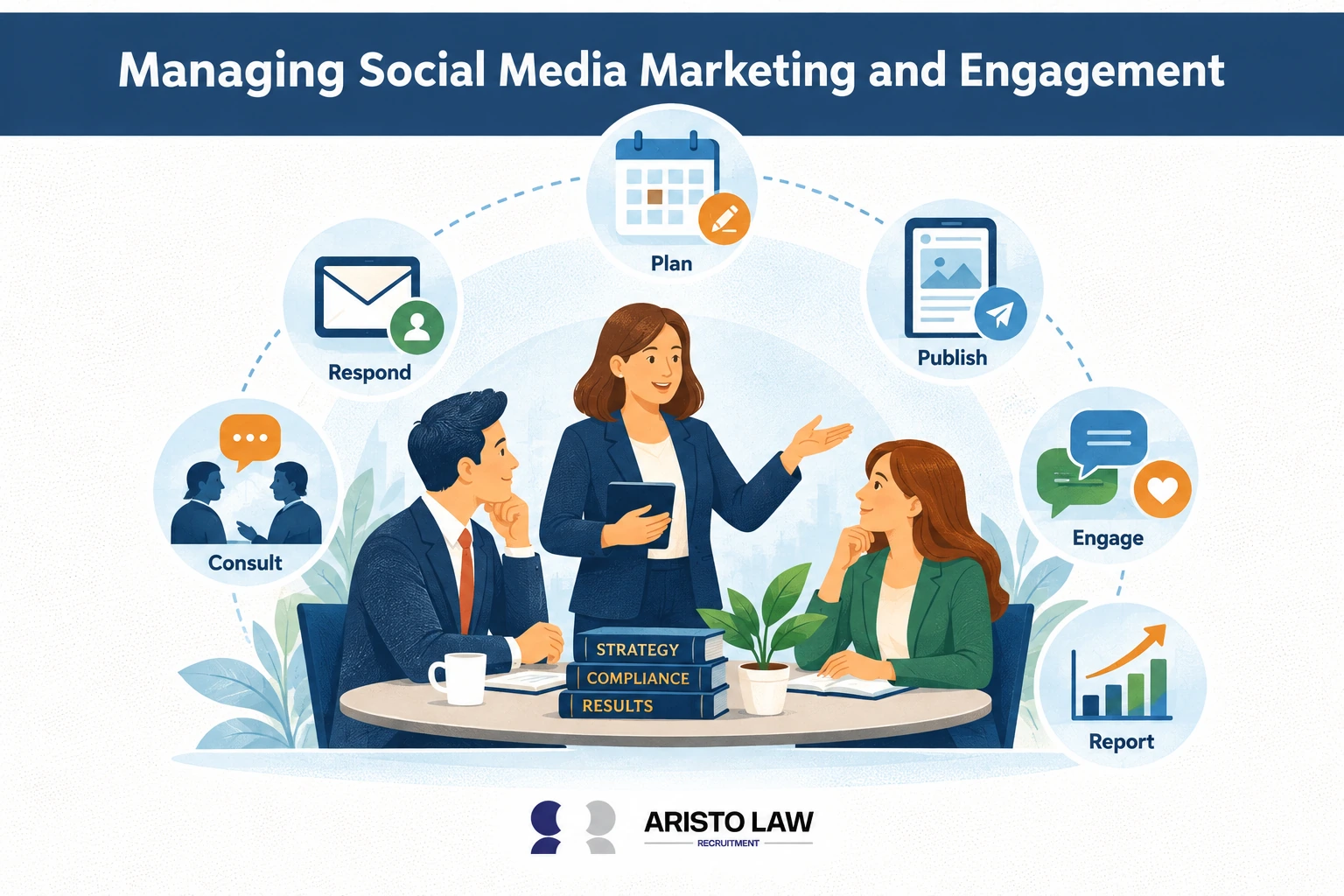
Operational considerations include content planning, brand
consistency, and lead tracking. Client acquisition improves when social
engagement drives website visits and consultation requests. Law firms
improve social-media performance through publishing schedules,
engagement monitoring, and campaign reporting.
7. Running
Email Marketing and Lead Nurturing Campaigns
Running email marketing and lead nurturing campaigns is the
process of maintaining communication with prospects through automated
and scheduled messaging. Virtual Assistants support email
workflows by managing contact lists, organizing campaigns, tracking
engagement metrics, and coordinating follow-up communication.
Marketing considerations include segmentation, automation, and CRM
integration. Lead nurturing improves consultation conversion because
prospects remain engaged during decision-making stages. Law firms
improve campaign performance through structured follow-up sequences,
audience segmentation, and response tracking.
8. Assisting
With PPC and Paid Advertising Campaigns
Assisting with PPC and paid advertising campaigns is the
process of supporting paid lead-generation initiatives through
administrative coordination and performance tracking. Virtual
Assistants support PPC Advertising by monitoring leads, organizing
campaign reports, updating landing-page information, tracking inquiry
sources, and coordinating communication between marketing vendors and
law firms.
Operational considerations include budget monitoring, lead
attribution, and conversion tracking. Client acquisition improves when
paid leads receive prompt follow-up and organized intake management. Law
firms improve PPC outcomes through reporting systems, consultation
tracking, and campaign reviews.
9. Conducting
Lead Qualification and CRM Management
Conducting lead qualification and CRM Management is the
process of organizing prospect information and identifying qualified
consultation opportunities. Virtual Assistants support lead
qualification by recording inquiry details, updating lead statuses,
tracking referral sources, scheduling consultations, and maintaining CRM
accuracy.
Operational considerations include intake standards, qualification
criteria, and communication workflows. Lead quality improves when
prospects receive organized follow-up and proper routing. Law firms
improve CRM performance through data-quality reviews, workflow
automation, and lead-tracking procedures.
10.
Automating Follow-Up Communication With Prospective Clients
Automating follow-up communication with prospective clients
is the process of maintaining contact through scheduled reminders,
emails, text messages, and consultation confirmations. Virtual
Assistants support automation by monitoring workflows, updating records,
reviewing communication queues, and managing exception handling.
Technological considerations include marketing-automation platforms,
CRM systems, and scheduling tools. Client acquisition improves when
prospects receive consistent communication. Law firms improve follow-up
performance through automated workflows, communication templates, and
response tracking.
11.
Coordinating Webinar and Online Event Promotion
Coordinating webinar and online event promotion is the
process of attracting prospects through educational digital
events. Virtual Assistants support event promotion by managing
registrations, sending reminders, updating event pages, organizing
attendee records, and coordinating communication.
Marketing considerations include audience targeting, follow-up
workflows, and lead tracking. Lead generation improves because webinars
provide direct engagement opportunities with prospective clients. Law
firms improve event performance through registration tracking, attendee
communication, and post-event follow-up systems.
12.
Performing Market Research and Competitor Analysis
Performing market research and competitor analysis is the
process of gathering information about legal-market demand, competitor
positioning, content strategies, and client trends. Virtual
Assistants support research activities by organizing data, tracking
competitor updates, monitoring search trends, and preparing reports.

Operational considerations include opportunity identification,
content planning, and service positioning. Client acquisition improves
when law firms respond to market demand effectively. Law firms improve
research value through recurring reporting, trend monitoring, and
competitor benchmarking.
13. Managing
Online Reviews and Law Firm Reputation
Managing online reviews and law firm reputation is the
process of monitoring client feedback and maintaining public trust
signals across review platforms. Reputation Management supports
Law Firm Lead Generation because prospective clients evaluate reviews
before contacting a law firm.
Increasing lead generation for law firms with virtual assistants
involves monitoring client feedback, responding to reviews, and
maintaining consistent brand credibility across digital platforms. Firms
seeking scalable review oversight and reputation monitoring use law
firm reputation management assistant services to
strengthen trust signals that influence consultation and case inquiry
volume.
Virtual Assistants support review-request workflows, response
coordination, review tracking, and listing management. Operational
considerations include compliance, response procedures, and review
monitoring. Client acquisition improves when review profiles remain
active and trustworthy. Law firms improve reputation performance through
structured review campaigns, response guidelines, and reputation
reporting.
14.
Tracking Lead Generation Metrics and Campaign Performance
Tracking lead generation metrics and campaign performance is
the process of measuring marketing effectiveness and consultation
outcomes across lead sources. Virtual Assistants support
reporting by maintaining dashboards, updating CRM records, tracking
conversions, organizing analytics data, and preparing performance
summaries.
Technological considerations include analytics dashboards, CRM
systems, call-tracking platforms, and marketing software. Client
acquisition improves when marketing decisions rely on measurable
performance data. Law firms improve campaign performance through
lead-source attribution, conversion tracking, intake reporting, and
recurring performance reviews.
How
can virtual assistants improve consultation booking rates?
Virtual assistants improve consultation booking rates by
reducing communication delays, following up consistently, and guiding
leads through intake workflows efficiently. Consultation
booking performance declines because of missed calls, delayed responses,
scheduling bottlenecks, intake abandonment, unclear next steps, and
inconsistent follow-up.
Virtual assistants reduce these friction points by monitoring
inquiries from websites, phone calls, email submissions, referrals, live
chat platforms, and social media channels, then routing prospects into
structured intake coordination workflows immediately.
Lead conversion improves because virtual assistants support
appointment scheduling, calendar coordination, consultation
confirmations, CRM updates, and intake communication across every stage
of the booking process. Scheduling delays decrease when virtual
assistants manage attorney calendars, present available consultation
times, coordinate rescheduling requests, and maintain accurate
appointment records. Intake coordination improves because prospective
clients receive clear instructions regarding required documents, intake
forms, consultation procedures, and communication expectations before
meetings occur.
Reminder systems improve attendance rates because virtual assistants
send appointment confirmations, calendar invitations, text reminders,
email reminders, and follow-up notifications before scheduled
consultations. Consultation abandonment decreases because virtual
assistants maintain communication with prospects who pause during intake
workflows, miss appointments, or fail to complete required forms.
Multilingual communication support improves accessibility for prospects
who prefer communication in languages other than English, improving
consultation opportunities across broader client groups.
CRM tracking improves lead conversion because virtual assistants
maintain lead-status notes, referral-source records, follow-up
schedules, consultation outcomes, and communication histories.
Consistent follow-up, organized appointment scheduling, clear intake
workflows, and rapid lead response improve consultation booking rates,
strengthen lead conversion performance, and support scalable law firm
growth.
How
do virtual assistants reduce law firm marketing costs?
Virtual assistants reduce law firm marketing costs by
improving lead conversion efficiency without requiring large in-house
administrative staffing expenses. Marketing ROI improves when
law firms convert a higher percentage of existing leads into
consultations rather than increasing advertising budgets to replace lost
opportunities.
Virtual assistants create operational leverage by supporting intake
efficiency, consultation scheduling, lead tracking, CRM management,
appointment reminders, and follow-up workflows that prevent
marketing-generated leads from slipping through the intake process.
Lead conversion declines because of delayed responses, missed calls,
incomplete intake records, inconsistent follow-up, and scheduling
bottlenecks. Virtual assistants reduce intake leakage by responding to
inquiries promptly, updating lead records, coordinating consultations,
tracking referral sources, and maintaining communication throughout the
intake journey. Consultation attendance improves because virtual
assistants send reminders, confirmations, rescheduling notices, and
follow-up communications that reduce no-shows and abandoned
appointments.
Legal staffing flexibility improves operational efficiency because
virtual assistants support growing lead volume without requiring
immediate expansion of full-time administrative teams. Lower payroll
overhead results from scaling support capacity according to workload
rather than maintaining larger in-house staffing structures during
fluctuating lead-generation periods. Marketing campaigns become more
effective because PPC advertising, SEO campaigns, referral programs,
social media marketing, and content-marketing efforts receive organized
intake support and lead-management coverage.
Marketing ROI improves further because better operational handling
increases revenue from already-generated leads. Law firms invest heavily
in advertising and lead-generation activities, yet lost revenue occurs
when intake systems fail to convert interested prospects into
consultations. Virtual assistants strengthen intake efficiency, improve
lead conversion consistency, support consultation booking workflows, and
increase the value generated from existing marketing investments without
requiring proportional increases in operational costs.
Why is lead
generation important for law firms?
Lead generation is important for law firms because it creates
a continuous flow of potential clients and helps maintain a consistent
pipeline of legal matters. Lead generation also supports
revenue growth, improves business stability, and strengthens
competitiveness in legal markets.
Law firm lead generation serves as the foundation of legal client
acquisition because consultations, retained clients, and revenue growth
depend on a reliable stream of qualified prospects entering intake
systems. Digital marketing, referrals, SEO, paid advertising, content
marketing, legal intake systems, and client conversion workflows work
together to generate and convert prospective clients into active
matters.
Research summarized by Clio (2025) found that tracking
marketing ROI, lead sources, and client intake performance is critical
to improving client acquisition and firm growth, identifying intake
optimization as a major driver of marketing effectiveness.
Response speed, organized follow-up, and lead nurturing influence legal
client acquisition because prospective clients contact multiple law
firms before selecting representation.
Listed below are the 12 reasons lead generation is important for law
firms.
-
Creates a steady pipeline of potential clients and legal
cases: Lead generation maintains a continuous flow of prospects
entering the intake process, reducing fluctuations in consultation
volume and matter acquisition. -
Supports consistent revenue growth and business
stability: Consistent lead flow improves revenue predictability
because new consultations create opportunities for retained matters and
recurring client acquisition. -
Helps law firms compete in crowded and highly competitive
legal markets: Competitive legal markets require active
visibility and client-acquisition systems. Lead generation improves
market presence and prospect engagement. -
Improves consultation booking and signed-client conversion
opportunities: Structured intake systems, appointment
scheduling, and lead nurturing improve the percentage of inquiries that
become consultations and retained clients. -
Reduces dependence on unpredictable referrals alone:
Referral-based growth fluctuates. Lead generation creates multiple
acquisition channels through search, advertising, content, and digital
outreach. -
Supports growth into new practice areas or geographic
markets: Targeted marketing campaigns, local SEO, and digital
outreach help law firms expand service visibility into new markets and
legal niches. -
Increases visibility through SEO, paid ads, content
marketing, and digital outreach: Search visibility and online
marketing place law firms in front of prospects actively seeking legal
services. -
Enhances client acquisition through structured intake and
follow-up systems: Lead nurturing, consultation reminders,
intake coordination, and follow-up workflows improve conversion
consistency across the client journey. -
Helps law firms scale operations more predictably and
efficiently: Reliable lead-generation systems create measurable
growth patterns that support staffing, budgeting, and operational
planning. -
Improves long-term sustainability through recurring lead flow
management: Sustainable growth depends on maintaining a
continuous source of qualified prospects rather than relying on
intermittent opportunities. -
Enables firms to measure marketing ROI and optimize client
acquisition strategies: Lead-source tracking, CRM reporting,
consultation metrics, and conversion analysis help firms identify which
marketing channels generate the strongest results. -
Strengthens brand awareness and market authority within
target legal niches: Consistent visibility through content,
search presence, reviews, and outreach improves recognition and trust
within target practice areas.
Lead generation, intake management, and follow-up systems function
together as core drivers of law firm growth strategy, legal business
development, and long-term client acquisition success.
Where
can law firms hire lead generation virtual assistants?
Law firms can hire lead generation virtual assistants through
specialized legal virtual assistant agencies, legal outsourcing
providers, remote staffing companies, and legal intake service
platforms. These providers focus on client acquisition, intake
management, CRM coordination, and lead conversion workflows for legal
practices.
Law firms increase lead generation with virtual assistants by
delegating prospect research, outreach coordination, CRM management, and
lead qualification workflows to dedicated support staff. Firms seeking
scalable client acquisition systems use virtual
legal marketing assistant services to strengthen lead
generation processes and improve pipeline consistency.
Lead generation virtual assistants support legal client acquisition
by handling intake screening, lead qualification, consultation booking,
CRM management, appointment reminders, follow-up communication, referral
tracking, and sales-pipeline coordination. Law Ruler (2026)
found that CRM systems help law firms capture leads, qualify prospects,
automate follow-up communications, and improve conversion
rates, emphasizing that lead nurturing and timely communication
are critical steps between inquiry and client retention.
Legal-industry experience, confidentiality compliance, intake
training, communication skills, and CRM proficiency remain important
selection criteria because legal intake workflows involve
client-sensitive information and time-sensitive lead opportunities.
Listed below are 12 common sources law firms use to hire lead
generation virtual assistants.
-
LegalWise PH: LegalWise PH provides legal virtual
assistants trained for intake coordination, appointment setting,
administrative support, and law firm workflow integration. -
Aristo Law: Aristo Law
provides outsourced legal staffing support for law firms seeking trained
virtual assistants for lead generation, intake coordination, CRM
management, consultation booking, client follow-up, and law firm growth
workflows. -
Legal Core USA: Legal Core USA offers virtual legal
assistants focused on intake management, scheduling, lead response,
client communication, and operational support. -
Go Legal Flow: Go Legal Flow focuses on intake
automation, lead-generation workflows, consultation booking support, and
structured follow-up systems for law firms. -
FirmLift AI: FirmLift AI provides AI-powered intake
and lead-follow-up systems designed to improve response speed,
consultation scheduling, and lead-conversion performance. -
Lawtte AI: Lawtte AI offers AI receptionist
services, lead qualification workflows, multilingual communication
support, and continuous intake coverage. -
Legal VA Pro: Legal VA Pro supports personal injury
law firms through intake management, consultation coordination, case
updates, and client communication workflows. -
Soteria: Soteria focuses on AI-assisted
lead-generation support and intake workflows for intellectual-property
and patent law firms. -
Freelance staffing platforms: Freelance marketplaces
provide contract-based intake coordinators, CRM specialists, appointment
setters, and lead-follow-up professionals for law firms requiring
flexible staffing arrangements. -
Legal outsourcing providers (LPOs): Legal
outsourcing providers deliver scalable intake operations, lead
qualification support, consultation scheduling, and client-acquisition
workflows through dedicated teams. -
CRM-integrated virtual assistant companies:
CRM-focused staffing providers support lead nurturing, pipeline
management, automated follow-up workflows, reporting, and consultation
tracking. -
Remote inside sales representatives: Remote sales
specialists focus on consultation booking, lead qualification, intake
communication, and prospect follow-up designed to improve signed-client
conversion rates.
Industry discussions consistently emphasize that successful law firm
lead generation depends less on purchasing more leads and more on rapid
response times, structured intake management, consistent follow-up, CRM
discipline, and qualified lead-handling workflows. Law firms achieve
stronger legal client acquisition results when lead-generation virtual
assistants operate within documented intake systems, clear communication
standards, and measurable conversion processes.
Is
virtual assistant support right for law firm lead generation?
Yes, virtual assistant support is highly effective for law
firm lead generation because it helps firms respond faster to inquiries
and manage intake workflows consistently. Qualified leads are
less likely to be lost when virtual assistants improve follow-up
communication and maintain structured response systems.
Law firm lead generation support works best when intake management
systems, CRM workflows, consultation booking processes, and follow-up
procedures require dedicated attention that attorneys cannot
consistently provide due to legal workload demands. Virtual intake
assistants improve legal client acquisition by maintaining rapid lead
response, organized communication, appointment scheduling, lead
nurturing, and intake tracking across multiple marketing channels.
Research and industry discussions consistently show that
firms lose prospective clients when calls, forms, chats, and
consultation requests remain unanswered or receive delayed
responses. Remote legal intake support improves operational
efficiency because intake workflows remain active even during periods of
attorney unavailability, high caseload volume, or marketing-driven lead
surges.
Listed below are 10 situations where virtual assistant support is
particularly effective.
-
Responding quickly to inbound calls, forms, chats, and
consultation requests: Rapid response improves legal lead
conversion because prospects contact multiple law firms before making
hiring decisions. -
Managing lead intake workflows and collecting preliminary
case information: Structured intake management systems improve
consultation readiness and workflow consistency. -
Scheduling consultations and sending reminders
automatically: Appointment coordination improves consultation
attendance and reduces no-show rates. -
Following up with leads through phone, email, SMS, and CRM
systems: Consistent follow-up improves lead nurturing and
consultation conversion opportunities. -
Preventing missed calls and delayed responses that reduce
conversion rates: Dedicated intake coverage protects marketing
investment by reducing lead loss. -
Updating CRM and intake management systems
consistently: Accurate records improve visibility into lead
status, referral sources, and conversion performance. -
Supporting multilingual intake and after-hours lead response
workflows: Extended availability improves accessibility for a
broader range of prospective clients. -
Scaling intake operations during marketing campaigns or
litigation surges: Operational scalability supports growth
without requiring immediate expansion of in-house staffing. -
Reducing attorney administrative workload so lawyers focus on
billable legal work: Attorney productivity improves when intake
coordination and communication management move to trained support
staff. -
Improving consistency in lead nurturing and client
communication workflows: Consistent communication improves
client experience and consultation-booking performance.
Virtual assistant support delivers the greatest value when
repetitive, administrative, or process-driven tasks consume time that
could be spent on higher-priority work.
Listed below are 8 situations where virtual assistant support is the
best fit.
-
High volumes of inbound leads
-
Missed calls or delayed follow-ups
-
Growing intake demands
-
Extended-hours lead handling needs
-
Multilingual intake requirements
-
CRM-driven intake systems
-
Scaling phases requiring cost-efficient support
-
Law firm growth initiatives requiring operational
efficiency
Virtual assistant support has limitations when legal judgment becomes
necessary. Virtual assistants should not independently provide legal
advice, evaluate legal merit, determine case strategy, establish
attorney-client relationships, or make final client acceptance
decisions. Attorney oversight, intake training, confidentiality
compliance, documented procedures, and clear escalation rules remain
necessary because legal-client acquisition workflows involve ethical
obligations, client-sensitive information, and attorney-controlled
decision-making responsibilities.
Build a legal support team that moves work forward.
Tell us what is slowing your practice down. We will help map the role, workflow, and support structure that fits.