
Estate Planning Paralegal: Responsibilities, Benefits, Probate, and Law Firm Outsourcing

Practical guidance for building efficient, accountable legal support operations.
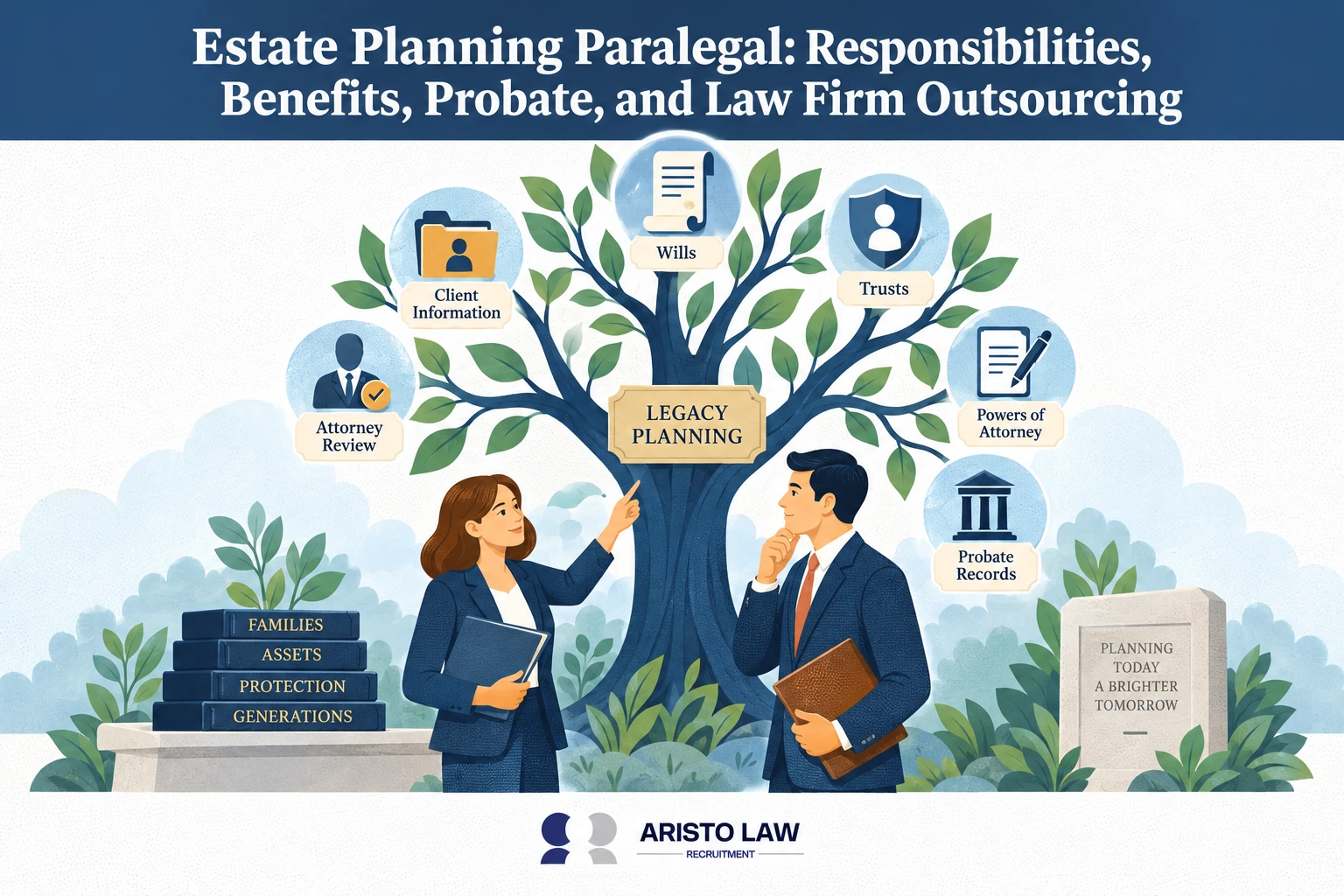
An estate planning paralegal is a legal support professional
who assists attorneys with estate planning, trust administration,
probate support, document preparation, and client coordination
workflows. Estate planning paralegals prepare wills, trusts,
powers of attorney, healthcare directives, probate filings, trust
administration documents, client intake forms, and estate planning
records under attorney supervision. Unlike probate paralegals, who focus
primarily on post-death estate administration and probate court matters,
estate planning paralegals support proactive planning activities
intended to organize assets and facilitate future estate transfers.
Quantitative evidence supports the value of paralegal utilization in
legal practice. The National Federation of Paralegal Associations
reports that effective delegation of substantive legal work to
paralegals increases attorney productivity and allows attorneys to
dedicate more time to billable legal analysis and client representation.
A study by Clio, from the Legal Trends Report, in 2016, found
that lawyers spend only about 31% of the workday on billable tasks, with
administrative and operational work consuming a significant portion of
their available time. Delegating document preparation, client
communication, scheduling, and file management to trained legal support
staff increases operational efficiency and workflow capacity.
Estate planning paralegals help law firms manage wills, trusts,
probate filings, trust administration, client intake, document tracking,
and compliance workflows. Outsourced and virtual estate planning
paralegals provide support through cloud-based legal software, secure
communication systems, and remote workflow management, reducing staffing
overhead while increasing scalability.
Aristolaw helps law firms manage estate planning workflows by
providing outsourced support for will preparation, trust documentation,
probate coordination, client intake management, estate file
organization, and legal administrative tasks. Hire
an Estate Planning Paralegal with Aristolaw. Aristolaw connects
law firms with outsourcing solutions that match trained estate planning
paralegal staff to each estate administration task, client communication
workflow, document preparation process, probate support function, trust
management activity, and estate planning responsibility.
What is an estate planning
paralegal?
An estate planning paralegal supports attorneys with wills,
trusts, probate preparation, estate administration, client
communication, and legal-document workflows related to wealth transfer
and legacy planning. An estate planning paralegal gathers
client intake data, organizes asset information, maps family
relationships, records beneficiary details, prepares draft estate
documents, schedules execution, and maintains estate files. A trust and
estate paralegal coordinates communication between attorneys, clients,
financial advisors, accountants, fiduciaries, and beneficiaries during
planning, execution, trust administration, and probate preparation.

An estate law paralegal supports post-execution workflows through
trust funding records, probate filing preparation, asset inventories,
beneficiary correspondence, deadline tracking, and estate maintenance.
An estate planning paralegal differs from litigation paralegals and
corporate paralegals because estate planning centers on asset transfer,
legacy planning, probate support, trust administration, and family-based
documentation rather than disputes, discovery, transactions, or
corporate governance.
What
are the responsibilities of an estate planning paralegal?
Estate planning paralegal responsibilities are client intake
management, asset inventory collection, beneficiary verification,
trust-document preparation, will-drafting support, probate-filing
coordination, and estate-administration tracking.
Listed below are the 12 responsibilities of an estate planning
paralegal.
-
Client intake management: An estate planning legal
assistant collects client information, family details, financial
records, and planning objectives. Client intake supports attorney
analysis. Client intake improves workflow efficiency. -
Asset inventory collection: An estate planning
paralegal gathers information about real estate, bank accounts,
investments, business interests, retirement assets, and personal
property. Asset inventories support estate planning accuracy. Asset
inventories reduce document revisions. -
Beneficiary verification: A probate legal assistant
verifies beneficiary identities, relationships, and contact information.
Beneficiary verification supports accurate estate distribution planning.
Beneficiary verification reduces administrative errors. -
Trust-document preparation: An estate planning
paralegal prepares trust drafts, trust schedules, trust summaries, and
supporting documentation under attorney supervision. Trust preparation
supports attorney productivity. Trust preparation accelerates document
completion. -
Will drafting support: An estate planning paralegal
organizes information required for wills, codicils, and related
estate-planning documents. Will drafting support improve document
consistency? Will drafting support reduces attorney administrative
workload. -
Probate filing coordination: A probate legal
assistant prepares probate packets, filing checklists, and supporting
documentation for court submission. Probate coordination supports
compliance. Probate coordination improves case progression. -
Court-document organization: An estate
administration paralegal maintains probate records, court
correspondence, filing deadlines, and case documents. Document
organization supports workflow visibility. Document organization reduces
missed deadlines. -
Deed preparation: An estate planning paralegal
assists with property transfer documents, beneficiary deeds, and
trust-funding deeds. Deed preparation supports asset transfer
objectives. Deed preparation improves estate administration
efficiency. -
Estate-tax information gathering: An estate planning
paralegal compiles financial records, valuation information, and
supporting tax documentation. Information gathering supports attorney
review. Information gathering improves preparation accuracy. -
Trust funding assistance: A trust administration
paralegal tracks asset transfers into trusts and monitors funding
requirements. Trust funding supports trust effectiveness. Trust funding
reduces post-death administration issues. -
Document execution coordination: An estate planning
paralegal schedules signings, coordinates witnesses, manages
notarization requirements, and organizes executed documents. Execution
coordination supports compliance. Execution coordination improves client
service. -
Estate-administration tracking: A trust
administration paralegal monitors deadlines, asset distributions,
beneficiary communications, and administration milestones.
Estate-administration tracking supports operational efficiency.
Estate-administration tracking improves client communication and matter
management.
What
documents can an estate planning paralegal help prepare?
Estate planning documents that paralegals help prepare are
legal instruments used to manage asset distribution, incapacity
planning, trust administration, and probate workflows under attorney
supervision. Accuracy is important because document errors
affect beneficiary distributions, probate outcomes, trust
administration, and estate-transfer objectives.
Listed below are the 11 documents an estate planning paralegal helps
prepare.
-
Revocable living trusts: Revocable living trusts
manage assets during life and distribute assets after death while
helping avoid probate for trust-owned property. -
Testamentary trusts: Testamentary trusts are created
through a will and become effective after death to manage beneficiary
inheritances. -
Wills: Wills identify beneficiaries, nominate
guardians, appoint executors, and provide instructions for asset
distribution. -
Durable powers of attorney: Durable powers of
attorney authorize designated individuals to manage financial and legal
matters during incapacity. -
Healthcare directives: Healthcare directives
document medical treatment preferences and healthcare decision-making
authority. -
Living wills: Living wills specify end-of-life
medical instructions and treatment preferences. -
Beneficiary forms: Beneficiary forms designate
recipients for retirement accounts, insurance policies, and other
transferable assets. -
Trust amendments: Trust amendments modify provisions
within existing trusts to reflect changing circumstances or planning
goals. -
Trust certifications: Trust certifications summarize
trust authority and trustee powers without disclosing full trust
details. -
Probate petitions: Probate petitions initiate
court-supervised estate administration and executor appointment
processes. -
Estate inventory documents: Estate inventory
documents identify, categorize, and value estate assets for
administration and distribution purposes.
A study by Rachel Lustbader, from the 2024 Wills and Estate
Planning Study, in 2024 found that only 32% of U.S. adults have a will,
meaning 68% lack foundational estate planning documentation. The study
also reported that 43% of adults cite procrastination as the primary
reason for not creating estate documents, demonstrating the need for
efficient estate-planning workflows and document preparation
support. Accurate preparation of wills, trusts, probate forms,
and trust-administration documents helps attorneys reduce errors,
improve client service, and maintain estate-planning compliance.
Can an
estate planning paralegal draft wills and trusts?
Yes, an estate planning paralegal can draft wills and trusts
under attorney supervision, but an estate planning paralegal cannot
provide legal advice or independently practice law. When people
ask, “Can a paralegal prepare a will?” “Can paralegals draft wills,” or
“can a paralegal prepare a living trust?” The answer depends on attorney
oversight because paralegals support document preparation rather than
legal decision-making. Estate planning paralegals gather client
information, organize asset data, populate attorney-approved templates,
prepare draft wills and trusts, and coordinate revisions, whereas
attorneys determine legal strategy, customize provisions, provide
advice, and approve final documents.
Attorney review remains a required part of estate-planning workflows
because client-specific trust structures, tax considerations,
beneficiary arrangements, and asset-distribution provisions involve
legal judgment that paralegals are not authorized to provide.
Independent creation of wills, trusts, or estate plans without attorney
supervision constitutes unauthorized practice of law in many
jurisdictions.
What
are the benefits of outsourcing estate planning paralegals for your
estate law firm?
The benefits of outsourcing estate planning paralegal support
for your law firm include lower operating costs, specialized expertise
access, reduced recruitment burden, and improved workflow
efficiency. Many firms use virtual
paralegal assistant services for estate planning
support to manage fluctuating workloads without
expanding permanent headcount.

Listed below are the 8 benefits of outsourcing estate planning
paralegal support.
-
Workload flexibility: An outsourced estate planning
paralegal supports firms during probate surges, trust administration
increases, and seasonal workload fluctuations without long-term staffing
commitments. -
Reduced recruitment costs: Remote legal support
eliminates many expenses associated with hiring, onboarding, training,
benefits administration, and employee retention. -
Faster onboarding: Outsourced estate law staffing
providers supply trained professionals who integrate into
estate-planning workflows more quickly than newly hired internal
staff. -
Specialized expertise access: An outsourced estate
planning paralegal brings experience with wills, trusts, probate
support, estate administration, trust funding, and legal-document
workflows. -
Improved workflow efficiency: Remote legal support
manages document preparation, client follow-up, deadline tracking,
probate coordination, and trust administration tasks, allowing attorneys
to focus on legal strategy and client representation. -
Scalability during growth: Outsourced support
enables firms to expand estate-planning services, handle larger client
volumes, and manage increased probate caseloads without immediately
hiring full-time personnel. -
Coverage for staffing shortages: An outsourced
estate planning paralegal helps maintain operational continuity during
employee absences, turnover, leave periods, or unexpected workload
increases. -
Remote support infrastructure: Virtual paralegals
work through cloud-based practice management systems, secure
communication platforms, document automation tools, and digital workflow
systems that support efficient estate administration operations.
How
does an estate planning paralegal support law firms?
An estate planning paralegal supports attorneys by managing
administrative, procedural, and document-intensive work that allows
attorneys to focus on legal strategy and client counsel. An
estate planning paralegal handles client intake, asset information
gathering, beneficiary documentation, trust and will preparation
support, probate case organization, estate administration tracking,
deadline management, document execution coordination, and client
communication workflows.
Attorneys delegate document drafting support, file organization,
probate filing preparation, trust administration tracking, scheduling,
and follow-up activities, whereas attorneys retain responsibility for
legal advice, estate-planning strategy, document approval, tax analysis,
and client-specific legal recommendations. During high-volume estate
planning projects and probate matters, paralegals improve legal workflow
management by reducing administrative bottlenecks, maintaining case
progression, and coordinating communication among clients,
beneficiaries, financial advisors, accountants, and probate courts.
A study by Thomas S. Clay and Eric A. Seeger, from the report
titled 2019 Law Firms in Transition Survey, in 2019, found that 69% of
law firm leaders report that partners actively resist change efforts to
operational workflows, even though shifting substantive tasks to
lower-cost legal support staff remains a leading differentiator for
firms managing changing market demands. Estate law firms and
probate lawyers use estate planning paralegals to improve document
preparation speed, enhance client service responsiveness, and increase
capacity without requiring attorneys to perform routine administrative
functions.
How
does an estate planning paralegal improve law firm productivity?
Estate planning paralegals improve law firm productivity by
increasing document-processing capacity, reducing attorney
administrative workload, and supporting efficient client
workflows. Estate planning paralegals improve legal operations
through workflow delegation, standardized document preparation, client
intake management, probate tracking, trust administration support,
deadline monitoring, file organization, and beneficiary
communication.
Estate law firms scale caseloads more efficiently when
document-intensive responsibilities such as wills, trusts, probate
filings, asset inventories, execution coordination, and
estate-administration tracking are assigned to specialized legal support
staff, allowing attorneys to focus on legal strategy, client counseling,
and complex planning matters. Solo practitioners gain additional
operational capacity without hiring multiple employees, boutique estate
firms improve service delivery during periods of growth, and
multi-attorney practices increase matter throughput by distributing
administrative work across dedicated estate-planning support
professionals.
A study by The Thomson Reuters Institute and the Georgetown
University Law Center Center on Ethics and the Legal Profession, from
the report titled 2024 Report on the State of the US Legal Market, in
2024, found that lawyer productivity continues to face distinct downward
pressures due to escalating overhead and operational
complexity. The study also reported that the implementation of
strategic staffing, technological tools, and the shifting of
administrative burdens away from core fee-earners are essential
maneuvers for firms attempting to safeguard profit margins.
estate-planning and probate support activities to trained paralegals,
law firms increase workflow capacity, improve client response times,
reduce document backlogs, and support higher-volume estate
administration operations without proportionally increasing attorney
workload by shifting routine.
What
is the difference between an estate planning paralegal and a probate
paralegal?
The difference between an estate planning paralegal and a
probate paralegal is that an estate planning paralegal focuses on
preparing wills, trusts, and asset-transfer strategies before death,
whereas a probate paralegal focuses on administering estates and
managing probate processes after death.
The table below shows the difference between an estate planning
paralegal and a probate paralegal.
Dimension |
Estate Planning
|
Probate Paralegal |
|---|---|---|
| Timing | Works before incapacity or death occurs | Works after death occurs |
| Primary Objective | Helps clients organize asset distribution, trust structures, and incapacity planning |
Helps administer estates and distribute assets according to wills, trusts, or intestacy laws |
| Client Interactions | Communicates directly with clients, creating estate plans | Communicates with executors, administrators, trustees, beneficiaries, and heirs |
| Legal Workflows | Supports estate planning, trust creation, will preparation, trust funding, and document execution |
Supports estate administration, probate filings, creditor notifications, asset transfers, and estate settlement |
| Document Types | Wills, revocable living trusts, powers of attorney, healthcare directives, trust amendments, beneficiary designations |
Probate petitions, inventories, accountings, court filings, creditor notices, distribution documents, and estate closing documents |
| Court Involvement | Limited court involvement in most matters | Frequent interaction with probate courts and court filing processes |
| Trust Administration Responsibilities | Assists with trust creation, amendments, and funding coordination |
Assists with post-death trust administration and beneficiary distributions |
| Asset Management Activities | Collects asset information and organizes ownership structures for future planning |
Identifies, values, transfers, and distributes estate assets after death |
| Deadline Management | Tracks document execution, trust funding, and planning milestones |
Tracks probate deadlines, court schedules, tax filings, and distribution timelines |
| Estate Settlement Activities | Focuses on preventing future administration issues through planning |
Focuses on resolving and closing estate administration matters |
| Overlap Areas | Supports trust administration, document management, client communication, asset documentation, and legal workflow coordination |
Supports trust administration, document management, client communication, asset documentation, and legal workflow coordination |
How
do estate planning paralegals support probate administration?
Estate planning paralegals support probate administration by
coordinating court filings, organizing estate records, tracking
deadlines, and assisting with estate-settlement workflows. An
estate planning paralegal prepares probate petitions. An estate planning
paralegal collects death certificates. An estate planning paralegal
identifies beneficiaries and heirs. An estate planning paralegal
coordinates beneficiary notifications. An estate planning paralegal
assists with creditor communications. An estate planning paralegal
compiles asset inventories. An estate planning paralegal prepares
probate filing documents.
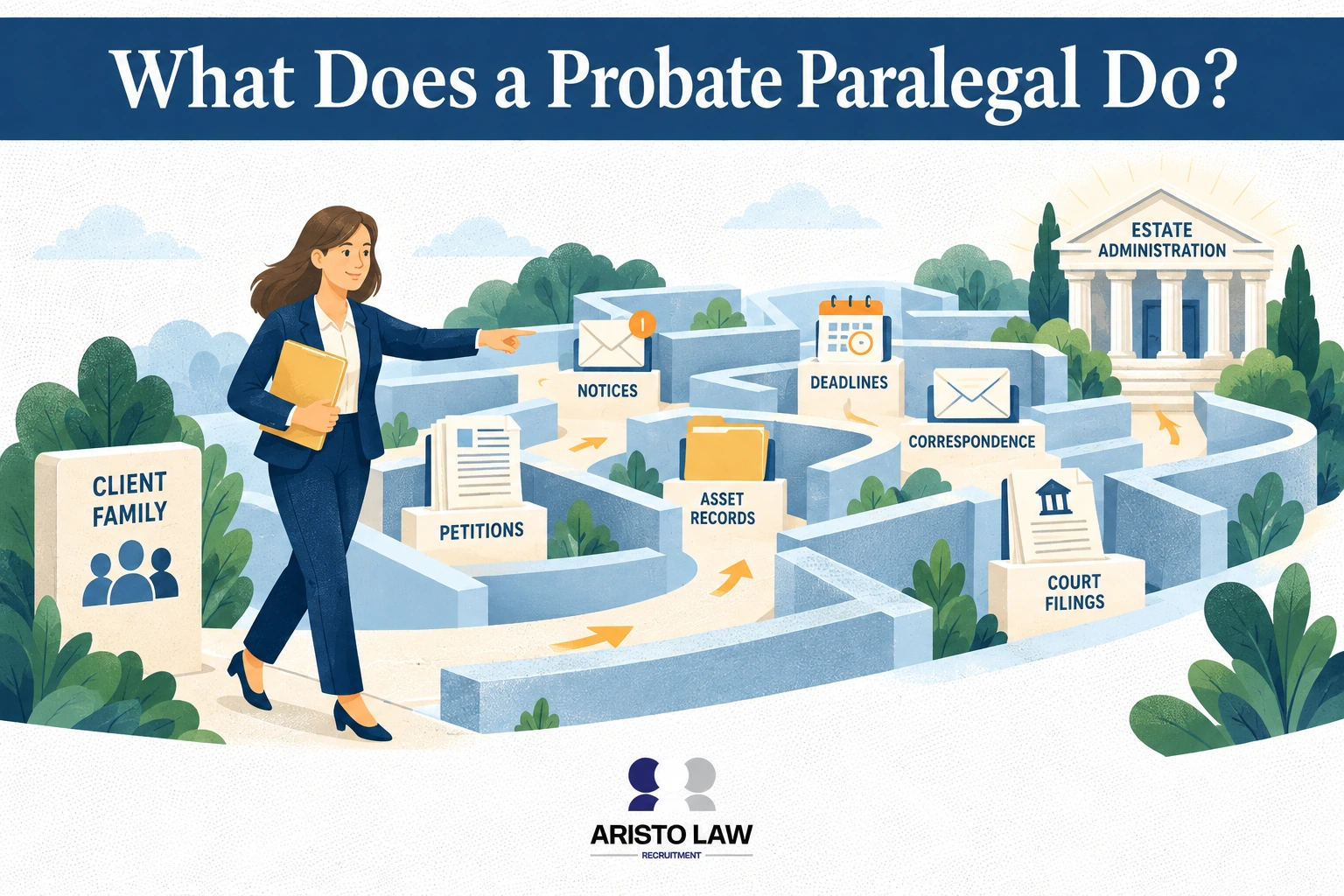
A probate paralegal manages filing deadlines. A probate paralegal
schedules court dates. A probate paralegal maintains probate records. A
probate paralegal organizes estate accountings. A probate paralegal
tracks asset distributions. A probate paralegal supports trust
administration.
Probate administration occurs after death. Probate administration
focuses on estate settlement. Probate administration involves court
supervision, creditor claims, asset transfers, and beneficiary
distributions. Estate planning occurs before death. Estate planning
focuses on wills, trusts, powers of attorney, healthcare directives, and
asset-transfer planning.
Estate planning paralegals support probate workflow management.
Estate planning paralegals support document organization. Estate
planning paralegals support case progression. Estate planning paralegals
reduce attorney administrative workload.
How
to hire an estate planning paralegal for your law firm?
To hire an estate planning paralegal for your law firm,
define workload requirements, identify required skills, evaluate
candidates, verify experience, assess technical proficiency, and
implement onboarding processes.
Listed below are the 8 steps to hiring an estate planning
paralegal.
-
Define workload requirements: Identify
estate-planning, probate, trust-administration, and client-support tasks
requiring delegation. -
Determine required skills: Establish requirements
for wills, trusts, probate procedures, legal drafting, document
management, and client communication. -
Source qualified candidates: Search through legal
staffing providers, remote legal support companies, paralegal networks,
referrals, and job boards. -
Evaluate estate-planning experience: Review
experience with wills, trusts, probate filings, estate administration,
trust funding, and beneficiary documentation. -
Verify technical proficiency: Assess knowledge of
legal practice-management software, document-automation systems,
case-management platforms, and secure communication tools. -
Conduct structured interviews: Evaluate
organizational skills, workflow management abilities, attention to
detail, confidentiality practices, and communication capabilities. -
Check references and credentials: Confirm employment
history, estate-law experience, professional certifications, and
performance history. -
Implement onboarding and workflow integration:
Provide training on firm procedures, document standards, client-service
protocols, and estate-planning workflows to support efficient legal
operations.
How
does AristoLaw support estate planning law firms with outsourced legal
staffing?
AristoLaw helps estate planning law firms manage
estate-administration workflows, probate support tasks, trust-document
processes, and legal operations through outsourced legal staffing
solutions. Law firms seeking outsourced
estate planning paralegal staffing support use
AristoLaw to assist with will preparation, trust-document organization,
probate coordination, estate file management, client intake, beneficiary
communications, trust-administration support, and legal workflow
management. AristoLaw provides virtual legal assistants and virtual
paralegals who support document preparation, deadline tracking, probate
process administration, client follow-up, and case organization under
attorney supervision.
Outsourced legal staffing helps firms increase operational
efficiency, manage higher caseload volumes, reduce administrative
burden, and avoid the costs associated with recruiting, training, and
maintaining additional in-house staff. AristoLaw provides staffing
flexibility that allows estate planning law firms to scale support
capacity during growth periods, probate surges, increased
trust-administration workloads, and expanding estate-planning practices
while maintaining consistent client service and operational
performance.
What
skills are required for estate planning paralegals?
Estate planning paralegal skills are trust and estate
knowledge, probate-procedure knowledge, document-drafting proficiency,
asset-detail management, confidentiality management, communication, and
deadline tracking.
Listed below are the 10 skills required for an estate planning
paralegal.
-
Trust and estate terminology knowledge: Knowledge of
trusts, wills, fiduciaries, beneficiaries, executors, and
estate-administration concepts supports accurate document preparation
and file management. -
Probate procedure knowledge: Understanding probate
processes, court filings, estate inventories, and probate deadlines
supports efficient probate support workflows. -
Document-drafting proficiency: Proficiency with
estate-planning templates, trust documents, wills, powers of attorney,
and healthcare directives supports document accuracy. -
Asset-detail management: Attention to ownership
structures, account information, property records, and asset
classifications supports accurate estate-planning outcomes. -
Beneficiary administration: Management of
beneficiary information, distributions, contact records, and inheritance
documentation supports estate-administration efficiency. -
Legal software proficiency: Experience with
document-automation systems, practice-management platforms,
probate-tracking tools, and trust-administration software supports
workflow productivity. -
Organizational ability: Management of estate files,
supporting documents, client records, and administration tasks supports
case progression and compliance. -
Confidentiality management: Protection of financial
records, personal information, estate details, and beneficiary data
supports client trust and legal compliance. -
Communication skills: Communication with attorneys,
clients, beneficiaries, financial advisors, accountants, and courts
supports coordinated estate administration. -
Deadline tracking: Monitoring probate deadlines,
trust-administration timelines, filing requirements, and execution
schedules supports timely case management.
When
should a law firm hire an estate planning paralegal?
A law firm should hire an estate planning paralegal when
estate-planning workloads, probate matters, or client-service demands
begin exceeding an attorney’s administrative capacity. Common
indicators include increasing caseloads, delayed will and trust
preparation, growing probate inventories, trust-administration backlogs,
rising client wait times, missed follow-up opportunities, and attorneys
spending excessive time on administrative work rather than legal
analysis.
Solo attorneys hire estate planning paralegal support when document
preparation and client coordination reduce available billable hours,
whereas small and growing firms add estate law staffing when probate
volumes, estate-administration responsibilities, and client demand
increase faster than internal support capacity. Operational warning
signs include attorney overtime, document-processing delays, filing
bottlenecks, deadline-management challenges, and reduced responsiveness
to clients and beneficiaries. Estate planning paralegal support removes
workflow constraints, increases matter capacity, improves service
delivery, and allows probate law firms to scale operations without
requiring attorneys to absorb additional administrative
responsibilities.
How
do estate planning paralegals support trust administration?
Estate planning paralegals support trust administration by
helping organize trust records, beneficiary communications, asset
documentation, and compliance-related workflows. After a trust
creator becomes incapacitated or dies, a trust and estate paralegal
assists with trust funding verification, trustee support, trust-asset
inventories, beneficiary correspondence, distribution documentation,
compliance tracking, and trust-administration record management.
An estate planning paralegal verifies whether assets were properly
transferred into the trust, organizes ownership records, tracks
administration deadlines, maintains trustee documentation, and prepares
materials needed for attorney review. Common trust-administration
challenges include incomplete trust funding, missing asset records,
beneficiary communication delays, documentation gaps, distribution
tracking issues, and compliance requirements; paralegals help address
these issues through document organization, workflow coordination, and
ongoing trust-management support. Trust administration workflows remain
organized because estate planning paralegals maintain records, monitor
milestones, support trustee communications, and help ensure that
trust-related activities progress efficiently under attorney
supervision.
Build a legal support team that moves work forward.
Tell us what is slowing your practice down. We will help map the role, workflow, and support structure that fits.