
Legal Bookkeeping – Virtual Assistant Support, Law Firm Financial Workflows, and Operational Efficiency

Practical guidance for building efficient, accountable legal support operations.
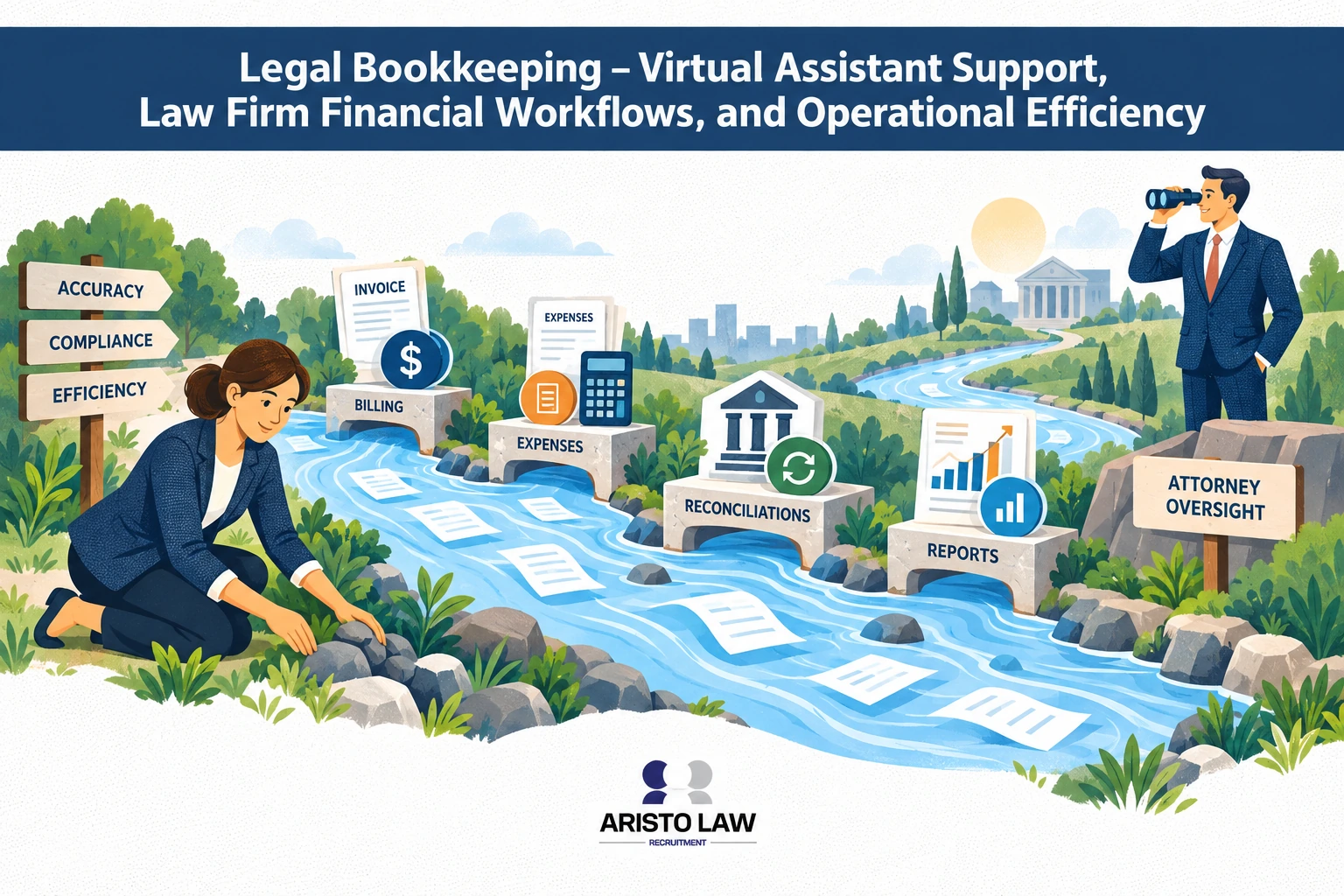
A legal VA is a remote legal support professional who assists
law firms with administrative, operational, intake, billing, scheduling,
document-management, CRM, and workflow-coordination tasks under attorney
supervision. Legal VAs help grow law firms by improving client
intake, accelerating lead response, maintaining communication workflows,
and supporting scalable legal operations without increasing full-time
in-house overhead.
Growth strategies include delegating administrative work, automating
case-management workflows, improving document organization,
strengthening deadline tracking, and increasing billable attorney time.
Growth strategies also include supporting legal research preparation,
assisting with drafting workflows, coordinating marketing activities,
managing business-development follow-up, and implementing SOP-driven
operational systems.
Research cited in the 2024 Clio Legal Trends Report found
that the average lawyer records only 2.9 billable hours in an 8-hour
workday, leaving 5.1 hours spent on non-billable activities such as
administrative work, communications, and document management. This
indicates substantial efficiency gains when administrative
responsibilities are delegated. Legal VAs improve operational
efficiency because attorneys spend more time on client representation
and revenue-generating legal work rather than administrative
coordination.
Legal VAs support case-management software, CRM systems, scheduling
platforms, document-management tools, intake systems, billing platforms,
and workflow-automation software that improve operational visibility and
consistency. Benefits include reduced staffing costs, improved client
responsiveness, stronger workflow accountability, scalable support
capacity, and more predictable law firm growth.
Legal VAs should not provide legal advice, represent clients in
court, make attorney-only legal decisions, establish legal strategy, or
engage in unauthorized practice of law activities. Hiring considerations
include legal workflow experience, role specialization, confidentiality
standards, communication quality, technology proficiency, and software
familiarity. Legal VAs focus on administrative and operational support,
while paralegals provide more substantive legal support involving
research, discovery, and document preparation.
Law firms should hire a legal VA when attorney workload, intake
volume, administrative demands, and operational complexity begin
limiting growth. Remote legal support improves efficiency, scalability,
client service, and long-term law firm growth through structured
workflow delegation and operational support systems.
Aristolaw helps law firms grow with a Legal VA by providing
outsourced support for administrative workflows, client intake, lead
follow-up, document coordination, scheduling, billing support, and
remote legal operations. Hire a
Virtual Legal Assistant with Aristolaw. Aristolaw connects law
firms with outsourcing solutions that match trained Legal VA staff to
each growth strategy, attorney support task, client service workflow,
lead management function, and law firm operations
responsibility.
Listed below are 10 ways a legal virtual assistant helps to grow your
law firm.
1. Improving Client Intake and Lead Response: Faster
intake and follow-up processes help law firms capture more qualified
leads and reduce client drop-off.
2. Scaling Client Communication Systems: Structured
communication workflows improve responsiveness, consistency, and client
satisfaction across growing caseloads.
3. Delegating Administrative Work: Administrative
delegation frees attorneys from routine tasks and allows greater focus
on legal work and client representation.
4. Automating Case Management Workflows: Workflow
automation reduces manual effort and improves task tracking, matter
progression, and operational efficiency.
5. Strengthening Document and Deadline Management:
Organized records and reliable deadline monitoring reduce compliance
risks and support case readiness.
6. Increasing Billable Attorney Hours: Removing
non-billable administrative burdens allows attorneys to devote more time
to revenue-generating legal activities.
7. Reducing Staffing and Operational Costs:
Efficient resource allocation lowers overhead expenses without
compromising workflow support and service delivery.
8. Supporting Legal Research and Drafting Workflows:
Research and drafting support improves preparation efficiency and
accelerates document production.
9. Expanding Marketing and Business Development
Support: Marketing and follow-up activities strengthen client
acquisition efforts and support firm growth objectives.
10. Creating Scalable SOP-Driven Operations:
Standardized procedures improve consistency, simplify training, and
support sustainable operational expansion.
1. Improving Client
Intake and Lead Response
Improving client intake and lead response is the process of
capturing, qualifying, routing, and responding to prospective-client
inquiries quickly and consistently through structured
workflows. Client intake directly affects law firm growth
because delayed responses, missed calls, incomplete records, and
inconsistent follow-up reduce consultation bookings and revenue
opportunities.
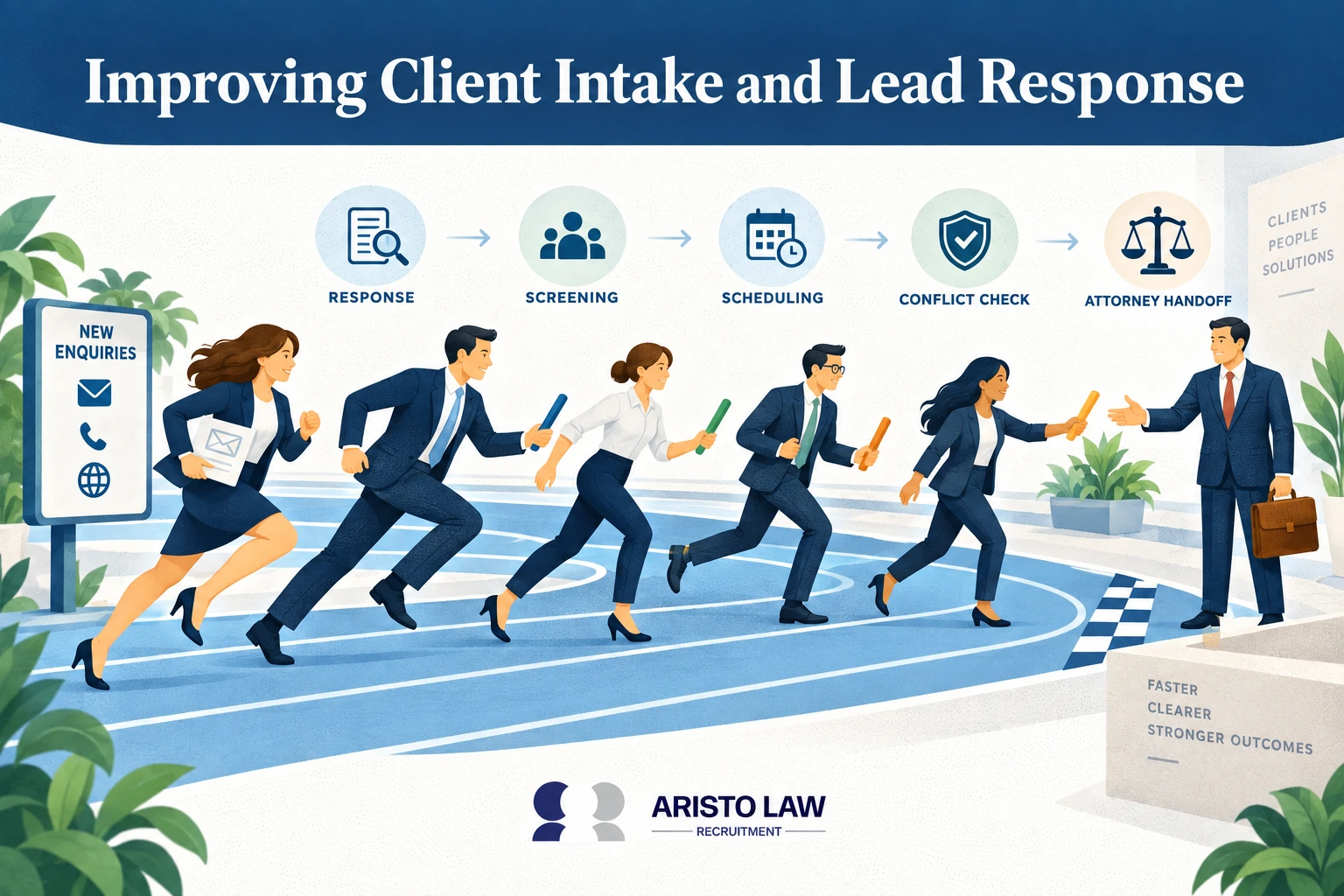
A legal virtual assistant helps improve lead capture by reducing
response delays and maintaining consistent intake workflows. Legal
virtual assistants support higher consultation conversion through virtual
intake specialist services that qualify prospects,
schedule appointments, and route leads to the appropriate legal
team.
Legal Virtual Assistant support improves intake operations through
contact-form monitoring, consultation scheduling, CRM updates, intake
screening, lead tracking, and workflow automation. Case Management
systems, SOP Management procedures, and Remote Legal Support workflows
improve scalability by maintaining response consistency as inquiry
volume increases. Law firms improve intake performance through
documented intake scripts, automated reminders, CRM integration,
lead-routing rules, response-time standards, and regular intake
audits.
2. Scaling Client
Communication Systems
Scaling client communication systems is the process of
managing growing volumes of client interactions through organized
communication workflows and technology platforms. Client
communication supports Law Firm Growth because consistent updates
improve client satisfaction, retention, and referral opportunities.
Legal Virtual Assistant services support email management,
appointment confirmations, follow-up coordination, client-status
updates, and communication tracking. Workflow Automation tools, CRM
platforms, and Legal Operations systems improve communication capacity
without requiring additional in-office staff. Law firms improve
communication scalability through centralized communication channels,
response templates, escalation procedures, communication logs, and
service-level response standards.
3. Delegating Administrative
Work
Delegating administrative work is the transfer of repetitive
operational tasks from attorneys to Legal Virtual Assistant
professionals. Administrative Support improves Attorney
Productivity because attorneys spend less time on scheduling, email
management, intake coordination, billing follow-up, and document
organization.
Remote Legal Support systems improve operational scalability through
distributed task management and workflow coordination. Business
Development benefits because attorneys allocate more time to client
service, case strategy, and revenue-generating activities. Law firms
improve delegation success through task inventories, workflow
documentation, approval rules, and performance monitoring systems.
4. Automating Case
Management Workflows
Automating Case Management Workflows is the use of software
and workflow automation tools to manage legal tasks, deadlines,
reminders, and matter progression. Case Management automation
supports Law Firm Growth because operational consistency improves as
matter volume increases.
Growing your law firm with a legal virtual assistant involves
reducing administrative bottlenecks by automating task assignment,
deadline tracking, document routing, and case status updates across
legal workflows. Understanding
legal workflow automation tools benefits helps law
firms connect virtual assistant support with scalable process execution,
higher operational consistency, and improved case management
efficiency.
Legal Virtual Assistant professionals support workflow automation by
monitoring task queues, updating matter records, tracking deadlines, and
escalating exceptions. Legal Operations systems improve visibility
through centralized reporting and workflow tracking. Law firms improve
automation outcomes through software integration, workflow mapping, task
ownership definitions, and routine process reviews.
5. Strengthening
Document and Deadline Management
Strengthening document and deadline management is the process
of organizing legal records and tracking critical timelines through
structured operational systems. Document management supports
Attorney Productivity because attorneys access organized records quickly
and reduce time spent locating information.
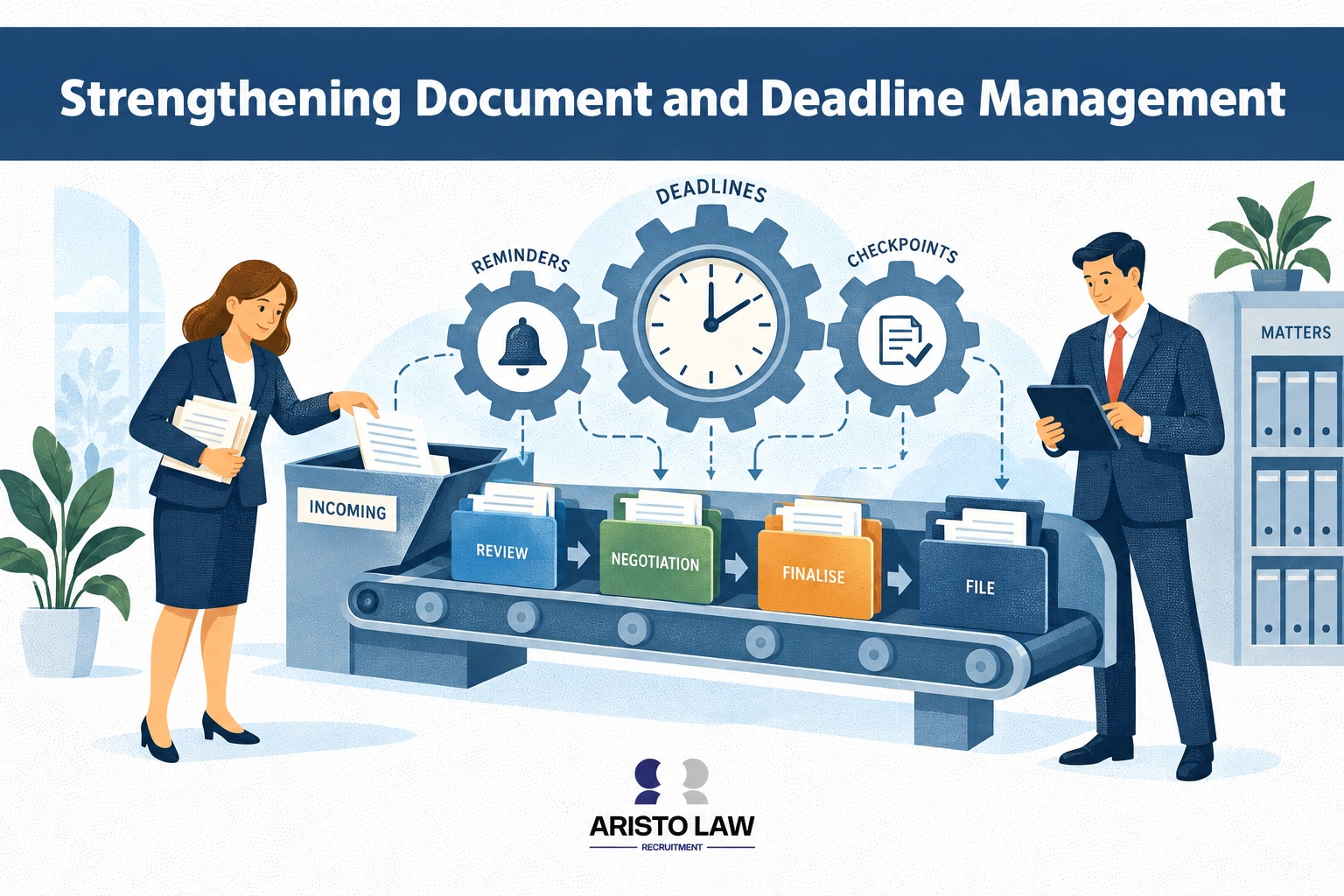
Legal Virtual Assistant support improves deadline tracking, filing
coordination, document indexing, version control, and calendar
management. Workflow Automation improves scalability through reminder
systems and deadline-monitoring tools. Law firms improve document
control through standardized naming conventions, document repositories,
approval workflows, and deadline escalation procedures.
6. Increasing Billable
Attorney Hours
Increasing billable attorney hours is the process of shifting
non-billable administrative work away from attorneys so more time
remains available for client matters. Attorney Productivity
improves because Legal Virtual Assistant professionals handle
scheduling, intake follow-up, CRM maintenance, billing coordination, and
administrative support tasks.
Law Firm Growth improves when attorneys devote more time to legal
services, business development, and client representation. Legal
Operations systems support workload distribution through task management
and workflow tracking. Law firms improve billable utilization through
delegation plans, workload audits, and operational reporting.
7. Reducing Staffing
and Operational Costs
Reducing staffing and operational costs is the practice of
supporting business growth without proportionally increasing internal
overhead. Legal Virtual Assistant services reduce recruitment
costs, office-space expenses, equipment purchases, employee-benefit
obligations, and administrative payroll requirements.
Remote Legal Support improves operational flexibility because
staffing levels adjust according to workload demand. Workflow Automation
further reduces manual processing costs across Legal Operations. Law
firms improve cost efficiency through role specialization, documented
workflows, scalable staffing models, and performance measurement
systems.
8. Supporting
Legal Research and Drafting Workflows
Supporting legal research and drafting workflows is the
process of assisting attorneys with information gathering, document
preparation support, and legal-content organization under attorney
supervision. Legal Virtual Assistant support improves workflow
efficiency through citation organization, document formatting, research
coordination, file preparation, and deadline monitoring.
A legal virtual assistant helps improve legal research accuracy and
supports faster drafting workflows across briefs, memoranda, and case
analysis. Growing your law firm with a legal virtual assistant connects
attorneys with virtual
legal research assistant and research analyst services
that perform case law review, citation verification, jurisdictional
research, and legal document preparation.
Case Management systems improve visibility by connecting research
activity to matter workflows. Attorney Productivity improves because
attorneys focus on legal analysis and final review. Law firms improve
research support through clear assignment protocols, quality-control
procedures, and documented review standards.
9.
Expanding Marketing and Business Development Support
Expanding marketing and business development support is the
process of improving lead generation, client acquisition, referral
management, and visibility through structured operational
support. Legal Virtual Assistant professionals support website
updates, CRM maintenance, review requests, lead tracking, content
publishing coordination, and marketing reporting.
Legal virtual assistants support marketing execution, lead
management, and client outreach activities that contribute to business
development. Law firms use virtual
legal marketing assistant services to manage campaign
coordination, content distribution, referral tracking, and
marketing-related administrative workflows.
Business Development improves because prospect follow-up and referral
management remain consistent across growth stages. Workflow Automation
improves lead-management efficiency through automated reminders and
tracking systems. Law firms improve marketing support through
performance reporting, lead-source tracking, CRM integration, and
documented campaign procedures.
10. Creating Scalable
SOP-Driven Operations
Creating scalable SOP-driven operations is the process of
standardizing workflows through documented procedures that maintain
consistency as a law firm grows. SOP Management supports Law
Firm Growth because operational quality remains stable across increasing
workloads, staffing changes, and expanding client demand.
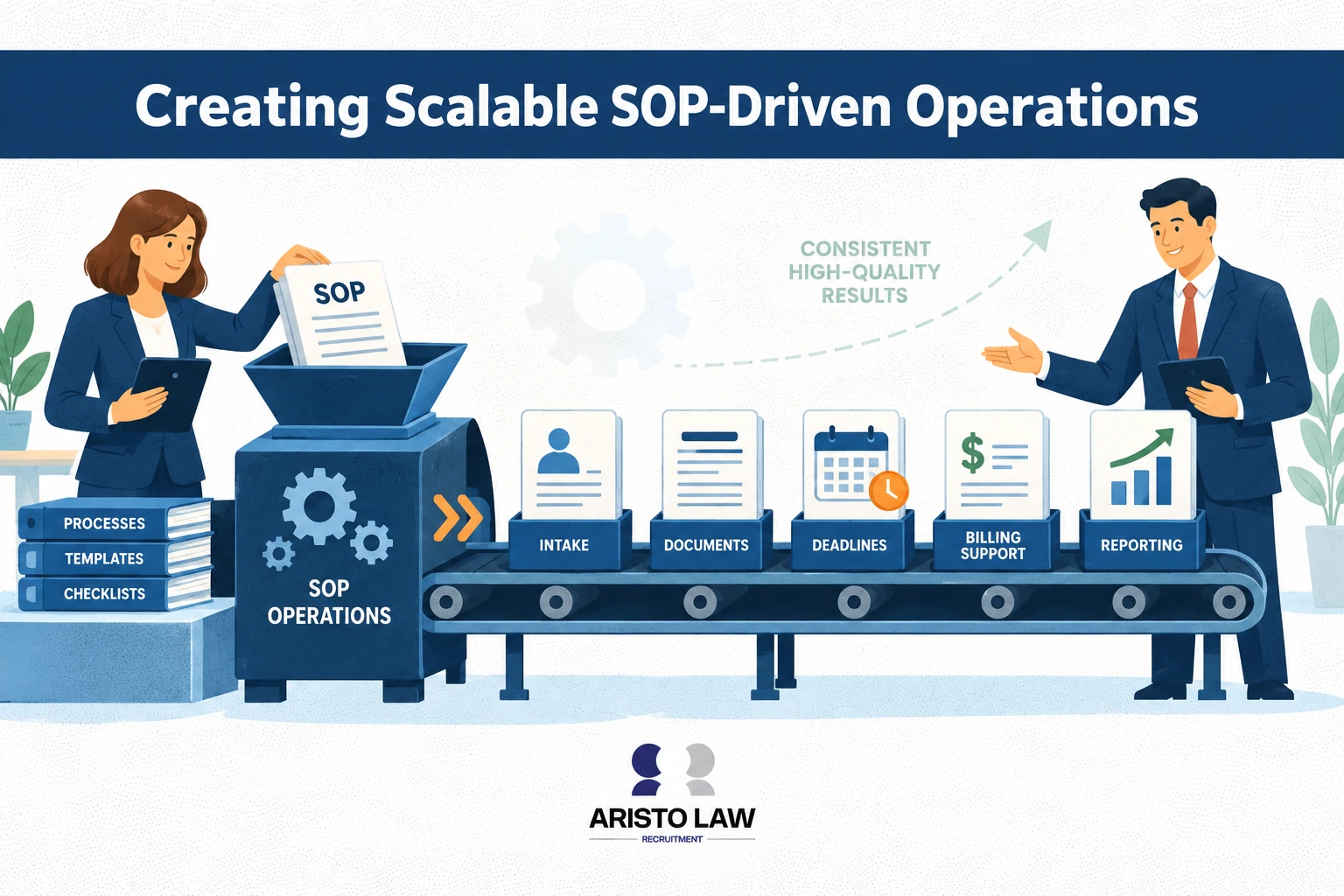
Legal Virtual Assistant professionals execute documented workflows
for intake, scheduling, communication, billing coordination, document
management, and administrative support. Legal Operations systems improve
accountability through task ownership, reporting, and workflow
visibility. Law firms improve scalability through written SOPs, training
programs, automation tools, quality-control reviews, and continuous
process improvement initiatives.
How can a legal
VA increase law firm business?
A legal VA can increase law firm business by improving lead
response, scheduling more consultations, reducing missed opportunities,
supporting marketing execution, and keeping client follow-up
consistent. Law firm growth depends on converting website
inquiries, phone calls, referrals, email leads, and social media leads
into scheduled consultations through organized intake and communication
systems.
Research by James Oldroyd, Kristina McElheran, and David
Elkington (2011), published through a Harvard Business Review
lead-response study, showed that companies responding to inquiries
within one hour were nearly 7 times more likely to qualify a lead than
those that waited longer, demonstrating the value of prompt follow-up
and inquiry management. Legal VA support improves lead response
workflows because inquiries receive prompt attention, accurate tracking,
and structured follow-up rather than remaining unanswered or delayed.
Faster response times improve consultation opportunities and reduce lead
loss caused by attorney workload or limited office availability.
CRM updates improve business visibility because legal VAs record lead
details, referral sources, communication history, consultation status,
and follow-up activity within centralized systems. Consultation booking
workflows improve conversion because legal VAs coordinate calendars,
schedule appointments, send confirmations, issue reminders, and maintain
communication before meetings occur. Appointment reminders and no-show
follow-up workflows reduce lost consultations by encouraging attendance
and re-engaging prospective clients who miss scheduled meetings.
Marketing execution becomes more effective because legal VAs support
website inquiry monitoring, lead-source tracking, review-request
coordination, referral management, and campaign follow-up activities
tied to business development efforts. Lead-status notes improve
operational visibility because attorneys and intake teams understand
where prospects remain within the intake process. Referral-source
tracking improves marketing decision-making because law firms identify
which channels generate the strongest consultation volume and client
acquisition results.
Legal VA support transforms marketing activity into consultations by
connecting lead generation, intake coordination, CRM management,
communication workflows, and follow-up systems into a structured
client-acquisition process. Consistent intake operations improve
conversion rates, support business growth, and create scalable law firm
systems without increasing internal administrative overhead.
What tasks should a
legal VA not handle?
Tasks a legal VA should not handle include legal advice, case
strategy, fee decisions, and final legal document approval.
Listed below are 15 tasks a legal VA should not handle.
-
Legal advice: Legal advice requires attorney
approval because legal conclusions, legal opinions, rights analysis, and
legal recommendations involve professional legal judgment. Legal VAs
collect information and coordinate communication but should not advise
clients on legal matters. -
Case strategy: Case strategy decisions involve
litigation planning, negotiation approaches, legal positioning, risk
assessment, and attorney judgment. Attorneys retain responsibility for
strategic legal decisions. -
Court representation: Court representation requires
licensed legal authority. Legal VAs should not appear in court,
represent clients before tribunals, argue motions, or act as legal
representatives. -
Unsupervised legal drafting: Legal VAs assist with
document formatting, information gathering, and draft preparation
support, but attorneys should review and approve substantive legal
documents before use or filing. -
Settlement recommendations: Settlement
recommendations involve legal risk analysis, negotiation strategy,
liability assessment, and legal advice. Attorneys should make and
approve settlement-related decisions. -
Fee decisions: Fee structures, legal pricing
decisions, engagement terms, billing arrangements, and fee negotiations
require attorney or firm-management approval. Legal VAs communicate
approved information but should not determine fees independently. -
Final legal document approval: Final approval of
contracts, pleadings, legal memoranda, settlement agreements, engagement
letters, and legal filings requires attorney review and
authorization. -
Interpretation of laws and regulations: Legal
interpretation requires professional legal analysis. Legal VAs organize
research materials but should not interpret statutes, regulations, case
law, or legal obligations for clients. -
Attorney-client privilege determinations: Privilege
assessments, confidentiality determinations, and legal-protection
decisions require attorney oversight because these issues affect legal
rights and litigation exposure. -
Conflict-of-interest decisions: Conflict reviews
involve administrative support and information gathering, but attorneys
should evaluate and approve final conflict determinations. -
Client legal-risk assessments: Risk assessments
involving liability exposure, legal claims, litigation outcomes, or
legal rights require attorney judgment and review. -
Negotiating legal positions on behalf of clients:
Negotiation authority involving legal rights, settlement terms, contract
positions, or litigation matters should remain with attorneys or
authorized legal professionals. -
Responding to sensitive legal questions without
escalation: Sensitive client questions involving legal rights,
legal obligations, settlement options, deadlines, litigation strategy,
or legal outcomes should follow escalation rules that route inquiries
directly to attorneys. -
Making decisions that create unauthorized practice of law
risk: Unauthorized practice of law risk arises when nonlawyers
perform activities reserved for licensed attorneys. Legal VAs should
follow role boundaries, use approved scripts, coordinate workflows,
organize documents, maintain client records, and escalate legal
questions requiring attorney approval. -
Approving confidentiality-sensitive disclosures:
Legal VAs should not independently authorize disclosure of confidential
information, privileged materials, trust-account information, or
protected client communications without attorney direction.
How should a law firm
hire a legal VA?
Steps to hire a legal VA include identifying growth
bottlenecks, testing workflow skills, verifying confidentiality
awareness, and onboarding with SOPs.
Listed below are 17 steps to hire a legal VA.
-
Identify growth bottlenecks: Growth bottlenecks
should be diagnosed before hiring. Missed calls, slow intake, attorney
administrative overload, document backlogs, billing delays, marketing
inconsistency, and client communication gaps indicate the need for a law
firm virtual assistant. -
Define the role based on operational needs: Role
definitions should focus on intake coordination, CRM management,
scheduling, document organization, billing support, client
communication, marketing coordination, or workflow management. Clear
responsibilities improve hiring accuracy. -
Choose the right staffing model: Staffing models
include part-time support, full-time remote support, dedicated
outsourced staffing, or agency-managed teams. Workload volume and growth
goals determine the most suitable structure. -
Determine whether a legal VA is the correct hire:
Legal VAs support intake, scheduling, CRM updates, administrative
workflows, client follow-up, and operational coordination. Receptionists
primarily handle calls and front-desk communication. Paralegals support
substantive legal work. Bookkeepers manage financial workflows.
Marketing assistants focus on campaign execution and promotion
activities. -
Screen legal support experience: Legal support
experience should include familiarity with intake systems, legal
terminology, case-management software, document workflows, scheduling
platforms, and law firm operations. -
Evaluate technology proficiency: Technology
assessments should cover CRM systems, case-management platforms,
document-management software, calendar tools, communication systems, and
workflow-automation platforms. -
Test intake-call handling skills: Sample tests
should include intake-call simulations, consultation scheduling
scenarios, lead qualification workflows, and client communication
exercises. Intake performance directly affects law firm growth. -
Test CRM-entry accuracy: CRM assessments should
evaluate lead tracking, referral-source entry, communication logging,
task creation, and status-update consistency. -
Test document-formatting ability: Document tests
should include file organization, formatting accuracy, template usage,
naming conventions, and document-management procedures. -
Test calendar-coordination workflows: Calendar
exercises should assess appointment scheduling, consultation
coordination, reminder management, conflict resolution, and deadline
tracking. -
Test client follow-up processes: Client follow-up
evaluations should measure communication professionalism, note-taking
accuracy, response consistency, and workflow compliance. -
Verify confidentiality awareness: Confidentiality
reviews should cover client-data protection, role-based access controls,
secure communication practices, password security, and escalation
procedures for sensitive information. -
Assess communication reliability: Communication
standards should evaluate responsiveness, professionalism, attention to
detail, task ownership, and reporting consistency. -
Review workflow and SOP compliance: Workflow
assessments should confirm the ability to follow documented procedures,
intake scripts, communication standards, escalation rules, and
operational checklists. -
Conduct a supervised trial period: Trial projects
should include intake support, CRM updates, scheduling coordination,
document management, and client follow-up workflows. Practical testing
improves hiring confidence. -
Onboard with documented SOPs: Onboarding should
include intake workflows, CRM procedures, communication templates,
confidentiality rules, escalation processes, software training, and
performance expectations. Structured onboarding improves operational
consistency and scalability. -
Use legal staffing providers when growth requires faster
deployment: Aristolaw provides trained law firm virtual
assistant staffing support for intake management, administrative
coordination, CRM workflows, client communication, scheduling, legal
operations support, and scalable remote legal staffing designed for
growing law firms.
When should a law firm
hire a legal VA?
A law firm should hire a legal VA when there are missed
leads, marketing inconsistency, and client communication
gaps.
Listed below are 14 occasions when a law firm should hire a legal
VA.
-
Missed leads reduce revenue opportunities: Missed
leads occur when website inquiries, phone calls, referrals, or email
prospects receive no response or delayed responses. Lost consultations
reduce client acquisition and business growth. Legal VAs improve lead
monitoring, intake coordination, and consultation scheduling. -
Slow intake delays client conversion: Slow intake
workflows create delays between inquiry submission and attorney contact.
Delayed intake weakens client experience and reduces consultation
conversion rates. Intake specialists or legal VAs improve intake speed
and lead processing. -
Attorney admin overload reduces billable capacity:
Attorney overload develops when attorneys spend excessive time on
scheduling, email management, CRM updates, intake follow-up, and
administrative coordination. Legal VAs improve attorney focus and
increase time available for legal work. -
Document backlog slows matter progression: Document
backlogs create operational delays involving file organization, document
preparation support, client records, and workflow management. Legal VAs
improve document coordination, while paralegals support substantive
legal document work. -
Poor follow-up weakens client retention and
conversion: Poor follow-up creates lost consultation
opportunities and inconsistent client communication. Legal VAs improve
appointment reminders, consultation confirmations, lead-status updates,
and follow-up workflows. -
Billing delays reduce cash-flow visibility: Billing
delays slow invoice delivery, payment collection, and
accounts-receivable management. Legal VAs support billing coordination
and payment tracking. Legal bookkeepers become more appropriate when
financial workflows dominate operational challenges. -
Marketing inconsistency limits business development:
Marketing inconsistency occurs when lead tracking, review requests,
website updates, referral management, or campaign coordination receive
insufficient attention. Marketing assistants focus on campaign
execution, while legal VAs support marketing operations and lead
management. -
Client communication gaps damage client experience:
Communication gaps create missed messages, delayed updates, scheduling
confusion, and inconsistent client contact. Legal VAs improve
communication workflows through organized tracking and coordination
systems. -
Growing consultation volume exceeds internal
capacity: Consultation demand increases faster than
administrative staffing. Legal VAs support scheduling, intake
processing, CRM updates, and consultation coordination without requiring
full in-office expansion. -
CRM records become incomplete or outdated: CRM
inaccuracies reduce lead visibility, referral tracking, and follow-up
consistency. Legal VAs maintain lead records, communication notes,
status updates, and intake workflows. -
Missed calls become a recurring problem: Frequent
missed calls indicate the need for a receptionist when call volume is
the primary bottleneck. Legal VAs become more appropriate when call
handling combines with intake, scheduling, CRM management, and
administrative workflows. -
Legal work begins exceeding attorney support
capacity: Paralegals become the better solution when legal
research, discovery management, document review, case summaries, and
substantive legal support create the primary bottleneck. Legal VAs
support operational and administrative workflows rather than substantive
legal analysis. -
Financial administration consumes excessive time:
Legal bookkeepers become more appropriate when reconciliation,
trust-account support, billing management, expense tracking, and
financial reporting dominate operational workload. -
Operational growth outpaces internal systems: Legal
VAs support scalable growth by managing intake, communication,
scheduling, CRM maintenance, administrative workflows, and operational
coordination through structured processes and documented procedures.
Should a law
firm hire a legal VA or a paralegal?
Both roles support legal operations, but they differ in scope
of work, training requirements, and the types of tasks they
perform.
Growing your law firm with a legal virtual assistant involves
matching administrative, intake, scheduling, and workflow tasks to
remote support roles while reserving substantive legal work for
qualified personnel where required. Evaluating legal
assistant vs paralegal differences skills and salaries
also helps law firms align staffing decisions with workload demands,
budget allocation, and operational growth objectives.
The table below shows the choice between hiring a legal VA or a
paralegal.
| Hiring Factor | Legal VA | Paralegal |
|---|---|---|
| Primary Role | Administrative support and law firm operations support | Substantive legal support under attorney supervision |
| Administrative Support | Strong focus on intake, scheduling, CRM updates, email management, billing follow-up, and client communication |
Limited focus on administrative workflows compared to legal work support |
| Legal Research | Basic research coordination and information gathering support | Detailed legal research, case-law review, and research memorandum support |
| Document Work | Document formatting, file organization, template management, and document coordination |
Discovery support, case summaries, document analysis, and substantive drafting support |
| Client Intake | Strong fit for intake management, consultation booking, lead tracking, and follow-up workflows |
Limited intake involvement unless combined with case-support responsibilities |
| Client Communication | Strong fit for routine communication, reminders, updates, and workflow coordination |
Client communication tied to case-support activities |
| Billing Support | Supports invoice follow-up, payment reminders, and CRM updates | Limited billing involvement unless assigned by the firm |
| Marketing Coordination | Supports review requests, website updates, referral tracking, and lead-management workflows |
Rarely involved in marketing coordination |
| Case Management | Supports administrative matter tracking and workflow coordination |
Supports substantive matter preparation and legal case support |
| Discovery Support | Minimal discovery involvement | Strong discovery-management and evidence-review support |
| Drafting Support | Supports formatting and document preparation workflows | Supports substantive drafting under attorney supervision |
| Legal Task Depth | Lower legal-task complexity | Higher legal-task complexity |
| Attorney Supervision | Supervision focused on workflow execution and client communication |
Supervision focused on legal work quality and substantive support |
| Cost Structure | Lower-cost staffing option focused on operational support | Higher-cost staffing option because of specialized legal skills |
| Growth Impact | Improves intake capacity, operational efficiency, lead conversion, and attorney time recovery |
Improves legal production capacity, matter preparation, and case-support capabilities |
| Best Bottleneck Solved | Attorney admin overload, missed leads, slow intake, communication gaps, scheduling issues, and workflow coordination |
Legal research backlog, discovery workload, case preparation delays, and substantive legal support shortages |
| Best Fit for Early Growth | Strong first hire when administrative work limits growth | Strong first hire when legal work volume exceeds attorney support capacity |
| Budget Consideration | Better fit for firms seeking operational support with lower staffing costs |
Better fit for firms requiring specialized legal support and deeper case involvement |
| Ideal Hiring Decision | Choose a legal VA when growth problems involve intake, scheduling, communication, billing follow-up, CRM management, or operational efficiency |
Choose a paralegal when growth problems involve legal research, discovery, drafting support, case preparation, or increasing matter complexity |
Law firms experiencing attorney administrative overload, missed
leads, slow intake, and communication bottlenecks benefit from a legal
VA first. Law firms experiencing legal research backlogs, discovery
pressure, complex case preparation demands, and substantive legal
workload growth benefit from a paralegal first.
Build a legal support team that moves work forward.
Tell us what is slowing your practice down. We will help map the role, workflow, and support structure that fits.