
Virtual Legal Assistant –Law Firm Efficiency, Legal Workflow Automation, and Remote Legal Support

Practical guidance for building efficient, accountable legal support operations.
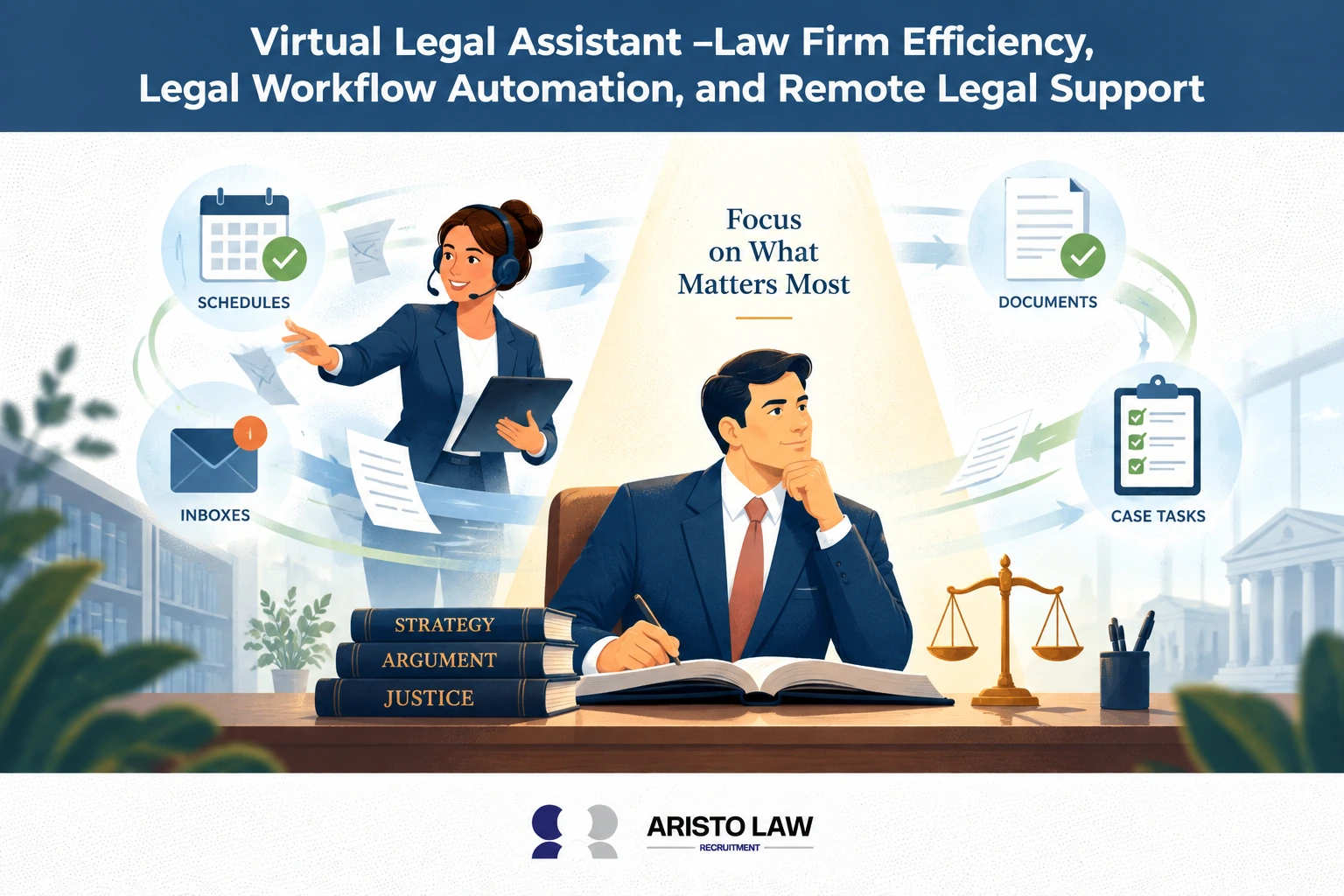
A virtual legal assistant is a remote legal support
professional who helps law firms manage administrative, operational, and
workflow-related legal tasks through cloud-based systems, communication
platforms, and centralized legal software. Virtual legal
assistants support attorneys by handling intake coordination,
scheduling, client communication, document organization, billing
support, CRM updates, workflow tracking, legal administrative support,
and attorney-supervised operational tasks that improve law-firm
efficiency without expanding full in-office staffing structures.
Law firms, solo attorneys, and growing legal practices use virtual
legal assistants to reduce operational overload, improve responsiveness,
accelerate intake handling, organize legal workflows, and increase
attorney availability for billable legal work. Research by
Affinity Consulting in 2023 showed that delegating administrative and
procedural tasks to paralegals and legal support staff helps law firms
streamline workflows, improve productivity, reduce inefficiencies, and
ensure tasks are handled more efficiently across legal
operations. Structured delegation of administrative and
procedural workflows improves productivity and client-service
responsiveness across legal environments.
Virtual legal assistants improve scalability through flexible
staffing models, lower overhead costs, fractional support structures,
and remote workflow coordination. Common automated legal workflows
include intake processing, calendaring, reminder systems, document
routing, CRM tracking, client follow-up, scheduling coordination, and
task-management automation through practice-management platforms and
workflow dashboards.
Modern virtual legal operations rely heavily on cloud-based
case-management systems, CRM platforms, document-management software,
e-signature tools, scheduling systems, billing platforms, secure
messaging systems, and remote collaboration tools supporting distributed
legal teams. Strong virtual legal assistants usually demonstrate
organizational discipline, communication quality, confidentiality
awareness, legal software proficiency, multitasking capability, and
workflow-management accuracy.
Law firms achieve the strongest results when remote legal support
integrates into documented workflows, secure systems, performance
metrics, and attorney-supervised operational structures focused on
productivity, responsiveness, workflow accuracy, and scalable legal
operations.
Aristolaw helps law firms improve virtual legal assistant
support, law firm efficiency, legal workflow automation, and remote
legal operations by providing outsourced support for administrative
tasks, document coordination, client communication, scheduling, intake
assistance, and automated workflow follow-up. Book a
Virtual Legal Assistant staffing consultation with Aristolaw.
Aristolaw connects law firms with outsourcing solutions that match
trained virtual legal assistant staff to each remote support task,
workflow automation need, administrative duty, client-facing function,
and law firm efficiency responsibility.
What is a virtual legal
assistant?
A virtual legal assistant is a remote legal support
professional who helps law firms manage administrative, client
communication, document, intake, scheduling, billing, and workflow tasks
through digital systems. Virtual legal assistants function
primarily as operational support resources improving law-firm efficiency
by reducing attorney administrative workload, organizing workflows,
maintaining communication continuity, and supporting centralized legal
operations through cloud-based software and remote collaboration
systems.
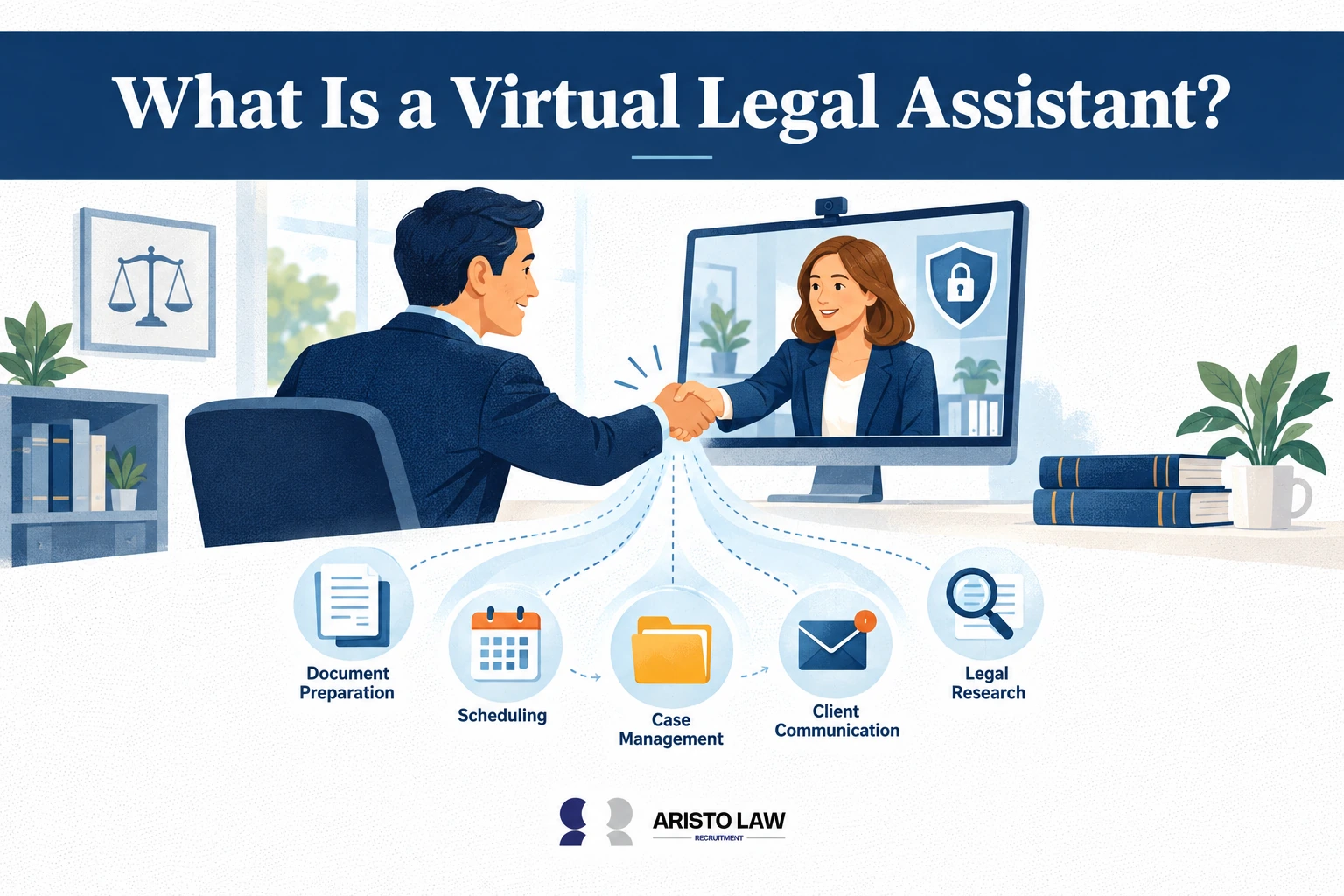
A virtual legal assistant supports law firms by managing
administrative workflows, legal documentation, scheduling, client
communication, and intake coordination in remote legal environments.
Virtual legal assistant operations integrate with outsourced legal
staffing models through virtual
legal assistant services that connect legal teams with
trained remote support professionals.
Unlike generic business virtual assistants, virtual legal assistants
operate inside legal environments requiring familiarity with legal
terminology, confidentiality standards, attorney-supervised workflows,
procedural deadlines, legal software systems, and client-sensitive
communication practices.
Virtual legal assistants support attorneys, paralegals, intake teams,
office managers, and legal operations staff through workflow
coordination involving scheduling, intake management, CRM updates,
billing support, document organization, e-signature routing,
communication tracking, repository maintenance, and task-management
workflows. Legal administrative support generally focuses on
communication, scheduling, intake coordination, file maintenance, and
operational organization.
Paralegal-adjacent support may include attorney-supervised legal
research assistance, procedural workflow coordination, compliance
tracking, or document preparation support without independent legal
analysis. Legal secretary support usually emphasizes correspondence
management, calendaring, transcription, and attorney scheduling, while
receptionist support focuses more heavily on call handling, lead
routing, appointment scheduling, and intake responsiveness.
Virtual legal assistants improve operational scalability because law
firms increase support capacity without proportionally increasing office
overhead, equipment costs, or permanent in-house staffing commitments.
A study by Hire
Overseas in 2025 shows that law firms using virtual legal
assistants experienced up to a 40% increase in productivity, allowing
firms to handle larger caseloads without hiring additional in-house
staff or expanding office infrastructure. Legal operations
research consistently shows structured delegation of repetitive
operational workflows improves productivity, response time, intake
continuity, and workflow consistency across growing legal practices.
Virtual legal assistants operate under attorney supervision and do
not independently practice law, provide legal advice, establish legal
strategy, negotiate legal matters, or exercise independent legal
judgment.
What does a virtual
legal assistant do?
Tasks a virtual legal assistant does include client intake,
appointment scheduling, CRM updates, file organization, and client
follow-up.
Listed below are 13 tasks of a virtual legal assistant.
-
Client intake and lead capture: Virtual legal
assistants respond to new inquiries, collect intake information,
coordinate conflict-check workflows, and route leads into CRM or intake
systems. Organized intake workflows reduce missed opportunities and
improve consultation conversion. -
Consultation booking and appointment scheduling:
Scheduling support includes consultation coordination, calendar
management, reminder systems, hearing scheduling, and meeting
confirmations. Structured scheduling reduces attorney interruptions and
prevents operational conflicts. -
Email management and inbox triage: Virtual legal
assistants organize inboxes, prioritize communication, route requests,
track follow-ups, and flag urgent workflow items for attorney review.
Inbox management improves responsiveness and workflow continuity across
legal operations. -
Document preparation and template population:
Administrative legal support often includes formatting legal documents,
populating templates, organizing attachments, preparing intake packets,
and maintaining standardized workflow documentation. Structured document
handling improves turnaround speed and reduces repetitive attorney
administrative work. -
E-signature routing and document coordination:
Virtual legal assistants send engagement letters, intake forms,
agreements, and procedural documents through e-signature systems while
tracking completion status and routing signed documents into
repositories. -
Billing support and payment follow-up: Billing
workflows include invoice coordination, payment reminders, time-entry
support, accounts-receivable follow-up, and billing-system updates
improving cash-flow continuity and administrative organization. -
CRM updates and matter tracking: Virtual legal
assistants maintain client records, update matter status, track
communication history, organize intake progression, and improve
operational visibility through centralized systems. -
Case-file maintenance and document organization:
File-management workflows include naming conventions, repository
organization, metadata tagging, version control, and document retrieval
support improving matter visibility and workflow consistency. -
Client follow-up and communication coordination:
Follow-up workflows include reminders, status updates, onboarding
communication, intake progression updates, and appointment confirmations
improving client responsiveness and operational reliability. -
Calendar coordination and deadline tracking: Virtual
legal assistants manage reminders, filing schedules, task deadlines, and
procedural workflow calendars reducing missed deadlines and operational
delays. -
Task-management and workflow coordination: Workflow
support includes updating task boards, assigning operational workflows,
tracking deliverables, and maintaining visibility across legal
matters. -
Call handling and communication routing: Some
virtual legal assistants also support receptionist-style workflows
involving call screening, intake routing, voicemail management, and
communication escalation. -
Administrative workflow automation support: Virtual
legal assistants frequently operate inside practice-management systems,
CRM platforms, intake software, and workflow dashboards supporting
operational automation and legal workflow consistency.
Virtual legal assistants improve law-firm efficiency by reducing
attorney interruptions, accelerating administrative workflows, improving
communication consistency, organizing operational systems, and helping
matters move through intake, scheduling, billing, and document workflows
more efficiently.
How does a virtual
legal assistant work?
A virtual legal assistant works by receiving delegated
law-firm tasks through secure software, completing remote support
workflows, updating legal systems, and escalating attorney-review items
when needed. The remote operating model usually begins when
attorneys, paralegals, intake teams, or legal operations staff assign
tasks through practice-management platforms, CRM systems, workflow
dashboards, secure messaging tools, or centralized task boards.
Virtual legal assistants then access cloud-based legal systems using
role-based permissions allowing controlled access to intake records,
scheduling systems, billing platforms, document repositories,
communication tools, and workflow-management software necessary for
assigned responsibilities.
Workflow execution follows a structured sequence involving task
assignment, SOP reference, document retrieval, workflow completion,
quality review, system update, and client or internal team follow-up. A
virtual legal assistant may receive intake assignments, appointment
scheduling requests, document-formatting tasks, billing updates, CRM
changes, e-signature routing instructions, communication follow-up
requests, or repository-management workflows.
SOPs remain heavily important because remote legal operations fail
frequently when firms rely on undocumented processes or unclear workflow
ownership. Strong virtual legal assistant systems include documented
intake procedures, communication standards, naming conventions,
escalation paths, deadline rules, attorney-review checkpoints, and
response-time expectations. Role boundaries also remain heavily
important because virtual legal assistants support administrative and
operational legal workflows under attorney supervision but do not
independently provide legal advice, legal strategy, or substantive legal
judgment.
Secure workflow management depends on confidentiality agreements,
encrypted communication channels, secure file-sharing systems, password
controls, MFA authentication, audit trails, version-controlled
repositories, and restricted-access policies protecting attorney-client
privilege and sensitive legal information.
Performance management inside remote legal operations usually focuses
on measurable outputs such as response time, intake conversion,
scheduling accuracy, task completion speed, document turnaround, billing
support consistency, communication quality, and attorney time recovered
rather than simple online activity monitoring.
How
do virtual legal assistants improve law firm efficiency?
Virtual legal assistants improve law firm efficiency by
removing repeatable administrative work from attorneys and converting
scattered tasks into structured remote workflows. Operational
efficiency improves when scheduling, intake coordination, billing
follow-up, CRM updates, communication tracking, document formatting,
repository management, and client follow-up workflows move into
organized support systems instead of interrupting attorney focus
throughout the day.
Legal operations research consistently shows structured delegation
improves attorney utilization, reduces workflow fragmentation,
accelerates administrative turnaround, and increases matter throughput
because attorneys spend more time on billable legal analysis,
negotiations, advocacy, and client representation rather than repetitive
operational coordination.
Virtual legal assistants improve attorney time recovery by handling
intake responses, consultation booking, inbox triage, scheduling
coordination, reminder systems, e-signature routing, and administrative
follow-up workflows that commonly create constant interruptions inside
legal practices. Reduced context switching improves productivity because
attorneys remain focused on substantive legal work instead of repeatedly
shifting attention between operational tasks, communication requests,
scheduling adjustments, and administrative updates.
Centralized document organization, CRM management, and workflow
tracking also improve matter visibility and reduce time lost searching
for files, communication history, billing updates, or scheduling
details.
Research by the McKinsey Global Institute in 2012 showed that
professionals spend up to 28% of their workweek on email and
administrative coordination, reducing time available for high-value
client work and slowing operational efficiency. Structured
virtual legal support also improves client communication consistency
through standardized intake workflows, centralized follow-up systems,
reminder automation, and communication tracking across legal
matters.
Efficiency gains come primarily from combining delegation with
documented workflow design, centralized software systems, SOP-driven
operational processes, role clarity, and measurable accountability
rather than simply hiring remote staff without operational
structure.
What
are the benefits of hiring a virtual legal assistant?
Benefits of hiring a virtual legal assistant include lower
overhead, faster client response, attorney time recovery, smoother
workflows, better document organization, improved billing support, and
scalable staffing.
Listed below are the 15 benefits of hiring a virtual legal
assistant.
-
Lower operational overhead: Remote staffing reduces
office-space costs, workstation expenses, equipment purchases, and fixed
administrative payroll obligations. Law firms increase support capacity
without proportionally expanding physical infrastructure. -
Faster client response and intake handling: Virtual
legal assistants improve intake responsiveness through call handling,
consultation scheduling, CRM updates, reminder systems, and
communication follow-up workflows. Faster response speed improves
consultation conversion and reduces missed-lead loss. -
Attorney time recovery: Delegating scheduling, inbox
management, intake coordination, billing support, and administrative
workflows allows attorneys to focus more heavily on billable legal work,
negotiations, legal analysis, and client representation. -
Smoother workflow coordination: Structured remote
support systems reduce workflow bottlenecks involving communication
tracking, scheduling conflicts, intake overflow, task backlog, and
operational interruptions. Centralized workflow management improves
operational consistency across legal matters. -
Better document organization and file management:
Virtual legal assistants maintain repositories, naming conventions,
template systems, version control, and document-routing workflows
reducing retrieval delays, duplication, and administrative rework. -
Improved billing support and cash-flow continuity:
Billing coordination, invoice follow-up, payment reminders, and
time-entry support improve accounts-receivable management and reduce
delayed invoicing workflows. -
Scalable staffing flexibility: Law firms expand
support capacity during litigation surges, intake spikes, transactional
workload increases, or rapid growth phases without immediately
committing to permanent in-house staffing expansion. -
Reduced attorney interruptions and context
switching: Attorneys maintain stronger focus on substantive
legal work when repetitive communication, scheduling, intake, and
operational coordination workflows move to remote support staff. -
Stronger intake and client communication
consistency: Structured communication workflows improve
follow-up reliability, intake continuity, appointment reminders, and
operational responsiveness across client-facing legal operations. -
Improved operational efficiency across distributed
teams: Cloud-based legal systems allow virtual legal assistants
to coordinate workflows, update systems, manage communication, and
support operational continuity remotely. -
Better workload distribution across legal teams:
Delegation structures balance operational work more efficiently between
attorneys, paralegals, intake staff, and administrative support
personnel. -
Increased matter throughput and workflow speed:
Faster intake handling, document coordination, scheduling support, and
workflow tracking improve overall matter progression across legal
operations. -
Flexible staffing during changing workload
conditions: Remote staffing models allow firms to increase or
reduce support based on utilization rate, caseload volume, and seasonal
demand instead of maintaining excess permanent headcount. -
Improved operational visibility and workflow
tracking: Virtual legal assistants frequently maintain CRM
systems, task boards, intake pipelines, and communication logs improving
workflow accountability and reporting visibility. -
Support for law-firm growth without operational
breakdown: Structured remote legal support helps solo
attorneys, small firms, and growing practices scale more sustainably
while maintaining communication quality, workflow organization, and
operational control.
How much does a
virtual legal assistant cost?
A virtual legal assistant costs between $15 and $75 per hour,
depending on experience, location, legal specialization, staffing model,
and whether the role is freelance, offshore, direct-hire, or
agency-managed. In America, pricing varies widely because law
firms purchase different levels of operational support ranging from
basic administrative assistance to specialized legal workflow support
involving intake management, litigation coordination, billing systems,
compliance workflows, and paralegal-level legal operations.
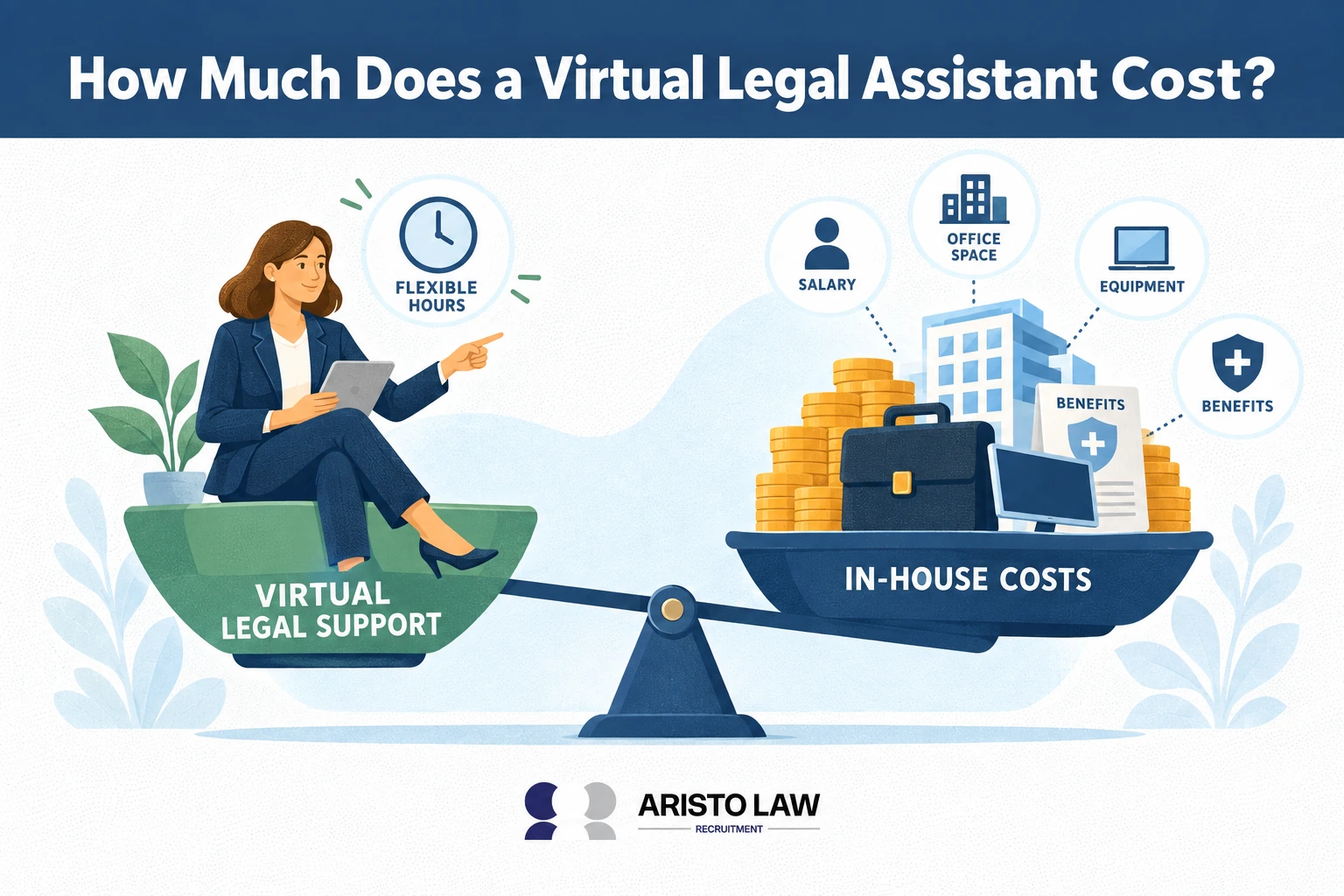
In New York City, hiring a virtual legal assistant costs
$25–$75 per hour, while in Los Angeles and Chicago, virtual legal
assistant services range from $20–$65 per hour depending on legal
specialization, staffing model, and experience level.
General administrative virtual legal assistants handling scheduling,
inbox management, CRM updates, communication routing, and appointment
coordination usually cost less than trained legal assistants familiar
with legal terminology, practice-management systems, intake workflows,
document preparation, confidentiality protocols, and law-firm
operations.
Entry-level offshore virtual legal assistants commonly range from
$8–$20 per hour depending on experience, communication quality, timezone
alignment, and supervision needs. U.S.-based virtual legal assistants
frequently range between $25–$60+ per hour because of domestic labor
costs, stronger legal workflow familiarity, and closer business-hour
alignment. Virtual paralegal support involving litigation workflows,
legal research support, contract coordination, compliance tracking, or
discovery management often ranges from $40–$100+ per hour depending on
specialization and procedural complexity. Specialized litigation
support, executive legal support, intake conversion support, and
corporate legal workflow coordination command premium pricing because
operational accuracy and workflow complexity increase.
Law firms may also use monthly retainers, fractional staffing
arrangements, part-time support models, or full-time remote staffing
structures depending on workload volume and operational needs.
Agency-managed staffing generally costs more because providers handle
recruiting, screening, onboarding, replacement support, supervision
assistance, payroll coordination, and operational continuity.
Direct-hire remote staffing may reduce long-term costs but increases
management responsibility, recruiting burden, onboarding effort, and
replacement risk for the firm.
Cheap virtual legal assistant services sometimes reduce short-term
staffing costs but may increase operational risk through weaker
communication quality, limited legal workflow familiarity, inconsistent
responsiveness, poor confidentiality discipline, slower turnaround, or
heavier attorney supervision requirements. Law firms usually achieve
stronger ROI when staffing decisions balance operational complexity,
workflow volume, supervision capacity, and legal support quality rather
than selecting providers based only on the lowest hourly rate.
When
should a law firm hire a virtual legal assistant?
A law firm should hire a virtual legal assistant when there
are missed calls, slow intake, attorney admin overload and growth beyond
current staff capacity.
Listed below are 12 occasions when hiring a virtual legal assistant
is necessary.
-
Missed calls and delayed lead response: Missed
intake calls reduce consultation conversion and create direct revenue
loss. Firms struggling with call coverage usually need a virtual
receptionist or intake-focused virtual legal assistant to improve
responsiveness and lead capture. -
Slow intake processing and poor onboarding flow:
Delayed intake coordination weakens client experience and increases
intake leakage. Firms experiencing onboarding bottlenecks often require
an intake specialist or virtual legal assistant managing CRM updates,
scheduling, reminders, and intake workflows. -
Attorney administrative overload: Attorneys handling
excessive scheduling, inbox management, communication routing, intake
coordination, and document organization lose billable productivity and
experience higher burnout risk. Firms facing operational overload
usually benefit from hiring a virtual legal assistant first. -
Growing document backlog and disorganized files:
Slow document preparation, poor repository maintenance, delayed
formatting, and inconsistent file management reduce matter velocity and
increase workflow risk. Administrative document overload often justifies
a virtual legal assistant, while substantive legal workflow backlog may
require a remote paralegal. -
Billing delays and weak invoice follow-up: Delayed
invoicing, incomplete billing entries, and inconsistent payment
follow-up create cash-flow strain and reduce revenue predictability.
Firms with financial workflow problems often need a dedicated billing
assistant or administrative legal support professional. -
Inconsistent client communication and follow-up:
Communication gaps reduce client trust, weaken retention, and increase
complaint risk. Virtual legal assistants improve workflow continuity
through reminders, updates, scheduling coordination, and intake
follow-up systems. -
Growth beyond current operational capacity: Rapid
caseload growth without operational support creates workflow
bottlenecks, scheduling pressure, intake delays, and attorney burnout.
Firms scaling quickly often require layered support involving virtual
legal assistants, remote paralegals, and operations coordination
staff. -
High attorney time spent on non-billable tasks:
Excessive administrative workload reduces attorney utilization and
limits matter capacity. Delegating operational workflows improves
productivity and matter throughput. -
Task backlog and missed workflow deadlines: Rising
backlog volume indicates operational imbalance and insufficient support
capacity. Firms should identify whether bottlenecks involve intake,
billing, litigation support, communication, or scheduling before
hiring. -
Litigation surges and procedural workflow pressure:
Discovery-heavy cases, filing deadlines, and litigation coordination
often require a remote paralegal rather than purely administrative
support. -
Operational disorganization and workflow visibility
problems: Workflow confusion, inconsistent task ownership, and
communication fragmentation may justify hiring a legal operations
coordinator supporting centralized workflow governance. -
Need for scalable staffing without immediate in-house
expansion: Remote legal staffing allows firms to increase
support incrementally without committing immediately to permanent
office-based hiring structures.
Aristolaw helps law firms identify the correct remote legal support
role by matching staffing structure to operational bottlenecks, workflow
complexity, communication needs, intake pressure, litigation support
requirements, and administrative workload volume. The strongest hiring
decisions come from identifying the most expensive operational failure
point first rather than hiring generic support without workflow
analysis.
Is a
virtual legal assistant right for your law firm?
A virtual legal assistant is right for your law firm when
support tasks are repeatable, remote-friendly, measurable, secure, and
supervised through clear attorney-review processes. Law firms
usually gain the strongest ROI from virtual legal support when
administrative workflows such as intake coordination, scheduling,
communication tracking, CRM updates, billing support, document
organization, reminder systems, and client follow-up occur consistently
enough to justify structured delegation.
Successful virtual legal assistant integration depends heavily on
technology readiness, confidentiality controls, workflow visibility, and
management structure. Firms using cloud-based practice-management
systems, centralized document repositories, CRM platforms, secure
communication tools, workflow dashboards, and standardized intake
systems usually scale remote support more efficiently because
operational coordination remains visible and measurable across
distributed teams. Confidentiality protections such as role-based
access, MFA authentication, encrypted communication, audit trails, and
documented supervision systems also remain heavily important because
remote legal operations increase workflow exposure if unmanaged.
The practice area also affects operational fit. High-volume practices
involving personal injury, family law, immigration, estate planning,
litigation support, or corporate workflow coordination often benefit
strongly from structured remote legal support. Firms emphasizing fast
client response, intake conversion, and operational scalability usually
experience stronger gains from virtual staffing models.
How
can virtual legal assistants support legal workflow automation?
Virtual legal assistants support legal workflow automation by
maintaining digital task systems, updating case-management software,
using templates, routing documents, and keeping automated processes
accurate. Legal workflow automation functions most effectively
when automation systems operate alongside structured human oversight
because legal operations frequently involve exceptions, incomplete
client information, deadline changes, procedural updates, communication
gaps, and workflow variations requiring operational coordination beyond
simple software automation.
A virtual legal assistant supports legal workflow automation by
organizing intake processes, document routing, deadline tracking, and
repetitive administrative tasks within structured legal operations. A
virtual legal assistant also improves efficiency through legal
workflow automation tools benefits and examples
connected to document automation, task synchronization, and law firm
process standardization.
Virtual legal assistants act as workflow operators who maintain
automation reliability across intake, scheduling, communication,
billing, document routing, and task-management systems inside modern law
firms. Research published by Virtual NexGen Solutions in 2025
showed that law firms implementing AI-driven workflow automation
experienced 40–60% productivity increases and major reductions in
operational overhead through automated intake, scheduling, billing, and
document management systems.
Virtual legal assistants commonly help configure and manage intake
forms, automated consultation reminders, CRM follow-up sequences,
scheduling workflows, task templates, matter-stage automation,
document-generation systems, e-signature routing, billing workflows, and
reporting dashboards integrated into practice-management platforms.
Intake automation improves lead capture and consultation scheduling, CRM
automation improves follow-up consistency, task templates standardize
recurring workflows, and e-signature systems accelerate engagement
letters, intake packets, and procedural approvals. Billing automation
also improves invoice generation, payment reminders, and financial
workflow continuity across distributed legal operations.
Virtual legal assistants remain heavily important because automated
systems still require human monitoring, data correction, workflow
validation, escalation handling, and operational oversight. Remote legal
support professionals verify intake accuracy, correct incomplete CRM
records, monitor workflow exceptions, update matter progression stages,
confirm completed signatures, resolve scheduling conflicts, maintain
template consistency, and ensure automated workflows align with actual
case activity and attorney-review requirements.
What
law firm workflows can be automated with virtual legal assistant
support?
Law firm workflows that can be automated with virtual legal
assistant support include intake follow-up, appointment reminders,
document routing, deadline tracking, billing reminders, client updates,
and task assignment.
Listed below are 11 law firm workflows that can be automated with
virtual legal assistant support.
-
Intake follow-up automation: Intake software and CRM
systems automatically send consultation reminders, lead-response emails,
intake forms, and onboarding instructions after a client inquiry.
Virtual legal assistants monitor incomplete forms, update CRM records,
correct missing information, escalate unresponsive leads, and coordinate
attorney review when conflict checks or legal screening become
necessary. Automation improves response speed, but intake workflows fail
when data entry errors, missing ownership, or delayed follow-up disrupt
lead progression. -
Appointment reminder automation: Scheduling systems
automatically send text reminders, email confirmations, calendar
invitations, and rescheduling links for consultations, hearings, or
client meetings. Virtual legal assistants monitor attendance, update
calendars, resolve scheduling conflicts, and escalate urgent changes
requiring attorney approval or procedural adjustment. -
Document routing automation: Practice-management
platforms and document systems automatically route intake packets,
engagement letters, contracts, filings, and internal workflow documents
to assigned staff or clients through workflow rules. Virtual legal
assistants verify document completion, track missing signatures, correct
formatting problems, maintain repository organization, and escalate
attorney-review items involving substantive legal content. -
Deadline tracking automation: Calendar systems and
case-management platforms automatically generate reminders for hearings,
filings, discovery deadlines, consultations, compliance obligations, and
internal workflow checkpoints. Virtual legal assistants monitor task
completion, update matter stages, escalate missed deadlines, and confirm
attorney review for high-risk procedural requirements. -
Billing reminder automation: Billing software
automatically sends invoices, payment reminders, overdue notices, and
accounts-receivable follow-up messages. Virtual legal assistants monitor
payment status, update billing records, resolve administrative billing
questions, and escalate trust-account or legal billing issues requiring
attorney or accounting review. -
Client update automation: CRM systems and
communication platforms automatically distribute matter-status
notifications, appointment confirmations, onboarding messages, intake
progression updates, and workflow reminders. Virtual legal assistants
monitor communication accuracy, correct incomplete records, coordinate
manual follow-up, and escalate sensitive legal communication requiring
attorney involvement. -
Task assignment automation: Workflow dashboards and
task-management systems automatically assign intake tasks, document
requests, billing actions, filing workflows, scheduling tasks, and
operational reminders based on matter stage or workflow triggers.
Virtual legal assistants maintain task ownership visibility, reassign
delayed work, monitor backlog growth, and escalate workflow bottlenecks
affecting operational efficiency. -
E-signature workflow automation: E-signature systems
automatically send engagement letters, settlement documents, intake
forms, compliance paperwork, and authorization forms to clients or
staff. Virtual legal assistants track signature completion, resolve
routing errors, update repositories, and coordinate attorney review
before final execution when required. -
Document-template automation: Document automation
systems populate repetitive legal forms, intake documents, billing
letters, and administrative correspondence using stored client data.
Virtual legal assistants verify populated information, correct
formatting inconsistencies, maintain template libraries, and monitor
workflow accuracy before attorney approval. -
Matter-stage workflow automation: Case-management
systems automatically trigger reminders, tasks, document requests,
billing actions, and communication sequences as matters move through
intake, litigation, compliance, or transactional stages. Virtual legal
assistants ensure matter stages reflect actual workflow progress and
resolve operational mismatches between software automation and real case
activity. -
Reporting and dashboard automation:
Practice-management software automatically generates reports involving
intake conversion, billing activity, task backlog, response time,
deadline completion, and workflow performance. Virtual legal assistants
review reporting accuracy, update operational data, and escalate
inconsistencies affecting management visibility.
Legal workflow automation improves remote law-office efficiency by
reducing repetitive administrative work, increasing operational
consistency, accelerating communication workflows, and improving
workflow visibility across distributed legal teams. Virtual legal
assistants remain heavily important because automation systems still
require human oversight, operational judgment, data validation, workflow
correction, and attorney-supervised exception handling to maintain
accuracy and procedural reliability.
What tools do
virtual legal assistants use?
Tools virtual legal assistants use include
practice-management platforms, e-signature tools, billing platforms,
calendars, secure messaging tools, and task boards.
A virtual legal assistant uses document automation platforms, client
communication software, billing systems, and legal
case management systems to coordinate legal workflows
and maintain case organization. Virtual legal assistants manage
calendaring, intake tracking, document storage, and deadline monitoring
through integrated legal operations technology.
Listed below are 15 tools virtual assistants use.
-
Practice-management platforms: Practice-management
systems centralize matter management, deadline tracking, communication
logs, scheduling, billing workflows, document access, and operational
reporting. Virtual legal assistants use these systems to coordinate
workflows, update matter status, manage tasks, and maintain operational
visibility across legal matters. Role-based permissions and audit trails
strengthen accountability and confidentiality. -
Intake systems: Intake software captures leads,
manages consultation requests, automates onboarding forms, schedules
consultations, and tracks intake progression. Virtual legal assistants
monitor incomplete intake records, manage follow-up workflows, and
coordinate conflict-check or attorney-review escalation where
required. -
CRM tools: CRM platforms organize lead tracking,
client communication history, intake status, referral management,
follow-up reminders, and workflow reporting. Centralized CRM systems
improve intake conversion visibility and communication continuity across
distributed legal operations. -
Document-management software: Document repositories
support file storage, naming conventions, metadata organization, version
control, secure retrieval, and repository maintenance. Virtual legal
assistants use document systems to maintain organized legal files,
reduce duplication, and improve workflow consistency. Audit logs and
permission controls strengthen operational security. -
E-signature tools: E-signature platforms route
engagement letters, intake packets, contracts, compliance forms, and
procedural documents electronically. Virtual legal assistants track
signature completion, manage routing workflows, and maintain repository
updates after execution. -
Billing platforms: Billing software manages invoice
generation, time-entry tracking, payment reminders, accounts receivable,
trust-account workflows, and financial reporting. Virtual legal
assistants support invoice follow-up, billing updates, payment
coordination, and administrative financial workflows improving cash-flow
continuity. -
Calendar and scheduling systems: Scheduling tools
coordinate consultations, hearings, reminders, intake appointments,
filing deadlines, and internal workflow meetings. Centralized calendars
reduce scheduling conflicts and improve procedural deadline
visibility. -
Secure messaging tools: Encrypted communication
systems support attorney-client communication, internal team
coordination, workflow escalation, and secure file sharing. Secure
messaging improves communication continuity while protecting
confidentiality and attorney-client privilege. -
Task boards and workflow dashboards: Task-management
systems assign workflows, track deliverables, monitor backlog, and
maintain operational accountability across legal support teams. Virtual
legal assistants use task boards to manage intake progression,
communication follow-up, billing workflows, scheduling tasks, and
administrative operations. -
Cloud-based file-sharing systems: Secure cloud
repositories support remote collaboration, controlled file access,
secure uploads, version synchronization, and centralized repository
management across distributed legal teams. -
Time-tracking and productivity systems: Timekeeping
platforms help firms monitor billable support activity, administrative
workflow time, utilization rate, and operational efficiency metrics. -
Reporting and KPI dashboards: Reporting tools track
intake conversion, response speed, document turnaround, task completion,
billing performance, and workflow efficiency across legal
operations. -
Workflow automation platforms: Automation tools
support intake reminders, CRM sequences, document routing, e-signature
triggers, billing reminders, and task escalation workflows while virtual
legal assistants monitor operational accuracy and exception
handling. -
Video conferencing and collaboration platforms:
Remote collaboration tools support internal meetings, client
consultations, workflow coordination, onboarding, and operational
communication across distributed legal teams. -
Cybersecurity and access-control systems: MFA tools,
VPN systems, password-management platforms, endpoint protection, and
access logging systems protect confidential legal information and
strengthen operational security across remote legal environments.
Strong remote legal operations depend heavily on software
consistency, centralized workflows, data hygiene, role-based access
controls, audit visibility, and standardized operational systems that
allow virtual legal assistants to support legal workflows securely and
efficiently.
How
should law firms measure virtual legal assistant performance?
Law firms should measure Virtual Legal Assistant performance through
operational KPIs that reflect workflow efficiency, client
responsiveness, administrative accuracy, and attorney productivity
recovery.
The table below shows KPIs for intake, responsiveness,
workflow speed, document accuracy, billing support, client follow-up,
and attorney time recovery.
| KPI Metric | What It Measures | Why It Matters for Law-Firm Efficiency and ROI |
|---|---|---|
| First-response time | Speed of responding to new leads, emails, intake requests, or client inquiries |
Faster response improves consultation conversion, client satisfaction, and revenue protection |
| Missed-call recovery rate | Percentage of missed calls successfully returned or converted into follow-up communication |
Reduces intake leakage and improves operational responsiveness |
| Consultation booking rate | Percentage of qualified leads converted into scheduled consultations |
Measures intake effectiveness and lead-conversion efficiency |
| Intake completion rate | Percentage of intake workflows completed accurately and on time | Improves onboarding consistency and reduces intake-processing delays |
| Document turnaround time | Speed of completing document formatting, routing, repository updates, or workflow tasks |
Faster turnaround improves matter progression and operational scalability |
| Revision rate | Frequency of corrections or rework required after task completion |
Lower revision rates indicate stronger workflow accuracy and training quality |
| Task completion rate | Percentage of assigned workflows completed within expected timelines |
Measures operational reliability and workflow consistency |
| Client follow-up completion | Consistency of reminders, updates, callbacks, intake follow-up, and communication workflows |
Improves client experience, communication continuity, and retention |
| Billing support completion | Completion accuracy for billing entries, invoice preparation, and administrative financial workflows |
Improves cash-flow continuity and operational organization |
| Invoice follow-up rate | Consistency of payment reminders and accounts-receivable follow-up workflows |
Reduces delayed payments and improves revenue collection efficiency |
| Attorney administrative hours saved | Reduction in attorney time spent on scheduling, intake, communication, billing, and administrative coordination |
Measures delegation effectiveness and attorney productivity recovery |
| Calendar accuracy rate | Accuracy of scheduling, hearing coordination, reminders, and procedural deadlines |
Reduces missed deadlines and operational disruption |
| CRM update accuracy | Reliability of client records, intake status updates, and communication tracking |
Improves workflow visibility and operational continuity |
| Response consistency across communication channels |
Reliability of communication through phone, CRM, email, and messaging systems |
Improves responsiveness and strengthens client-service quality |
| Workflow backlog volume | Number of incomplete or delayed operational tasks | Rising backlog indicates staffing imbalance or workflow bottlenecks |
| Matter-status update consistency | Frequency and accuracy of case-management system updates | Improves attorney visibility into workflow progression |
| Document organization accuracy | Quality of repository management, naming conventions, metadata tagging, and version control |
Reduces document retrieval delays and operational confusion |
| Deadline completion rate | Percentage of workflow tasks completed before internal or procedural deadlines |
Strengthens operational reliability and reduces workflow risk |
| Client satisfaction indicators | Feedback related to responsiveness, communication quality, and operational support |
Strong client-service quality improves retention and referral growth |
| Utilization rate | Percentage of staff capacity actively used productively | Helps firms balance staffing levels and avoid operational inefficiency |
What
virtual legal assistant services do law firms outsource?
Law firms outsource a wide range of Virtual Legal Assistant
services to improve operational efficiency and reduce administrative
burden. Virtual legal assistant outsourcing allows attorneys
and internal legal teams to delegate repetitive administrative and
procedural workflows into centralized remote support systems while
preserving attorney oversight for substantive legal work, legal
judgment, negotiations, and client representation.
Legal operations and outsourcing studies consistently show that
outsourcing administrative and procedural legal support functions
improves attorney productivity, reduces fixed overhead costs, shortens
turnaround times, and increases workflow efficiency through centralized
digital task-management systems integrated into cloud-based legal
technology platforms.
Listed below are the 15 major virtual legal assistant services
commonly outsourced by law firms and legal departments.
-
Client intake processing and onboarding
coordination: Remote legal assistants handle consultation
scheduling, intake forms, CRM updates, lead follow-up, onboarding
communication, and intake workflow tracking improving intake conversion
and responsiveness. -
Appointment scheduling and attorney calendar
management: Outsourced scheduling support coordinates hearings,
consultations, reminders, deadline tracking, and meeting logistics
reducing attorney interruptions and scheduling conflicts. -
Email management and communication coordination:
Virtual legal assistants organize inboxes, route communication, track
follow-ups, prioritize workflow messages, and maintain client
communication continuity across legal operations. -
Legal document formatting, organization, and file
management: Outsourced support teams maintain repositories,
naming conventions, document templates, metadata organization, version
control, and administrative document workflows improving operational
consistency. -
Court deadline tracking and docket support:
Deadline-management workflows involving hearing reminders, filing
schedules, procedural tracking, and internal deadline coordination are
commonly delegated to remote legal support staff. -
Billing assistance, invoicing, and payment follow-up
workflows: Virtual legal assistants support invoice
preparation, billing-entry coordination, payment reminders, accounts
receivable follow-up, and billing-system updates improving cash-flow
continuity. -
CRM and case-management software updates: Remote
legal support professionals maintain client records, matter progression
updates, intake status tracking, workflow dashboards, and communication
history inside legal systems. -
E-filing preparation and administrative filing
coordination: Outsourced staff frequently assist with
procedural filing preparation, document assembly, repository updates,
filing coordination, and workflow organization under attorney
supervision. -
Legal transcription and document conversion
services: Remote legal assistants support transcription
workflows, formatting tasks, PDF conversion, OCR management, and
administrative document preparation. -
Discovery document organization and workflow
support: Litigation-heavy firms frequently outsource discovery
indexing, repository organization, document tracking, and procedural
coordination workflows. -
Litigation case tracking and procedural workflow
coordination: Remote support teams help manage litigation
calendars, procedural reminders, task tracking, hearing coordination,
and operational workflow continuity. -
Client follow-up communication and status-update
management: Virtual legal assistants manage reminders,
onboarding communication, appointment confirmations, intake progression
updates, and workflow follow-up systems improving client-service
consistency. -
Administrative support for specialized practice
areas: Family law, litigation, corporate law, immigration, real
estate, estate planning, and compliance-focused practices commonly
outsource operational legal support workflows aligned with their
procedural needs. -
Remote workflow coordination between attorneys, paralegals,
courts, and vendors: Outsourced support staff maintain
communication continuity, workflow visibility, task routing, and
coordination across distributed legal operations. -
Cloud-based legal system management and digital workflow
support: Virtual legal assistants help maintain
practice-management systems, CRM platforms, workflow dashboards,
e-signature systems, intake automation, and centralized digital legal
operations.
These services are commonly outsourced because administrative and
procedural workflows are highly repeatable, measurable, remote-friendly,
and compatible with standardized digital legal systems supporting
scalable law-firm operations.
What
legal support tasks can virtual assistants handle?
Virtual assistants can handle legal support tasks related to
administration, workflow coordination, communication management, and
document organization, helping law firms operate more efficiently
through remote digital support systems. Legal operations and
workflow-management studies consistently show that delegating repetitive
administrative and coordination tasks to virtual assistants improves
law-firm productivity, reduces operational bottlenecks, strengthens
workflow continuity, and allows attorneys to focus more heavily on
substantive legal strategy, negotiations, advocacy, and client
representation.
Listed below are the 14 major legal support tasks virtual assistants
commonly handle in law firms and legal departments:
-
Client intake processing and onboarding
coordination: Virtual assistants collect intake information,
schedule consultations, update CRM systems, send onboarding forms, and
maintain intake follow-up workflows improving lead conversion and
communication continuity. -
Appointment scheduling and attorney calendar
management: Remote support staff coordinate consultations,
hearings, reminders, internal meetings, and procedural deadlines
reducing attorney interruptions and scheduling conflicts. -
Email management and communication follow-ups:
Virtual assistants organize inboxes, route communication, track
follow-ups, prioritize workflow requests, and maintain communication
continuity across legal matters. -
Legal document formatting, organization, and file
management: Administrative legal support often includes
template population, repository organization, metadata tagging, naming
conventions, document formatting, and version-control workflows. -
Court deadline tracking and administrative docket
support: Virtual assistants monitor hearing schedules, filing
reminders, procedural deadlines, and internal task timelines supporting
operational reliability and workflow coordination. -
Billing assistance, invoicing, and payment tracking
workflows: Remote support professionals assist with invoice
preparation, payment reminders, time-entry coordination, billing-system
updates, and accounts-receivable follow-up improving cash-flow
continuity. -
CRM and case-management system updates: Virtual
assistants maintain client records, intake progression updates, workflow
status, communication logs, and matter-stage visibility across legal
operations. -
Legal transcription and document conversion
services: Administrative support frequently includes
transcription, OCR workflows, PDF conversion, formatting cleanup, and
document preparation tasks. -
E-filing preparation and administrative filing
coordination: Virtual assistants often organize filing packets,
prepare procedural documents for attorney review, coordinate
administrative filing workflows, and maintain repository updates. -
Client communication and case-status update
coordination: Remote legal support teams send reminders,
coordinate follow-ups, maintain onboarding communication, and track
workflow updates improving client-service consistency. -
Workflow tracking across multiple practice areas:
Litigation, family law, corporate law, immigration, real estate,
compliance, and estate-planning practices frequently use virtual
assistants to manage procedural workflows and administrative
coordination. -
Data entry and digital record-management tasks:
Virtual assistants maintain databases, update workflow systems, organize
records, and manage structured operational data across cloud-based legal
platforms. -
Coordination between attorneys, paralegals, courts, clients,
and vendors: Workflow coordination improves operational
continuity and reduces communication fragmentation across legal
matters. -
Secure handling of confidential legal information:
Virtual assistants operate inside role-based legal systems using
encrypted communication channels, secure repositories, audit-tracked
workflows, and confidentiality protocols protecting attorney-client
privilege.
Virtual assistants support legal operations under attorney
supervision and within clearly defined workflow boundaries. They
generally cannot independently provide legal advice, represent clients,
establish attorney-client relationships, negotiate legal matters, or
make substantive legal strategy decisions because those responsibilities
fall under attorney-only legal practice regulations and
unauthorized-practice-of-law restrictions.
How do
virtual legal assistants support legal research tasks?
Virtual legal assistants support legal research tasks by
helping attorneys and paralegals organize, gather, manage, and
coordinate legal information and research workflows through remote
digital systems and structured administrative support
processes. Legal operations and workflow-efficiency studies
consistently show that delegating research coordination and
administrative support tasks improves attorney productivity, accelerates
information retrieval, reduces workflow bottlenecks, and strengthens
document-management efficiency across document-intensive legal
environments.
A virtual legal assistant reviews case law, statutes, court filings,
and jurisdiction-specific sources to organize legal information for
attorneys and litigation teams. Virtual legal assistant workflows also
support document analysis, citation tracking, and outsourced virtual
legal research assistant and research analyst services
for legal research operations.
Virtual legal assistants improve legal research operations primarily
through workflow organization, document coordination, repository
management, deadline tracking, and information handling rather than
independently interpreting laws or providing substantive legal
conclusions.
Listed below are the 12 major ways virtual legal assistants support
legal research workflows:
-
Organizing legal research materials and case-law
documentation: Virtual legal assistants maintain structured
repositories containing statutes, court opinions, briefs, memoranda,
exhibits, compliance materials, and research references improving
retrieval speed and workflow visibility. -
Assisting with retrieval of statutes, regulations, and court
opinions: Remote legal support professionals frequently
retrieve legal materials from research databases, court portals, and
digital repositories for attorney or paralegal review. -
Managing legal research files and document systems:
Virtual legal assistants maintain folder structures, metadata tagging,
naming conventions, indexing systems, and version-control workflows
improving operational consistency across research projects. -
Formatting citations and legal research documents:
Administrative research support often includes formatting citations,
organizing references, proofreading research compilations, and preparing
structured legal research packages. -
Tracking research assignments and workflow
deadlines: Virtual legal assistants monitor research-request
progress, update workflow systems, coordinate deadlines, and maintain
visibility into pending legal research assignments. -
Coordinating research requests between attorneys and legal
teams: Workflow coordination includes routing assignments,
organizing supporting materials, maintaining communication continuity,
and tracking review status across legal operations. -
Preparing research summaries and document
compilations: Virtual legal assistants may assemble
attorney-prepared research materials, organize findings chronologically
or categorically, and compile supporting documentation for review
workflows. -
Supporting legal database searches and workflow
systems: Remote legal support professionals frequently assist
with administrative search coordination through legal research
platforms, case-management systems, and repository tools under attorney
direction. -
Managing indexing, tagging, and categorization
workflows: Structured tagging and categorization improve
searchability, repository visibility, and long-term retrieval efficiency
across legal research projects. -
Supporting compliance and policy research
organization: Corporate law, compliance, regulatory, and
policy-heavy practices often use virtual legal assistants to organize
procedural research workflows and maintain regulatory documentation
systems. -
Maintaining confidentiality and secure handling of research
materials: Research workflows frequently involve
privilege-sensitive communication, litigation strategy documents,
compliance records, and confidential client information requiring secure
workflow controls and role-based access systems. -
Supporting remote collaboration on legal research
projects: Cloud-based collaboration systems allow attorneys,
paralegals, and virtual legal assistants to coordinate research
workflows across distributed legal operations efficiently.
Virtual legal assistants generally support research administration
and workflow coordination rather than substantive legal interpretation.
They do not independently analyze laws, establish legal strategy,
provide legal opinions, or draw substantive legal conclusions because
those responsibilities remain under attorney or paralegal supervision
within regulated legal-practice structures.
How can
virtual legal assistants support solo lawyers?
Virtual legal assistants support solo lawyers by taking over
intake, scheduling, client follow-up, billing support, document
preparation, and administrative workflows that otherwise fall directly
on the attorney. Solo attorneys frequently operate
simultaneously as lawyer, receptionist, intake coordinator, scheduler,
billing manager, office administrator, and client-service
representative, creating constant operational interruptions that reduce
billable productivity and increase burnout risk.
Legal operations and workflow-efficiency studies consistently show
that structured delegation of repetitive administrative workflows
improves attorney productivity, strengthens client responsiveness,
reduces operational bottlenecks, and increases matter throughput across
small legal practices.
The first workflows solo lawyers commonly delegate involve
missed-call recovery, consultation scheduling, inbox triage, CRM
updates, intake coordination, reminder systems, document templates,
billing follow-up, payment reminders, and communication tracking because
these operational tasks consume large amounts of non-billable attorney
time throughout the day. Virtual legal assistants improve intake
continuity by responding to leads quickly, scheduling consultations,
maintaining intake follow-up, and preventing communication gaps that
reduce conversion rates or weaken client trust.
Administrative support also improves workflow organization through
document formatting, repository maintenance, scheduling coordination,
e-signature routing, task tracking, and calendar management systems
integrated into cloud-based legal platforms.
Remote support becomes especially valuable for solo lawyers because
operational capacity expands without immediately requiring office space
expansion or permanent in-house staffing costs. Virtual legal assistants
also improve responsiveness and workflow consistency during court
appearances, consultations, hearings, travel, or litigation-heavy
periods when solo attorneys cannot manage communication simultaneously.
Structured delegation reduces context switching and allows solo lawyers
to focus more heavily on legal strategy, negotiations, case preparation,
advocacy, and client representation rather than repetitive operational
coordination.
Successful solo-lawyer remote support systems depend heavily on
documented workflows, intake scripts, centralized software systems,
secure communication tools, confidentiality controls, attorney-review
checkpoints, and clearly defined role boundaries because virtual legal
assistants support legal operations under attorney supervision rather
than independently practicing law or providing legal advice.
What skills
should a virtual legal assistant have?
A virtual legal assistant should have strong administrative,
communication, organizational, technical, and legal workflow management
skills. Virtual legal assistants need these skills to
effectively support attorneys and law firms through remote digital
operations while maintaining accuracy, confidentiality, and procedural
efficiency.

Legal operations and remote workforce studies consistently show that
productivity in virtual legal support roles depends heavily on
communication quality, digital proficiency, structured workflow
management, confidentiality compliance, and the ability to operate
independently within attorney-supervised legal systems. Virtual legal
assistants differ from general business virtual assistants because legal
environments involve stricter confidentiality obligations, procedural
deadlines, legal terminology, litigation-sensitive workflows,
attorney-client privilege protections, and practice-management software
systems requiring higher operational precision.
Listed below are the 17 core skills virtual legal assistants should
have:
-
Strong written and verbal communication skills:
Virtual legal assistants communicate with attorneys, clients, courts,
vendors, and legal staff through email, CRM systems, intake workflows,
and scheduling platforms requiring professional tone and workflow
clarity. -
Organizational and document-management abilities:
Legal operations depend heavily on structured repositories, naming
conventions, version control, metadata organization, and workflow
tracking reducing retrieval delays and operational confusion. -
Time-management and deadline-tracking skills:
Litigation, compliance, intake, and transactional workflows involve
procedural deadlines, reminders, scheduling coordination, and escalation
rules requiring operational discipline. -
Knowledge of legal terminology and legal office
procedures: Familiarity with legal workflow terminology
improves communication accuracy and operational coordination across
litigation, corporate, family law, immigration, and compliance
environments. -
Proficiency with legal practice-management software and
cloud-based systems: Virtual legal assistants frequently use
CRM systems, billing platforms, intake software, document repositories,
scheduling tools, e-signature systems, and workflow dashboards
supporting remote legal operations. -
Scheduling and attorney calendar-management
capability: Calendar coordination, consultation booking,
hearing scheduling, reminder systems, and deadline visibility improve
workflow continuity and reduce scheduling conflicts. -
Email management and professional client communication
skills: Inbox organization, communication routing, follow-up
tracking, and intake coordination improve responsiveness and
client-service quality. -
Attention to detail and document accuracy: Legal
operations require strong accuracy because formatting errors, missed
deadlines, incomplete intake records, or repository inconsistencies
create operational and procedural risk. -
Confidentiality awareness and secure handling of legal
information: Virtual legal assistants regularly access
privilege-sensitive communication, intake records, litigation files,
billing information, and client data requiring strong confidentiality
discipline. -
Familiarity with e-filing systems and digital court
workflows: Litigation-heavy environments frequently require
understanding of procedural filing coordination and digital court
systems. -
Multitasking and workflow prioritization ability:
Remote legal support professionals often coordinate intake, scheduling,
communication, billing, document workflows, and deadline management
simultaneously. -
Data entry, CRM management, and file-organization
capability: Accurate operational data improves workflow
visibility, intake tracking, matter progression reporting, and
communication continuity across legal systems. -
Remote collaboration and cloud-based workflow coordination
proficiency: Distributed legal operations require strong
communication discipline, centralized workflow coordination, and
software consistency across remote teams. -
Basic legal research and document-formatting support
skills: Administrative legal support frequently includes
organizing legal materials, formatting research documents, maintaining
repositories, and supporting attorney-supervised research workflows. -
Cybersecurity awareness for remote legal operations:
Remote legal environments require understanding of MFA systems, secure
communication channels, password hygiene, phishing prevention, access
controls, and encrypted workflow systems protecting confidential legal
data. -
Adaptability to changing caseloads and operational
priorities: Law firms frequently experience litigation surges,
intake spikes, scheduling changes, and procedural workflow adjustments
requiring operational flexibility. -
Ability to work independently within attorney-supervised
systems: Virtual legal assistants frequently manage operational
workflows autonomously while still following attorney review structures,
escalation protocols, and legal compliance standards.
Strong virtual legal assistants combine general administrative
competency with legal-specific workflow discipline, procedural
awareness, confidentiality compliance, and technology proficiency
supporting scalable modern law-firm operations.
What
should law firms consider when hiring a legal virtual assistant?
Law firms should consider role scope, legal experience,
confidentiality practices and performance metrics when hiring a legal
virtual assistant.
A virtual legal assistant supports law firms through delegated
intake, scheduling, document handling, and administrative coordination
tied to legal workflows. Law firms evaluating staffing structure,
compliance requirements, and workflow compatibility benefit from
understanding how
to hire a virtual legal assistant within a scalable
legal support model.
Listed below are17 things law firms should consider when hiring legal
virtual assistants.
-
Role scope and workflow ownership: Firms should
define whether the role focuses on intake coordination, scheduling,
billing support, litigation administration, CRM management, receptionist
workflows, executive support, or procedural legal support. Unclear role
scope creates workflow confusion, duplication, and operational gaps. -
Legal experience and practice-area fit: Candidates
with familiarity in litigation, family law, immigration, estate
planning, corporate law, compliance, or personal injury workflows
usually require less onboarding and produce fewer workflow errors.
Practice-area alignment improves operational accuracy and communication
quality. -
Task complexity and supervision requirements:
Administrative scheduling and intake workflows require different skill
levels than litigation coordination, procedural tracking, or
document-intensive support. Firms should match task complexity to
supervision capacity and operational risk tolerance. -
Confidentiality practices and data-security
discipline: Legal virtual assistants regularly access
confidential client records, billing systems, intake data, litigation
files, and attorney communication. Firms should evaluate MFA usage,
password discipline, secure-device policies, encrypted communication
practices, and confidentiality awareness. -
Software proficiency and legal technology
familiarity: Strong candidates usually understand
practice-management systems, CRM platforms, intake software, billing
systems, e-signature tools, workflow dashboards, and document
repositories. Software familiarity reduces training time and operational
disruption. -
Client communication quality: Virtual legal
assistants often represent the operational face of the firm during
intake, follow-up, scheduling, and workflow communication. Professional
tone, responsiveness, and communication clarity directly affect client
experience and consultation conversion. -
Document-management and organizational capability:
Repository organization, naming conventions, version control, metadata
tagging, and workflow consistency heavily affect matter visibility and
operational reliability across legal systems. -
Intake exposure and lead-management ability: Firms
heavily dependent on consultations and lead conversion should evaluate
intake responsiveness, follow-up discipline, CRM management, and
scheduling coordination experience carefully. -
Time-zone coverage and availability alignment:
Time-zone overlap affects communication speed, scheduling continuity,
intake responsiveness, and workflow coordination across distributed
legal operations. -
Performance metrics and accountability structure:
Law firms should define measurable KPIs involving response time, intake
conversion, scheduling accuracy, document turnaround, billing support
completion, task backlog, and attorney time recovered before hiring
begins. -
Supervision model and escalation protocols: Remote
legal support operates most effectively when firms establish
attorney-review checkpoints, escalation rules, communication standards,
workflow ownership, and approval structures clearly. -
Onboarding requirements and SOP readiness: Firms
with documented workflows, intake scripts, template systems,
communication policies, and operational SOPs usually integrate virtual
legal assistants more successfully and achieve faster ROI. -
Pricing structure and staffing flexibility: Firms
should compare hourly pricing, monthly retainers, fractional staffing,
part-time support, full-time coverage, and scalability options against
operational workload volume rather than selecting providers solely by
price. -
Staffing-agency support and replacement options:
Agency-managed staffing often provides recruiting assistance, candidate
vetting, replacement support, onboarding guidance, and operational
continuity reducing hiring friction and staffing risk. -
Communication cadence and workflow visibility:
Strong remote staffing structures depend on regular workflow reviews,
task boards, centralized communication systems, and measurable
operational reporting improving accountability. -
Remote work discipline and independent workflow
management: Virtual legal assistants frequently operate with
limited direct supervision, making self-management, prioritization,
deadline discipline, and operational consistency heavily important. -
Scalability and long-term operational fit: Firms
should evaluate whether the staffing structure supports future caseload
growth, intake expansion, litigation surges, or operational scaling
without requiring immediate restructuring.
Aristo Law helps law firms reduce hiring risk by matching virtual
legal assistants to practice-area workflows, operational bottlenecks,
software environments, confidentiality requirements, and scalability
needs while supporting candidate vetting, staffing alignment, and remote
legal workflow integration.
Build a legal support team that moves work forward.
Tell us what is slowing your practice down. We will help map the role, workflow, and support structure that fits.